The Elusive Yungas Screech Owl: A Symbol of Biodiversity in the Andean Forests
The Yungas Screech Owl (Megascops hoyi) is a captivating yet elusive bird species that inhabits the dense montane forests of the South American Andes. Nestled within the Yungas, a region known for its rich biodiversity and unique ecosystems, this small owl plays a vital role in the ecological balance of its habitat. Despite its critical ecological role, the Yungas Screech Owl remains one of the lesser-known members of the owl family, overshadowed by its more charismatic relatives. However, recent attention from ornithologists and conservationists has shed light on the importance of preserving this species and its habitat.
Habitat and Distribution
The Yungas Screech Owl is primarily found in the humid montane forests of Bolivia and Argentina, at elevations ranging from 1,500 to 3,000 meters. These forests, often shrouded in mist, provide a perfect environment for the owl, offering abundant prey and ample cover from predators. The Yungas region, characterized by its steep slopes and lush vegetation, supports a diverse array of flora and fauna, making it a biodiversity hotspot. Unfortunately, this region is also under threat from human activities such as deforestation, agriculture, and urbanization, putting pressure on the habitats of many species, including the Yungas Screech Owl.
Physical Characteristics
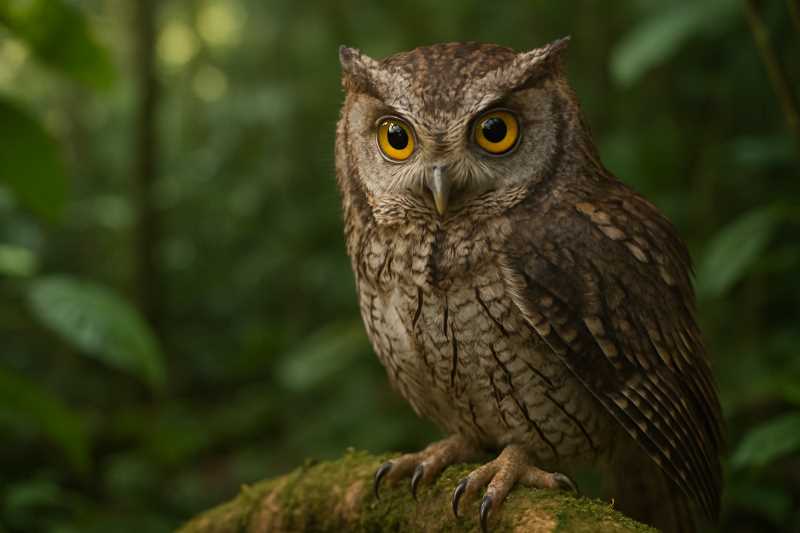
The Yungas Screech Owl is a small to medium-sized owl, measuring approximately 20 to 23 centimeters in length. It has a distinct appearance, with mottled brown and gray plumage that provides excellent camouflage against the bark and leaves of its forest home. Its large, forward-facing eyes are adapted for night vision, allowing it to hunt effectively in low-light conditions. The owl’s ear tufts and facial disc serve as sound detectors, aiding in locating prey even in complete darkness.
Behavior and Diet
As a nocturnal predator, the Yungas Screech Owl is active primarily during the night. It feeds on a variety of prey, including insects, small mammals, and occasionally other birds. Its hunting technique involves quiet, stealthy flight and acute hearing to locate and capture prey. The owl’s diet plays a crucial role in controlling insect populations, thus maintaining the ecological balance within its habitat.
During the breeding season, which typically occurs in the Southern Hemisphere’s spring and summer months, the Yungas Screech Owl nests in tree cavities or abandoned nests of other birds. The female lays a clutch of two to four eggs, which she incubates while the male provides food. The owlets are born blind and helpless, relying on their parents for food and protection until they fledge.
Conservation Status
Currently, the Yungas Screech Owl is classified as “Least Concern” by the International Union for Conservation of Nature (IUCN). However, this status does not imply that the species is free from threats. Habitat destruction due to logging, agriculture, and urban expansion poses significant risks to the owl’s survival. Additionally, climate change may alter the delicate balance of the montane ecosystems, further impacting the owl’s habitat.
Conservation efforts are crucial to ensure the long-term survival of the Yungas Screech Owl. Protecting the Yungas forests through sustainable land management and establishing protected areas can help preserve the owl’s natural habitat. Furthermore, raising awareness about the importance of this species and its role in the ecosystem can foster community support for conservation initiatives.
The Role of Research and Community Involvement
Ongoing research is vital to understanding the Yungas Screech Owl’s ecology and behavior. Scientists are employing various methods, including bioacoustic monitoring and satellite tracking, to gather data on the owl’s population size, distribution, and breeding habits. These studies provide valuable insights that inform conservation strategies and help prioritize areas for protection.
Community involvement is another critical component of conservation efforts. Engaging local communities in conservation activities, such as habitat restoration and monitoring programs, can lead to more sustainable and effective outcomes. Education and outreach programs can also empower communities to take pride in their natural heritage and participate actively in its preservation.
Conclusion
The Yungas Screech Owl is a remarkable species that embodies the rich biodiversity of the Andean montane forests. Despite facing numerous challenges, there is hope for its conservation through targeted research, habitat protection, and community engagement. By preserving the Yungas Screech Owl and its habitat, we not only safeguard a unique species but also contribute to the overall health and resilience of one of the world’s most vital ecosystems. In doing so, we ensure that future generations will have the opportunity to appreciate the wonders of this enigmatic owl and the diverse world it inhabits.
Related posts