Moluccan Scops Owl: Nature’s Nocturnal Enigma
The Moluccan Scops Owl, scientifically known as Otus magicus, is a fascinating bird that continues to captivate ornithologists and bird enthusiasts alike. This elusive species, belonging to the Strigidae family, is renowned for its distinctive calls and striking appearance. Native to the Moluccas, a group of islands in Indonesia, the Moluccan Scops Owl is a testament to the rich biodiversity found in this part of the world.
Habitat and Distribution
The Moluccan Scops Owl inhabits a variety of forested environments, ranging from lowland rainforests to montane forests at elevations up to 1,500 meters. These owls are predominantly found on the islands of Halmahera, Buru, Seram, and the nearby islets. The dense foliage of these forests provides ideal shelter and hunting grounds for these nocturnal predators, ensuring their survival in an ecosystem teeming with life.
Physical Characteristics
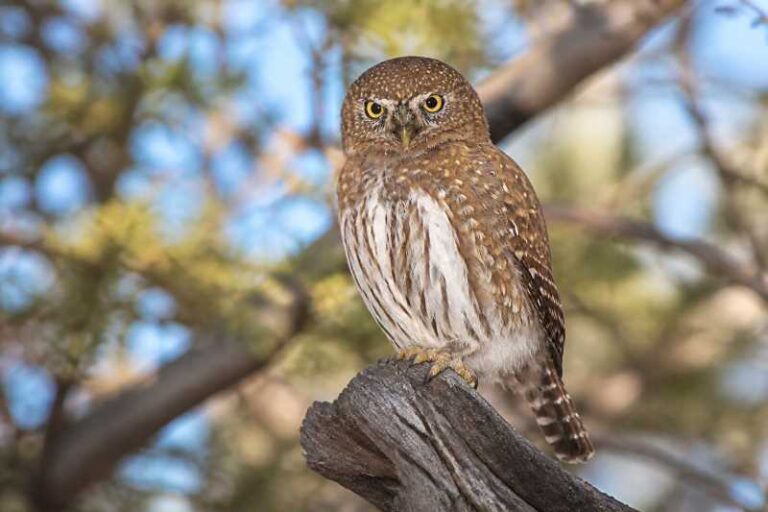
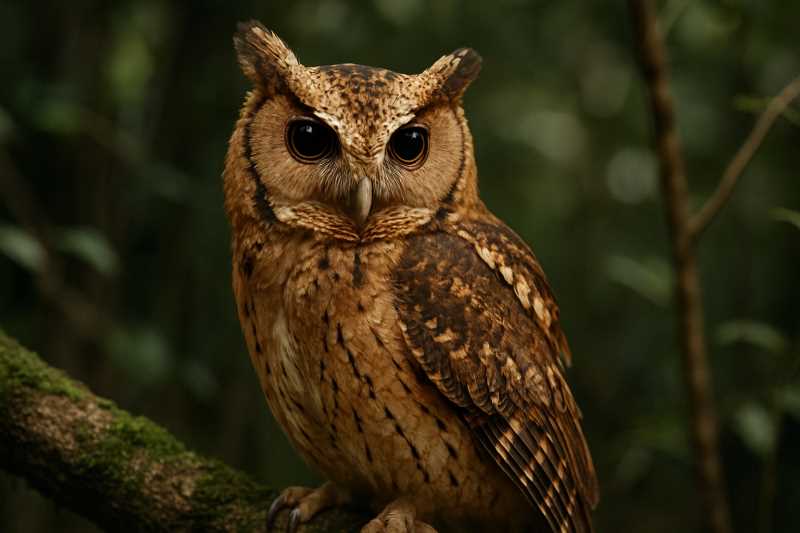
Measuring about 20-25 cm in length, the Moluccan Scops Owl is a small yet robust bird. It boasts a plumage that serves as perfect camouflage against the forest backdrop. The mottled brown and gray feathers are complemented by a distinctive pattern of streaks and spots, facilitating a seamless blend into the tree bark. Its piercing yellow eyes are not only a defining feature but also an essential adaptation for nocturnal hunting. The owl’s tufts, resembling ears, add to its enigmatic appearance, further accentuating its alert demeanor.
Behavior and Diet
Primarily nocturnal, the Moluccan Scops Owl embarks on its hunting expeditions under the veil of darkness. Its diet is diverse, consisting mainly of insects, small mammals, and occasionally smaller birds. The owl’s acute sense of hearing and exceptional night vision make it a formidable predator, capable of detecting even the slightest movements in the underbrush.
Communication among Moluccan Scops Owls is achieved through a series of whistles and hoots. These calls play a crucial role in territorial defense and mating rituals. The male’s call is notably louder and more frequent during the breeding season, serving as a beacon to attract potential mates.
Reproduction and Lifespan
The breeding season of the Moluccan Scops Owl coincides with the onset of the rainy season, a period characterized by an abundance of food resources. Nesting typically occurs in tree cavities, where the female lays a clutch of 2-4 eggs. Both parents share the responsibility of incubation and feeding the chicks, showcasing a cooperative breeding strategy that enhances the survival chances of their offspring.
The lifespan of the Moluccan Scops Owl in the wild is not well-documented, but it is estimated to be around 10-15 years. This longevity is contingent upon factors such as habitat stability and availability of food resources.
Conservation Status
The Moluccan Scops Owl is currently listed as Least Concern by the International Union for Conservation of Nature (IUCN). However, this status does not imply immunity to threats. Habitat destruction, primarily due to deforestation and land conversion for agriculture, poses a significant risk to the owl’s natural habitat. Additionally, climate change and its resulting impacts on weather patterns and prey availability could further exacerbate challenges for this species.
Conservation efforts are essential to safeguard the future of the Moluccan Scops Owl. Initiatives aimed at preserving the forested regions of the Moluccas, coupled with sustainable land-use practices, are crucial in maintaining the delicate balance of this unique ecosystem.
Cultural Significance
In local folklore, the Moluccan Scops Owl holds a special place, often regarded as a symbol of wisdom and mystery. Its presence is sometimes associated with omens or messages from the spiritual realm, reflecting the deep-rooted cultural connections between the people of the Moluccas and their natural environment.
Conclusion
The Moluccan Scops Owl is an emblematic species that embodies the enchanting allure of the Indonesian archipelago. Its survival hinges on the concerted efforts of conservationists, researchers, and local communities dedicated to preserving the natural habitats that these owls call home. As we continue to unravel the mysteries of the Moluccan Scops Owl, it serves as a poignant reminder of the intricate web of life that thrives in the rich tapestries of the world’s forested landscapes.
Related posts