The Enigmatic Bufflehead: A Dive into the Life of Bucephala albeola
The Bufflehead, scientifically known as Bucephala albeola, is a small, strikingly beautiful diving duck native to North America. Recognized for its distinctive plumage and agile diving capabilities, the Bufflehead is a favorite among birdwatchers and ornithologists alike. This article explores the unique characteristics, habitat, behavior, and conservation status of this fascinating waterfowl.
Physical Characteristics
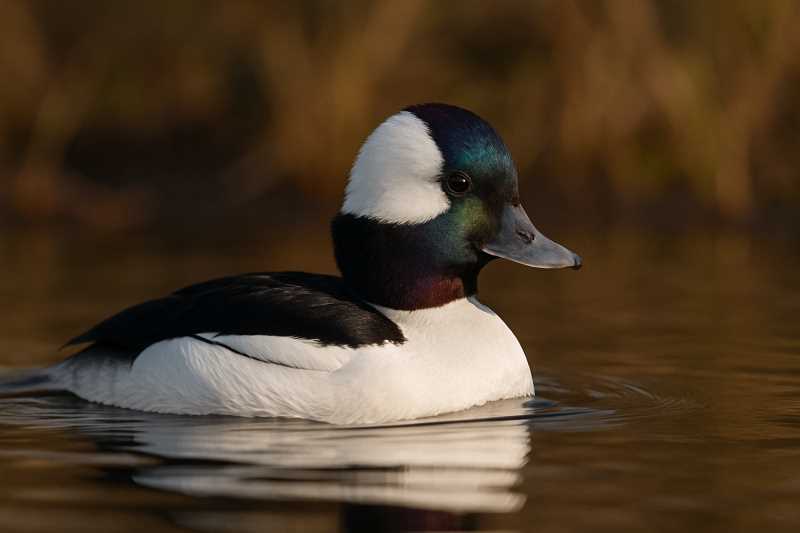
The Bufflehead is one of the smallest ducks in North America, measuring approximately 13 to 16 inches in length with a wingspan of about 21 to 24 inches. Adult males are particularly eye-catching, with their iridescent green and purple heads that appear black in less favorable light. A large white patch on the back of their head sets them apart from other duck species. Females and immature males, although less vibrant, are still distinctive with their gray-brown bodies and a smaller white cheek patch.
Habitat and Distribution
Buffleheads are migratory birds, breeding in the boreal forests and aspen parklands of Canada and Alaska. They prefer nesting in tree cavities, often those created by Northern Flickers. In winter, they migrate to coastal waters, lakes, and ponds across the United States and northern Mexico. They are particularly fond of sheltered bays and estuaries where they can easily dive for food.
Behavior and Diet
Known for their diving prowess, Buffleheads feed primarily on aquatic invertebrates, such as insects and crustaceans, during the breeding season. In winter, their diet shifts to include more plant matter, mollusks, and small fish. They are agile swimmers, using their compact bodies and strong legs to propel themselves underwater in search of food.
Buffleheads are monogamous and often form long-term pair bonds. Their courtship displays are an intricate dance, involving head-bobbing and wing-flapping to attract a mate. Once paired, they are known to return to the same nesting sites year after year.
Conservation Status
Currently, the Bufflehead is listed as a species of Least Concern by the International Union for Conservation of Nature (IUCN). This status is largely due to their stable population numbers and wide distribution. However, like many other wildlife species, Buffleheads face threats from habitat destruction and climate change. Preservation of their breeding and wintering habitats is crucial for their continued survival.
Birdwatching and Cultural Significance
Birdwatchers prize sightings of Buffleheads for their entertaining diving behavior and striking appearance. Their small size and rapid wingbeats make them a delightful challenge to observe and photograph. In Native American cultures, the Bufflehead is often seen as a symbol of agility and adaptability, traits that are evident in their life cycle and survival strategies.
Conclusion
The Bufflehead is a remarkable species that showcases the beauty and adaptability of North American wildlife. Through their striking appearance, fascinating behaviors, and resilience, they continue to captivate the hearts of nature enthusiasts. Conservation efforts must continue to ensure that future generations can enjoy and learn from these captivating birds.
As we strive to protect natural habitats and mitigate climate change, the Bufflehead serves as a reminder of the interconnectedness of ecosystems and the importance of preserving biodiversity. By understanding and appreciating species like Bucephala albeola, we can foster a deeper connection with the natural world and inspire actions that contribute to its preservation.
Whether observed in their northern breeding grounds or during their winter migrations along coastal waters, the Bufflehead remains a symbol of nature’s resilience and beauty. As stewards of the environment, it is our responsibility to ensure that such marvels of wildlife continue to thrive for generations to come.
Related posts