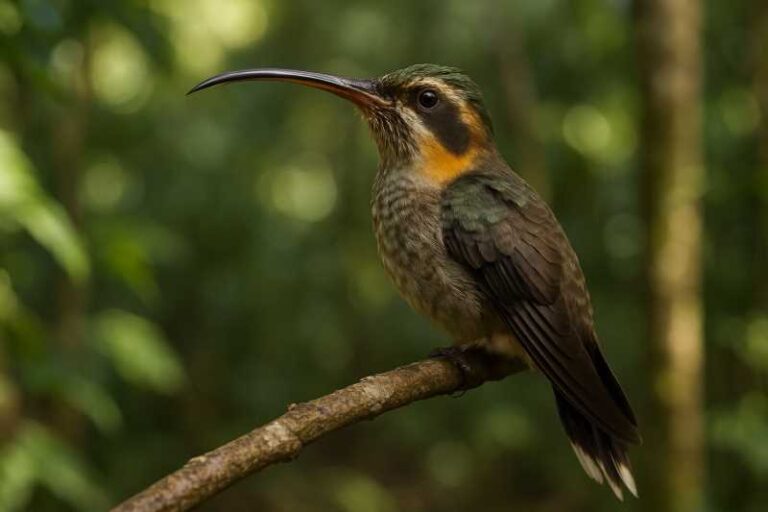
The Enchanting Emerald-chinned Hummingbird: A Jewel of the Neotropics
In the mesmerizing world of avian wonders, the Emerald-chinned Hummingbird (Abeillia abeillei) stands out as a particularly captivating species. Known for its dazzling plumage and dynamic flight, this small bird epitomizes the enchanting diversity of the Neotropical ecosystems. Found predominantly in the mountainous regions of Central America, the Emerald-chinned Hummingbird is a testament to nature’s artistry and the intricate ecological networks that sustain such vibrant life forms.
Taxonomy and Description
The Emerald-chinned Hummingbird belongs to the Trochilidae family, a large and diverse group of birds known for their iridescent colors and rapid wing beats. Abeillia abeillei is the sole species within the genus Abeillia, a testament to its unique evolutionary path. Males and females of this species exhibit sexual dimorphism, with males being slightly more striking due to their vivid emerald-green chin that gives the species its name. Their upperparts are a resplendent green, while the underparts transition into a soft, grayish-white, and their tails are typically a deep, shimmering blue.
Habitat and Range
These tiny avian jewels are primarily found in the cloud forests and subtropical or tropical moist montane forests of Central America, ranging from southern Mexico through Guatemala, Honduras, and into El Salvador. Their preference for high-altitude environments, usually between 1,000 and 2,500 meters, allows them to exploit the rich floral resources available in these biodiverse regions. However, their habitat is increasingly threatened by deforestation and land conversion for agriculture, prompting conservationists to monitor their populations closely.
Behavior and Ecology
Emerald-chinned Hummingbirds are solitary birds, primarily interacting with conspecifics during the breeding season. Their flight is a marvel of evolution, characterized by rapid wing beats that allow them to hover in place, a crucial ability for feeding on nectar from flowers. These birds are vital pollinators, playing a significant role in the reproduction of many plant species. They possess a remarkable memory, enabling them to recall the locations and flowering schedules of individual plants across their territory.
In addition to nectar, they also consume small insects and spiders, which provide essential proteins and nutrients necessary for their energy-intensive lifestyle. Their diet makes them an integral part of their ecosystem, controlling insect populations and ensuring the continued proliferation of flowering plants.
Reproduction and Lifespan
The breeding season for the Emerald-chinned Hummingbird varies geographically, generally aligning with the availability of food resources. Males perform elaborate aerial displays to attract females, showcasing their agility and the brilliance of their plumage. Once a mate is secured, the female takes on the sole responsibility of nest-building and chick-rearing. She constructs a tiny cup-shaped nest using plant fibers, moss, and spider silk, camouflaging it with lichens to protect it from predators.
Females typically lay two white eggs, which they incubate for about 14 to 19 days. The chicks are altricial, hatching blind and featherless, and require extensive parental care. The female feeds them through regurgitation, providing a nutrient-rich diet that supports their rapid growth. Fledging occurs around 20 to 26 days after hatching, although the young may continue to depend on the mother for some time.
Conservation Status and Challenges
Currently, the Emerald-chinned Hummingbird is classified as Least Concern by the International Union for Conservation of Nature (IUCN). However, this status does not fully reflect the pressures they face from habitat loss and climate change. The gradual encroachment of agriculture and urban development into their natural habitats poses a significant threat, as does the alteration of climate patterns, which can affect the flowering cycles of the plants they depend on.
Conservation efforts aimed at preserving cloud forests and montane habitats are essential for the continued survival of this species. Initiatives that promote sustainable agriculture and reforestation, along with the establishment of protected areas, can help mitigate some of the threats. Furthermore, raising awareness about the ecological importance of hummingbirds can foster greater appreciation and support for conservation programs.
Conclusion
The Emerald-chinned Hummingbird is more than just a visually stunning bird; it is a vital component of its ecosystem, contributing to the health and biodiversity of the regions it inhabits. Protecting this species requires a concerted effort to address the environmental challenges it faces, ensuring that future generations can continue to marvel at its beauty and ecological significance. As stewards of the natural world, it is our responsibility to safeguard the delicate balance that allows such extraordinary creatures to thrive.
Related posts