Discovering the Rinjani Scops Owl: A New Avian Marvel of Southeast Asia
In the verdant landscapes of Southeast Asia, on the slopes of Mount Rinjani in Lombok, Indonesia, resides a remarkable creature that has captured the attention of ornithologists and bird enthusiasts alike. The Rinjani Scops Owl (Otus jolandae), a species only described in 2013, represents a fascinating addition to the avian world, offering insights into the rich biodiversity of the Indonesian archipelago.
A New Arrival in the Ornithological World
The Rinjani Scops Owl was first identified as a distinct species when researchers noted its unique vocalizations and morphological characteristics, setting it apart from its close relatives. Named after the Dutch ornithologist Jolanda Luksenburg, this species underscores the potential for new discoveries in even relatively well-studied regions.
Physical Characteristics
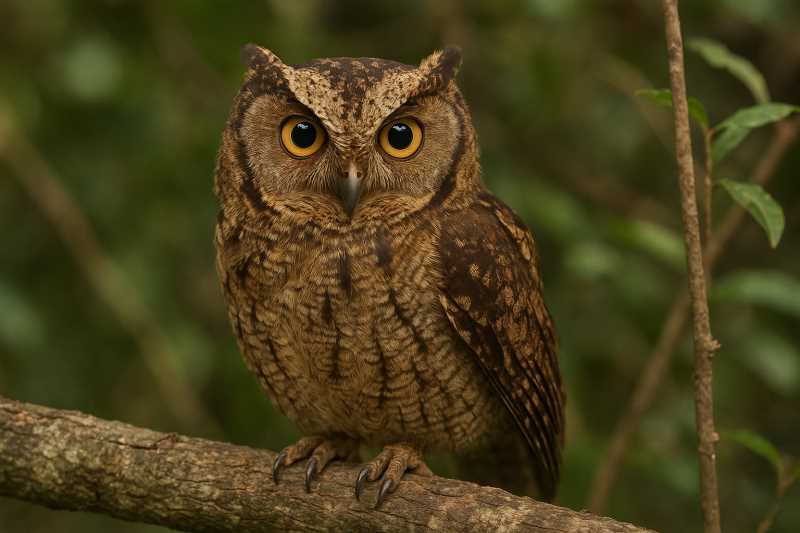
The Rinjani Scops Owl is a small owl, measuring approximately 20 centimeters in length. It exhibits a mottled brown plumage, which provides excellent camouflage against the forested backdrop of its habitat. Its feathers are speckled with white and darker brown spots, aiding in its stealthy lifestyle. One of the most distinguishing features of this species is its strikingly large, bright yellow eyes, which are adapted for nocturnal hunting.
Vocalization and Behavior
One of the defining characteristics that led to the identification of Otus jolandae as a separate species is its distinct call. Unlike its relatives, the Rinjani Scops Owl produces a rapid series of hoots, which experts have likened to a ‘hoot-hoot-hoot’ sequence. This vocalization is not only an essential tool for communication during mating but also plays a role in territorial defense.
In terms of behavior, these owls are primarily nocturnal, utilizing their keen eyesight and silent flight to hunt insects and small vertebrates under the cover of darkness. They are solitary creatures, except during the breeding season when pairs can be seen actively communicating and hunting together.
Habitat and Distribution
The Rinjani Scops Owl is endemic to Lombok, with its primary habitat being the montane forests on the slopes of Mount Rinjani. This region, characterized by high biodiversity and unique ecological conditions, provides the perfect environment for these owls. The dense canopy and abundant prey make it an ideal setting for their survival.
Conservation Status and Threats
Currently, the Rinjani Scops Owl is classified as “Data Deficient” by the International Union for Conservation of Nature (IUCN). This classification highlights the need for further research to determine the population size and trends of this newly identified species. Despite its relatively recent discovery, the owl faces potential threats from habitat loss due to deforestation, agricultural expansion, and human encroachment.
Conservation efforts are imperative to protect the delicate ecosystem of Mount Rinjani and its inhabitants. Local and international conservation organizations are encouraged to conduct detailed studies to understand better the ecological needs and vulnerabilities of Otus jolandae.
The Importance of Discovery
The discovery of the Rinjani Scops Owl is a testament to the richness of the world’s biodiversity and the importance of continued exploration and study of our planet’s ecosystems. It serves as a reminder of the many species that remain hidden in the shadows, waiting to be discovered and understood.
Moreover, this discovery highlights the critical role of local communities and scientists in biodiversity conservation. By fostering collaborations and increasing awareness of the unique wildlife that inhabits regions like Lombok, we can work toward sustainable solutions that benefit both people and nature.
Future Directions
The journey of understanding the Rinjani Scops Owl has only just begun. Future research should aim to map its full range, study its breeding habits, and monitor its population dynamics. Such efforts will not only aid in its conservation but also contribute to the broader understanding of the ecological intricacies of Southeast Asian fauna.
In conclusion, the Rinjani Scops Owl stands as a symbol of the enduring mysteries of the natural world. As we continue to uncover the secrets of such species, we gain invaluable insights that can guide conservation efforts and inspire a deeper appreciation for the diverse life forms that share our planet.
The discovery of Otus jolandae is a compelling reminder of how much there is still to learn about our world and the importance of safeguarding its natural treasures for future generations.
Related posts