Introduction
The Pallid Cuckoo, Heteroscenes pallidus, is a medium-sized cuckoo of open Australian habitats. It is best known for its brood-parasitic breeding strategy, in which females lay their eggs in the nests of other bird species. The species was formerly placed in Cacomantis, Cuculus and other genera in different taxonomic treatments, but Heteroscenes pallidus is the current name used by the IOC World Bird List.
Physical Description
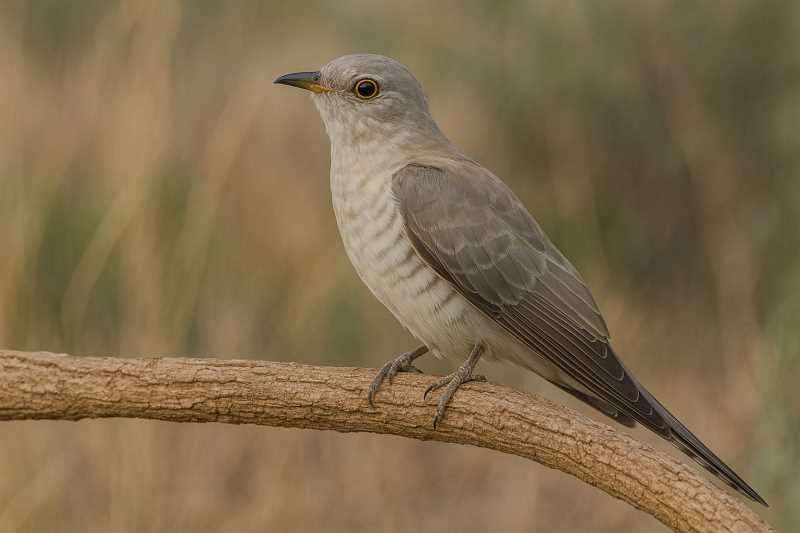
The Pallid Cuckoo measures approximately 28–33 centimetres in length. It has a slender, long-tailed shape, long pointed wings and a relatively small head. Adults are generally grey above, with darker wings and back, pale grey to whitish underparts, and broadly barred black-and-white undertail feathers. A bright yellow eye-ring is a useful identification feature, although it may be difficult to see in poor light.
Sexes and age classes show noticeable variation. Adult males are commonly grey, while females may be grey-brown or show warmer rufous tones. Young birds are more strongly mottled and barred, with brown and buff upperparts and streaked or mottled underparts. The bill is brownish and the legs and feet are grey-brown.
Range and Habitat
The Pallid Cuckoo is widespread across Australia, occurring in open forests, woodlands, savanna, scrub, farmland, paddocks, parks and other well-treed open country. It is particularly associated with habitats that provide scattered perches, open ground for feeding and suitable host species for breeding.
The species is migratory in the broad sense, although movements vary by region. Some populations move seasonally in response to rainfall, temperature and food availability, while others may remain in the same general area for much of the year. It has been recorded from sea level to about 1,510 metres.
Where to See This Species
Eungella National Park, Queensland, Australia
Pallid Cuckoo is included in the documented native bird list for Eungella National Park. Look in open woodland and forest edges, especially where taller trees overlook clearings, tracks or grassier ground. Seasonal movements and local conditions can affect sightings.
Nearby accommodation: Eungella village and the wider Mackay hinterland provide cabins, guest houses, self-catering accommodation and camping options.
Mungo National Park, New South Wales, Australia
Pallid Cuckoo is recorded among the birds of Mungo National Park. The park’s open mallee, woodland, shrubland and grassland habitats provide suitable conditions for scanning exposed perches and listening for the species’ distinctive call, particularly during periods of seasonal activity.
Nearby accommodation: Accommodation is available through the park’s camping and lodge facilities, with additional hotels, motels and self-catering options in the Mildura and Wentworth area.
Purnululu National Park, Western Australia, Australia
Pallid Cuckoo is listed for Purnululu National Park, where open woodland, spinifex country and creek-side vegetation provide suitable habitat. Search from quiet roads, walking tracks and lookouts with views across open country, especially after rain or during periods when insect activity is high.
Nearby accommodation: The park has camping facilities, while Warmun and Kununurra provide additional accommodation including campsites, cabins, hotels, lodges and self-catering options.
Behaviour and Diet
Pallid Cuckoos are usually seen alone or in pairs. They often sit quietly on an exposed branch, fence or dead limb before dropping to the ground to seize prey. The diet consists mainly of insects and their larvae, with hairy caterpillars being an important food item. Other insects may be taken from foliage or the ground.
The species has a distinctive repeated whistle, often described as an ascending series of notes. Its call may reveal its presence before the bird is seen and has contributed to traditional names such as the Brainfever Bird.
Pallid Cuckoos are brood parasites. The female lays an egg in the nest of another bird, usually after removing one of the host’s eggs. Recorded host groups include honeyeaters, woodswallows, whistlers, flycatchers, thornbills and other small to medium-sized Australian passerines. The Willie Wagtail and Hooded Robin are among the documented hosts.
The cuckoo egg commonly resembles the eggs of the host. After hatching, the young cuckoo may eject host eggs or nestlings and then monopolise the food brought by the foster parents. The young bird grows rapidly and can become much larger than its hosts before fledging.
Identification Tips
- Look for a slender, long-tailed cuckoo measuring about 28–33 centimetres.
- Adults are usually grey or grey-brown, with darker wings and back and pale underparts.
- The broadly barred black-and-white undertail is often more conspicuous than the body plumage.
- A yellow eye-ring may be visible at close range.
- Search exposed branches, dead limbs, fence posts and woodland edges rather than dense forest interiors.
- Listen for the repeated, rising whistle, which may be easier to detect than the bird itself.
- Juveniles are more mottled and brown than adults.
- The Oriental Cuckoo can appear similar in some parts of Australia, but the Pallid Cuckoo is generally associated with open habitats and has a distinctive barred undertail and yellow eye-ring.
Conservation Status
The Pallid Cuckoo is currently assessed as Least Concern on the IUCN Red List. Its global population has not been quantified, but it is widespread, locally common and considered likely to have a stable overall population trend.
The species may still be affected locally by the clearance and fragmentation of open woodland, changes in land management, declining host populations and changes in insect abundance. Maintaining native woodland, habitat corridors, healthy woodland edges and viable populations of host birds can benefit the species. There is no reliable basis for assigning a global population estimate.
Frequently Asked Questions
Where is the Pallid Cuckoo found?
The Pallid Cuckoo is widespread across Australia, occurring in open woodland, savanna, scrub, farmland, parks and other lightly wooded habitats.
What does the Pallid Cuckoo eat?
It feeds mainly on insects and their larvae, especially hairy caterpillars. It usually takes prey from the ground or foliage after watching from a low or exposed perch.
Is the Pallid Cuckoo a brood parasite?
Yes. The female lays her egg in the nest of another bird, leaving the host to incubate the egg and raise the young cuckoo.
Which birds raise Pallid Cuckoo chicks?
Recorded hosts include honeyeaters, woodswallows, whistlers, flycatchers, thornbills, Willie Wagtails and Hooded Robins. The host species used can vary between regions.
How can the Pallid Cuckoo be identified?
Look for a slender grey or grey-brown cuckoo with a long tail, pale underparts, a barred undertail and, in good light, a yellow eye-ring. Its repeated rising whistle is also distinctive.
Is the Pallid Cuckoo endangered?
No. It is currently classified as Least Concern, although local habitat loss and changes affecting host birds and insect prey may create regional pressures.
References
- BirdLife International
- IOC World Bird List
- Australian Museum
Related posts