
The Enigmatic Brown Creeper: A Closer Look at Nature’s Stealthy Climber
The Brown Creeper (Certhia americana), often overlooked due to its inconspicuous appearance, is a small passerine bird renowned for its unique behavior and specialized adaptations. This bird is a member of the Certhiidae family, which includes other creepers found across different continents. Observing the Brown Creeper can be a delightful experience for birdwatchers, as it offers a glimpse into the intricate world of avian ecology.
Physical Characteristics
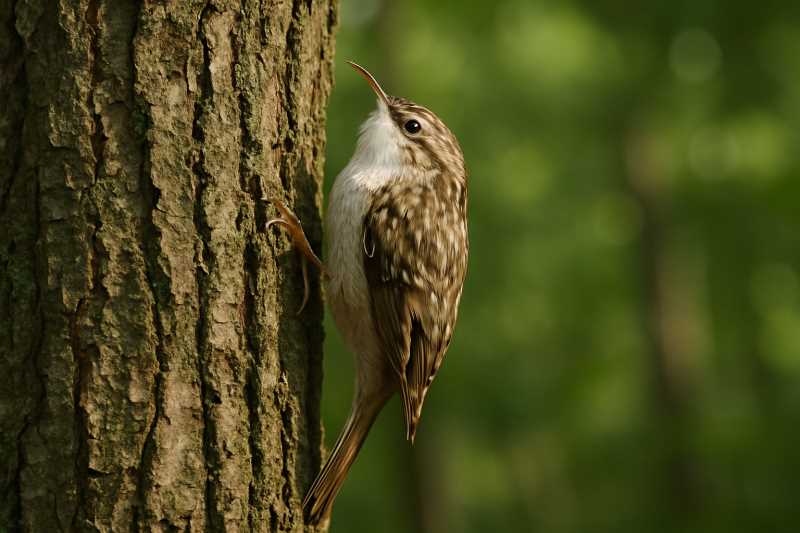
The Brown Creeper is aptly named for its overall brown plumage, streaked with white and buff, which provides excellent camouflage against the bark of trees. This cryptic coloration makes it challenging to spot when it is foraging. The underparts are primarily white, and the bird possesses a slim, decurved bill perfectly adapted for probing the bark of trees. Typically measuring about 5 inches in length, the Brown Creeper has a wingspan of approximately 7.5 inches and weighs between 7 and 10 grams.
One of the most distinctive physical features of the Brown Creeper is its long, stiff tail feathers. These tail feathers act as a prop, supporting the bird as it spirals up tree trunks in search of food. This adaptation is crucial for its climbing lifestyle, allowing the bird to maintain balance and stability while navigating vertical surfaces.
Behavior and Ecology
The Brown Creeper is primarily insectivorous, feeding on a diet rich in insects and spiders, which it extracts from the crevices of tree bark. It is known for its methodical foraging technique, starting at the base of a tree and working its way up in a spiral path. Once it reaches the top, the bird will fly down to the base of another tree and repeat the process. This behavior not only maximizes its foraging efficiency but also minimizes energy expenditure.
Due to its elusive nature, the Brown Creeper is most often detected by its high-pitched, thin calls. These calls play a significant role during the breeding season, helping males to establish territory and attract mates. The breeding season typically occurs from March to July, during which time the female builds a cup-shaped nest behind loose bark or in a tree cavity. Both parents participate in feeding the young, which fledge about 15 to 20 days after hatching.
Habitat and Distribution
Brown Creepers are widely distributed across North America, from Canada to northern parts of Central America. They inhabit mature forests, preferably those with a dense canopy and an abundant supply of large, old trees, which provide ample foraging opportunities and nesting sites. The species is also found in mixed woodlands and, occasionally, in urban parks with suitable tree cover.
During the winter months, Brown Creepers may join mixed-species foraging flocks, which include other small birds such as chickadees and kinglets. This behavior is thought to enhance foraging success and provide protection against predators.
Conservation Status
Currently, the Brown Creeper is classified as a species of Least Concern by the International Union for Conservation of Nature (IUCN). However, habitat loss due to logging and deforestation poses a potential threat to their populations. Conservation efforts aimed at preserving mature forests and maintaining healthy ecosystems are crucial for ensuring the survival of this species.
Conclusion
The Brown Creeper exemplifies the remarkable diversity and specialization found in the avian world. Its adaptations for a life spent clinging to and climbing tree trunks are a testament to the evolutionary pressures that have shaped its existence. For bird enthusiasts and ecologists alike, the Brown Creeper offers a window into the complex interactions between species and their habitats. As we continue to study and protect these fascinating birds, we gain a deeper appreciation for the delicate balance of our natural world and the importance of preserving it for future generations.
Related posts


