Exploring the World of the Least Sandpiper: A Tiny Yet Remarkable Shorebird
The Least Sandpiper (Calidris minutilla) is a fascinating bird species that captivates birdwatchers and ornithologists alike with its small stature and incredible migratory habits. As the smallest member of the sandpiper family, this diminutive bird is often overlooked, yet it plays a significant role in the ecosystems it inhabits.
Physical Characteristics
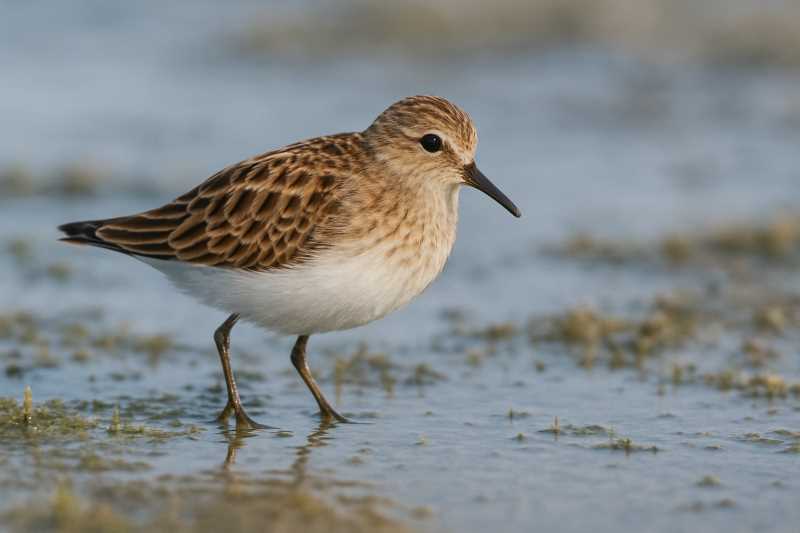
The Least Sandpiper is aptly named for its petite size. Measuring about 5 to 6 inches in length with a wingspan of approximately 10 to 11 inches, it weighs in at a mere 0.7 to 1 ounce. Its plumage is a mix of browns and buffs, providing excellent camouflage against sandy and muddy terrains. During the breeding season, adults exhibit a more pronounced streaked pattern on their backs and crowns, while their legs maintain a distinctive yellowish hue year-round. These features, along with their slightly down-curved bills, help distinguish them from other similar shorebirds.
Habitat and Range
The Least Sandpiper is highly adaptable, occupying a range of habitats from coastal shores to inland wetlands. During the breeding season, they are predominantly found in the northern regions of North America, particularly in boreal and subarctic zones. They prefer open areas with sparse vegetation, such as tundra and peat bogs, where they can easily forage for insects and other invertebrates.
In the non-breeding season, these birds undertake impressive migrations to Central and South America, covering thousands of miles. They can be found in a variety of wetland habitats during winter, including mudflats, marshes, and estuaries. This adaptability in habitat selection is crucial for their survival, allowing them to exploit a wide range of food resources across different environments.
Diet and Foraging Behavior
The diet of the Least Sandpiper primarily consists of small invertebrates, which they skillfully extract from mud and sand. Their foraging technique is characterized by rapid probing with their sensitive bills, enabling them to detect prey hidden beneath the surface. They often feed in mixed-species flocks, which provides added protection from predators and increases foraging efficiency.
During migration and in their wintering grounds, they may also consume seeds and plant material, showcasing their dietary flexibility. This opportunistic feeding behavior is essential for sustaining the high energy demands of their long migratory journeys.
Reproduction and Lifecycle
Breeding for the Least Sandpiper begins in late spring when they arrive at their northern nesting sites. Males perform elaborate flight displays to attract mates, and once paired, the female selects a nesting site. Nests are typically shallow depressions on the ground, lined with grass and leaves for insulation.
The female lays a clutch of about three to four eggs, which both parents incubate for approximately 19 to 22 days. Once hatched, the chicks are precocial, meaning they are relatively mature and mobile from birth. Despite this, they rely on their parents for guidance and protection until they are capable of independent flight, usually within two to three weeks.
Conservation Status and Challenges
Currently, the Least Sandpiper is classified as Least Concern by the International Union for Conservation of Nature (IUCN), reflecting its broad range and stable population numbers. However, like many shorebirds, it faces challenges from habitat loss due to wetland drainage, pollution, and climate change. Conservation measures that protect critical habitats, especially migratory stopover sites, are essential for ensuring the continued survival of this species.
Conclusion
The Least Sandpiper, with its extraordinary migratory journeys and adaptability, serves as a testament to the resilience of nature. As conservation efforts continue to protect their habitats, these tiny shorebirds will hopefully thrive for generations to come. Observing them in their natural habitats offers not only a glimpse into their lives but also highlights the interconnectedness of global ecosystems.
Related posts