The Little Stint: A Detailed Exploration of the Tiny Shorebird
The Little Stint (Calidris minuta) is a fascinating species renowned for its remarkable migratory patterns and adaptability. As one of the smallest members of the sandpiper family, this bird captivates ornithologists and birdwatchers alike with its delicate presence and tenacious survival strategies.
Identification and Physical Characteristics
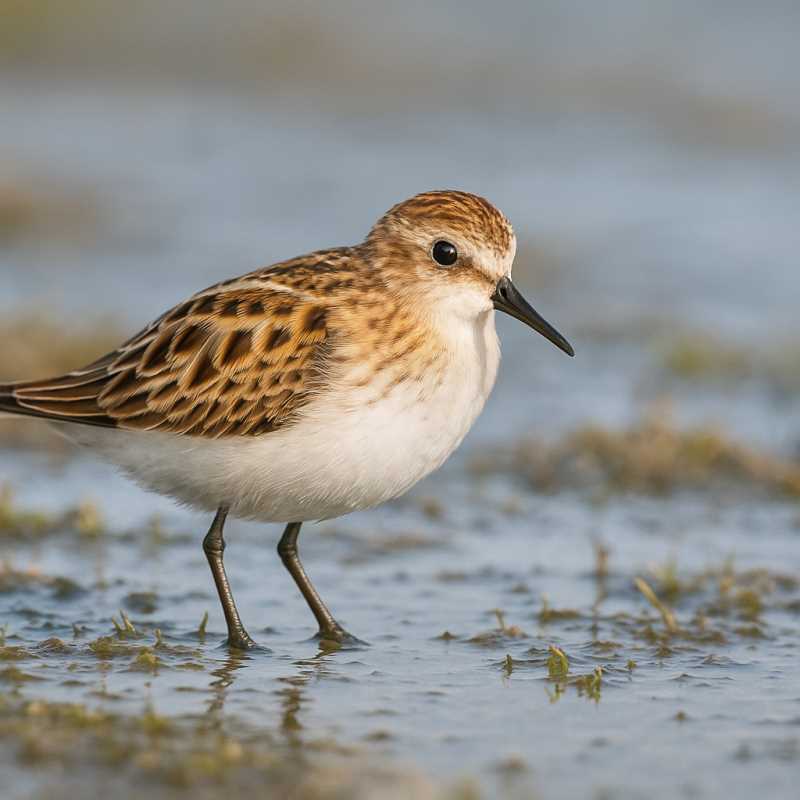
The Little Stint is a diminutive shorebird, measuring approximately 13 to 15 centimeters in length with a wingspan of about 28 to 30 centimeters. Despite its small size, it is robust and agile, featuring a short, straight bill and relatively long legs that aid in its foraging activities. The plumage of the Little Stint varies seasonally; during the breeding season, it boasts a rich rufous coloration on its back and crown, while in the non-breeding season, it adopts a more subdued gray-brown hue. Its underparts remain white throughout the year, providing a stark contrast to its darker back.
Habitat and Distribution
The Little Stint is a migratory bird with a wide geographical range. Breeding primarily in the Arctic tundra of northern Europe and Asia, it embarks on an impressive journey to its wintering grounds in sub-Saharan Africa, the Indian subcontinent, and Southeast Asia. This extensive migration covers thousands of kilometers and is a testament to the bird’s endurance and adaptability. During migration, the Little Stint can be found in a variety of habitats including mudflats, coastal lagoons, and estuaries, where it prefers soft, muddy substrates rich in invertebrates.
Feeding and Foraging Behavior
The diet of the Little Stint primarily consists of small invertebrates, such as insects, crustaceans, and mollusks. Its foraging behavior is characterized by rapid movements, as it actively probes the mud with its bill in search of prey. The Little Stint often forages in flocks, which not only helps in locating food more efficiently but also provides safety in numbers from predators. This collective behavior is particularly evident during migration, when large congregations of Little Stints can be observed feeding in suitable habitats.
Breeding and Reproduction
Breeding takes place during the short Arctic summer, a period when the tundra is rich in insect life, providing ample food resources for raising chicks. The nesting site is typically a shallow scrape in the ground, often lined with grass or leaves to provide some insulation. Both parents are involved in incubating the eggs, which usually number between three to four per clutch. Once hatched, the chicks are precocial, meaning they are relatively mature and mobile shortly after birth. This rapid development is crucial in the harsh Arctic environment, where the window for breeding and rearing young is limited.
Conservation Status and Threats
Currently, the Little Stint is classified as a species of Least Concern on the IUCN Red List, thanks to its large population and extensive range. However, it faces numerous threats that could impact its numbers in the future. Habitat loss, particularly in wetland areas due to human development, poses a significant risk. Additionally, climate change is an ever-present threat, potentially altering the delicate ecosystems that the Little Stint depends on for breeding and foraging. Conservation efforts focus on protecting wetland habitats and monitoring population trends to ensure the long-term survival of this species.
Conclusion
The Little Stint, with its extensive migratory routes and adaptability to various environments, is a remarkable example of avian resilience and perseverance. Its ability to thrive across continents highlights the interconnectedness of ecosystems and the importance of international conservation efforts. As environmental challenges continue to mount, understanding and protecting species like the Little Stint becomes increasingly vital, not only for their survival but for the health of global biodiversity as a whole.
By raising awareness and advocating for the protection of wetland habitats, we can contribute to the ongoing efforts to preserve the Little Stint and ensure that future generations can continue to marvel at this extraordinary bird.
Related posts