The Graceful and Enduring: Understanding the Demoiselle Crane
The Demoiselle Crane, scientifically known as Anthropoides virgo, is a captivating avian species revered for its grace and resilience. As the smallest of the crane family, these birds are a testament to the beauty and tenacity of nature, thriving in diverse environments across the globe.
Physical Characteristics
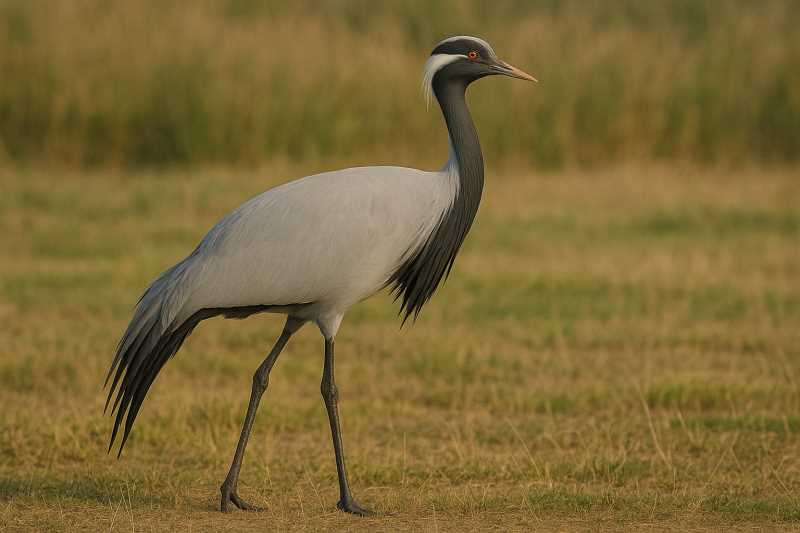
Demoiselle Cranes are distinguished by their elegant stature and striking appearance. Measuring approximately 85 to 100 centimeters in height, these cranes are smaller than their crane cousins, such as the Sarus or the Whooping Cranes. Despite their size, they exude an air of grace and dignity, characterized by their long, slender legs and necks. Their plumage is primarily a soft gray, with a notable white feathered neck and a tuft of black feathers extending from the lower throat to the chest, which adds a dramatic contrast to their appearance. Their bright red eyes and black legs complete their distinctive look, making them one of the most visually appealing cranes.
Habitat and Distribution
Demoiselle Cranes inhabit a variety of environments, including dry grasslands, savannas, and semi-desert regions. They are widely distributed across central Asia, with significant populations in Mongolia, Kazakhstan, and parts of India. These cranes are known for their remarkable migratory patterns, traveling thousands of kilometers from their breeding grounds in Central Asia to wintering sites in the Indian subcontinent and Africa. During migration, they face numerous challenges, including harsh weather conditions and human-made obstacles, yet they persevere, demonstrating impressive endurance and adaptability.
Behavior and Diet
These cranes are social birds, often found in flocks, especially during migration and in their wintering grounds. They are known for their complex and graceful courtship dances, which involve a series of bows, leaps, and flapping of wings, accompanied by distinctive calls. These dances are not only a spectacle to behold but are integral to their mating rituals.
Their diet primarily consists of plants, seeds, and insects, which they forage for in the open fields. They have also been known to consume small vertebrates, adapting to the available resources within their habitat. This varied diet allows them to thrive in different environments, showcasing their adaptability.
Conservation Status
Currently, the Demoiselle Crane is listed as a species of Least Concern by the International Union for Conservation of Nature (IUCN). However, they face threats from habitat loss due to agricultural expansion and human encroachment. Conservation efforts are essential to maintain their population levels and ensure that these elegant birds continue to grace our skies.
Organizations and local governments have been working to protect their habitats and migration corridors, focusing on sustainable land use practices and establishing protected areas. Education and awareness programs are also crucial in fostering coexistence between human populations and these majestic birds.
Cultural Significance
The Demoiselle Crane holds cultural significance in various regions. In India, they are considered birds of good omen, associated with the onset of the monsoon season. In Mongolia and Kazakhstan, they are celebrated in folklore and often symbolize endurance and success. Their presence is a reminder of the interconnectedness of ecosystems and the importance of preserving biodiversity.
Conclusion
The Demoiselle Crane is a remarkable species that embodies elegance, adaptability, and resilience. As we continue to study and admire these birds, it is crucial to support conservation efforts that protect their natural habitats and migratory paths. By doing so, we ensure that future generations can witness the beauty and majesty of the Demoiselle Crane, a true symbol of nature’s wonders.
"The dance of the Demoiselle Crane is not just a courtship ritual; it is a celebration of life, a testament to the enduring spirit of nature, and a call to action for conservation."
Through understanding and preservation, we can ensure that the skies remain a stage for their graceful performance.
This is one of the species covered in our book Cranes Of The World which is part of our Kings Birds of the world series, and one of the Kings Guides.

Related posts