The Varied Lorikeet (Psitteuteles versicolor) is a brilliantly colored, energetic parrot native to the tropical woodlands of northern Australia. Though less widely known than its rainbow-hued cousins, this species is equally captivating, both in appearance and behavior. With its dynamic personality, vibrant plumage, and important role in its ecosystem, the Varied Lorikeet is a true gem of Australia’s avian diversity.
Physical Description
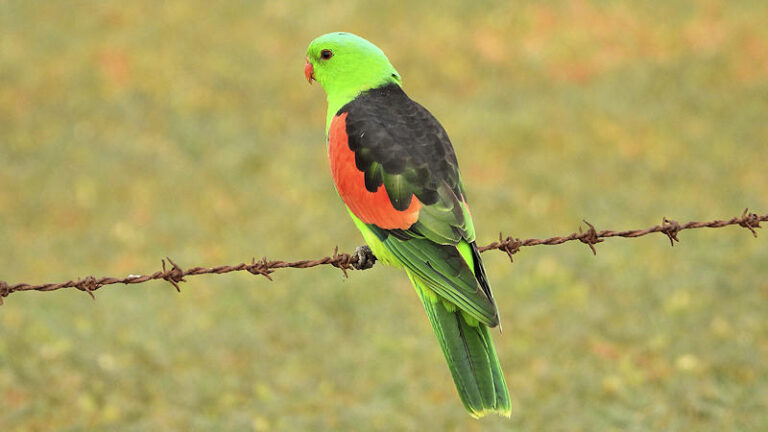
The Varied Lorikeet is aptly named for its multicolored plumage. Measuring approximately 19 to 21 cm in length, this small lorikeet features a green back and wings that provide excellent camouflage among the foliage. The underparts are yellow with fine red streaks, while the head is a vivid mix of red, blue, and yellow tones. Males and females look similar, although subtle variations in the intensity of coloration can sometimes be observed.
Its red beak and bare, orange-red eye-ring enhance its tropical appearance. The species has a brush-tipped tongue adapted for feeding on nectar and pollen—a key trait among lorikeets.
Distribution and Habitat
Endemic to northern Australia, the Varied Lorikeet is primarily found in the tropical and subtropical regions of Queensland, Northern Territory, and parts of northern Western Australia. Its preferred habitats include monsoonal forests, paperbark woodlands, eucalypt groves, and open savannahs with scattered flowering trees.
These birds are nomadic, moving in response to the flowering patterns of trees like eucalyptus, grevillea, and melaleuca. Their range overlaps with other nectar-feeding birds, but the Varied Lorikeet’s agility and speed often give it a competitive edge.
Behavior and Ecology
Varied Lorikeets are social, noisy, and highly active birds that are often seen in small flocks. They communicate with high-pitched, chattering calls that can be heard from a distance as they move from tree to tree in search of food. Like other lorikeets, they are adept flyers and can perform swift, acrobatic maneuvers among branches.
Feeding primarily on nectar and pollen, Varied Lorikeets also consume soft fruits and occasionally insects. Their brush-tipped tongues allow them to lap nectar from deep within flowers, aiding in pollination. In this way, they play a vital ecological role, especially in maintaining the reproductive cycles of native flora.
Breeding and Lifecycle
Breeding typically occurs during the dry season, between May and November, depending on regional flowering and rainfall. Nesting takes place in tree hollows—usually high in eucalyptus or other large native trees. Pairs are monogamous and work together to raise their young.
The female usually lays two white eggs, which she incubates for around 22 days. Once hatched, the chicks are fed by both parents and fledge in approximately six weeks. Due to their dependence on mature trees with suitable nesting hollows, the species is vulnerable to habitat degradation.
Conservation Status
Currently, the Varied Lorikeet is listed as Least Concern by the IUCN Red List. However, localized threats do exist. Habitat loss due to land clearing, agriculture, and urban expansion poses a long-term risk. Additionally, the availability of nesting sites is reduced in areas where old-growth trees have been removed.
Climate change, which can alter flowering patterns and reduce food availability, also poses a potential threat in the future. Despite this, the species is still relatively widespread and adaptable, particularly in remote regions where natural ecosystems remain intact.
Tips for Birdwatchers
Birdwatchers hoping to see the Varied Lorikeet should visit northern Australia during the dry season, when flowering is at its peak. Look for them in flowering eucalyptus forests, especially near water sources. Their distinctive high-pitched calls and energetic flight patterns make them easier to locate.
Photographers will appreciate their colorful plumage, but patience is essential—these fast-moving birds rarely sit still for long. Early morning is often the best time to observe their feeding activity.
Final Thoughts
The Varied Lorikeet is a vibrant and essential part of Australia’s northern birdlife. Though not as commonly seen as the Rainbow Lorikeet, it is a species of equal beauty and ecological importance. Protecting its habitat ensures not only the survival of this species but also the health of the ecosystems it supports. For bird enthusiasts and conservationists alike, the Varied Lorikeet represents a dazzling piece of Australia’s natural heritage that deserves appreciation and protection.
Related posts