Australia’s tropical and subtropical coastlines are home to an array of unique and specialized birdlife, and among the most captivating of these is the Mangrove Robin (Peneothello pulverulenta). With its cryptic plumage and secretive habits, this bird is rarely seen but plays a vital role in one of the country’s most dynamic ecosystems—the mangrove forests. Its close ecological ties to coastal wetlands make the Mangrove Robin not only a fascinating species for ornithologists and birdwatchers but also a symbol of the importance of conserving Australia’s fragile intertidal zones.
Identification and Description
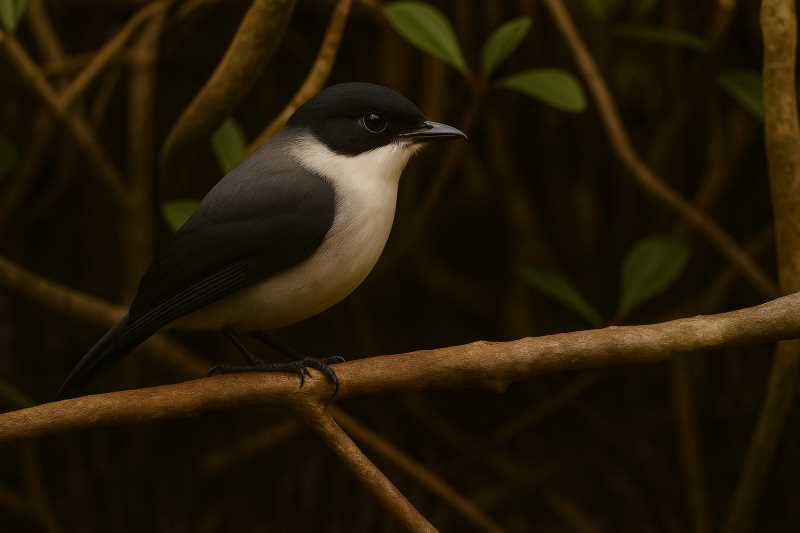
The Mangrove Robin is a medium-sized songbird, measuring around 16–18 cm in length. It has a rather plain appearance, especially when compared to Australia’s more flamboyant robins. The plumage is predominantly slate-grey, with a paler underside and slightly darker wings and tail. This understated coloration provides excellent camouflage against the shadowy and complex backdrop of mangrove roots and muddy estuarine soils.
Sexual dimorphism is subtle, but males may be slightly darker and more robust. Both sexes have a short, sharp bill adapted for snatching insects from bark and mudflats, and dark eyes that blend well with their plumage. Their song is a soft, sweet series of high-pitched whistles—often the first clue that a bird is nearby.
Distribution and Habitat
The Mangrove Robin is a habitat specialist found almost exclusively in mangrove forests along the northern coastlines of Australia, New Guinea, and some nearby islands. In Australia, its range includes the mangroves of northern Queensland, the Northern Territory, and the Kimberley region of Western Australia.
Its strict reliance on mangroves—especially mature stands of Avicennia and Rhizophora—means that it is rarely seen more than a few meters away from tidal zones. These birds are non-migratory and highly territorial, remaining in their preferred patches year-round.
Behaviour and Ecology
Mangrove Robins are insectivorous, feeding primarily on beetles, spiders, ants, and other invertebrates found in mud, leaf litter, and crevices in bark. They often forage low to the ground or among aerial roots, using short hops and quick darting movements to locate prey.
They are usually seen singly or in pairs, especially during the breeding season, which typically spans from August to March. Nests are constructed in tree hollows or forks, often well concealed among mangrove foliage. The female lays 2–3 eggs, and both parents share in feeding the young.
One remarkable trait of Mangrove Robins is their fidelity to territories and nesting sites. Studies suggest they maintain year-round territories, defending them through vocal displays and occasional chasing of intruders.
Conservation Status and Threats
The Mangrove Robin is currently listed as Least Concern by the IUCN, primarily due to its broad overall range. However, in Australia, its habitat is increasingly under threat from coastal development, mangrove clearing, pollution, and rising sea levels linked to climate change.
Because this species is so closely tied to mangrove ecosystems, any disturbance to these forests can have a disproportionate effect on its survival. For instance, clearing of mangroves for tourism infrastructure or aquaculture operations reduces available nesting and foraging habitat.
Additionally, climate-induced sea-level rise poses a significant long-term threat. As intertidal zones become inundated more frequently and for longer periods, mangrove forest composition and structure could shift, potentially rendering current habitats unsuitable for the Mangrove Robin.
Conservation of this bird therefore depends on preserving intact mangrove ecosystems, implementing buffer zones, restricting development in sensitive areas, and promoting community-based conservation programs in coastal regions.
Importance in Ecosystem
Though inconspicuous, the Mangrove Robin plays an important ecological role in controlling insect populations in mangrove environments. By foraging extensively among the roots and leaf litter, it contributes to the health and balance of the ecosystem. Its presence also serves as a useful bioindicator: healthy populations of Mangrove Robins often signal a well-functioning mangrove forest.
For birdwatchers and eco-tourists, this robin offers a chance to observe a unique species in a biologically rich but often underappreciated habitat. Patience and quiet observation can reward those who seek this elusive guardian of the tide.
Conclusion
The Mangrove Robin may not dazzle with bright colours or dramatic displays, but it represents the quiet strength and resilience of one of Australia’s most critical habitats. As guardians of the mangroves, these birds deserve greater recognition and protection. Their survival is intertwined with that of the forests they inhabit, reminding us of the profound connection between species and the ecosystems they call home.
Related posts