Introduction
Gray’s Bald-faced Saki, scientifically known as Pithecia irrorata, is a distinctive primate species belonging to the Pitheciidae family. These New World monkeys are primarily found in the dense forests of South America. Known for their striking appearance, Gray’s Bald-faced Saki is a subject of intrigue for primatologists and wildlife enthusiasts alike. This article explores various aspects of the species, including its physical characteristics, habitat, behavior, and conservation status.
Physical Description
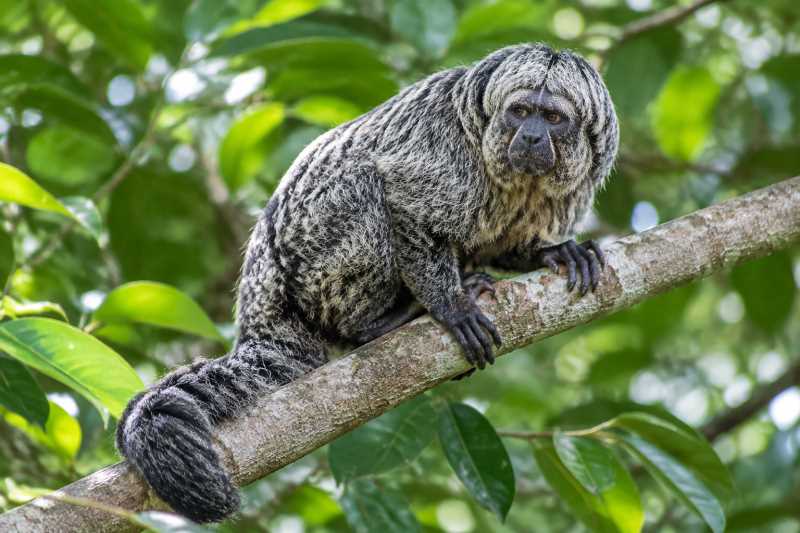
Gray’s Bald-faced Saki is renowned for its unique and striking appearance. Measuring approximately 30 to 40 centimeters in body length, these primates exhibit a bushy tail that can extend up to 50 centimeters, aiding in balance and agility. The species is sexually dimorphic, with males typically larger and more robust than females.
The most distinctive feature of Gray’s Bald-faced Saki is its bald, pale face, which starkly contrasts the dark, dense fur covering the rest of its body. The face is almost human-like, with large expressive eyes and a pronounced jawline. Their fur is typically a mixture of gray, black, and brown, providing excellent camouflage within their forested habitats.
Range and Habitat
Gray’s Bald-faced Saki is primarily found in the tropical and subtropical forests of the Amazon Basin. Their range extends across several South American countries, including Brazil, Peru, and Bolivia. These primates thrive in dense, undisturbed forests, where they can navigate the treetops using their agile limbs and long tails.
These monkeys prefer the upper canopy of the forest, rarely descending to the lower levels. This arboreal lifestyle helps them avoid ground-dwelling predators and allows them to exploit food resources high in the trees. The dense foliage provides both shelter and sustenance, making these forests ideal habitats for Gray’s Bald-faced Saki.
Behavior and Diet
Gray’s Bald-faced Saki exhibits fascinating social behaviors. They are typically found in small family groups consisting of a monogamous pair and their offspring. These groups are territorial, often defending their home range from other saki groups. Communication within the group is facilitated through a series of vocalizations, body postures, and facial expressions.
The diet of Gray’s Bald-faced Saki is primarily frugivorous, with fruits making up the bulk of their intake. However, they are also known to consume seeds, leaves, and insects, making them omnivorous. Their strong jaws and teeth are well-adapted to cracking hard nuts and seeds, a crucial skill for survival in the Amazonian forests.
Identification Tips (field recognition cues)
Identifying Gray’s Bald-faced Saki in the wild requires attention to several key features:
- Facial Appearance: The bald, pale face is the most obvious distinguishing feature.
- Size and Build: Look for a medium-sized monkey with a robust build and long, bushy tail.
- Fur Color: Their fur is typically a mix of gray, black, and brown, providing camouflage.
- Habitat: They are usually found in the upper canopy of dense forests.
Conservation Status (with threats and protections)
Gray’s Bald-faced Saki is currently classified as Near Threatened by the International Union for Conservation of Nature (IUCN). The primary threats to their survival include habitat destruction due to deforestation, illegal wildlife trade, and hunting.
Efforts to protect these primates include the establishment of protected areas within their range and initiatives to curb illegal logging and hunting. Conservation organizations are also working to raise awareness about the species and its ecological importance, aiming to secure a future for Gray’s Bald-faced Saki.
Frequently Asked Questions
What is the primary diet of Gray’s Bald-faced Saki?
Gray’s Bald-faced Saki primarily feeds on fruits, but they also consume seeds, leaves, and insects. Their strong jaws allow them to crack open hard nuts and seeds.
Where can Gray’s Bald-faced Saki be found?
These primates are found in the Amazon Basin, particularly in the forests of Brazil, Peru, and Bolivia, thriving in dense, undisturbed rainforest canopies.
How does Gray’s Bald-faced Saki communicate?
Communication within their groups is achieved through vocalizations, body postures, and facial expressions, which help maintain social bonds and defend territory.
What are the main threats to Gray’s Bald-faced Saki?
The primary threats include habitat destruction due to deforestation, illegal wildlife trade, and hunting. Conservation efforts focus on habitat protection and legal enforcement.
How can Gray’s Bald-faced Saki be identified in the wild?
Look for a medium-sized monkey with a bald, pale face, robust build, long bushy tail, and mixed gray, black, and brown fur, typically residing in the upper forest canopy.
Related posts