The Enigmatic Capped White-eye: A Closer Look at Zosterops fuscicapilla
The avian world is replete with fascinating species, each contributing uniquely to the rich tapestry of global biodiversity. Among these, the Capped White-eye (Zosterops fuscicapilla) stands out with its distinctive features and intriguing behaviors. This article delves into the habitat, characteristics, behaviors, and conservation status of this enchanting bird species, providing an insightful overview for ornithologists and bird enthusiasts alike.
Habitat and Distribution
The Capped White-eye is primarily found in the lower montane and tropical forests of New Guinea, an island known for its incredible avian diversity. These birds thrive in forest edges and clearings, often venturing into gardens and secondary growths. The dense foliage of these habitats provides ample food resources and nesting sites, making them ideal for the Capped White-eye’s survival.
New Guinea, part of the Australasian realm, is often referred to as the ‘land of birds’ due to its rich avifauna, and the Capped White-eye is a notable member of this community. Their range is predominantly within the central and eastern parts of the island, where they can be observed flitting through the canopy in small, sociable flocks.
Physical Characteristics
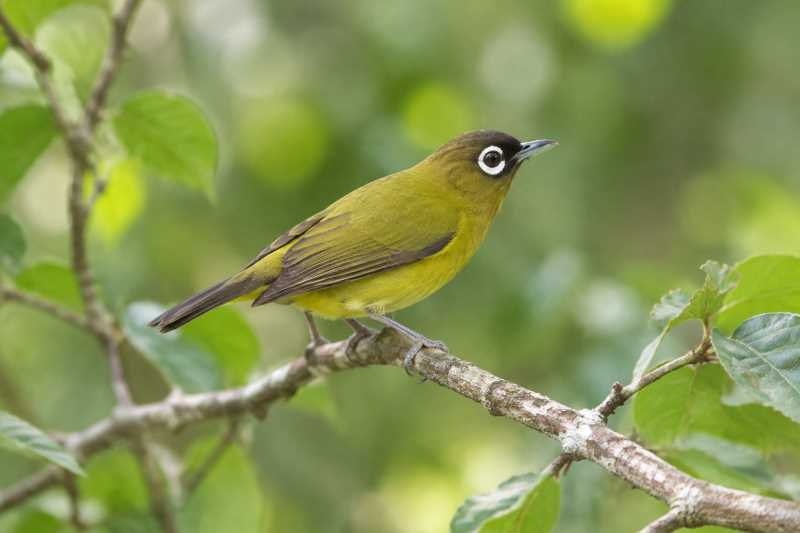
Zosterops fuscicapilla is easily recognizable by its olive-green plumage and striking white eye-ring, a characteristic trait shared by many species in the Zosteropidae family. The ‘capped’ aspect of its common name is derived from the darker coloration on the crown of its head, which contrasts with its otherwise bright and vibrant body.
These birds are small, typically measuring about 11-12 cm in length, with a slender body that aids in their agile flight through dense forest canopies. Their eyes are a dull brown, complementing their subtle yet charming appearance. The bill is short and slightly curved, adapted for their insectivorous and frugivorous diet.
Behavior and Diet
Capped White-eyes are highly social creatures, often observed in flocks that can include other species of white-eyes. This social structure is advantageous for foraging and provides safety in numbers from potential predators. Their diet primarily consists of insects and fruits, which they forage from the forest canopy, using their agile flight and keen eyesight to spot food.
The foraging behavior of Zosterops fuscicapilla is particularly interesting. They are known to employ a strategy called ‘gleaning,’ where they pick insects off leaves and branches while perched or during short flights. This method allows them to effectively exploit the diverse array of arthropods available in their habitat.
Breeding and Nesting
The breeding habits of the Capped White-eye are fascinating, albeit not extensively documented. They construct small, cup-shaped nests in the forks of tree branches, using fine grass, leaves, and spider webs to bind the structure together. Both males and females participate in nest building and caring for the young, reflecting the cooperative nature of their species.
Breeding season varies slightly depending on environmental conditions, but it generally aligns with periods of abundant food availability. The female typically lays two to three eggs, which are incubated for about 11-13 days. The fledglings are altricial, requiring attentive care and feeding from both parents until they are ready to venture out on their own.
Conservation Status
The IUCN Red List currently categorizes the Capped White-eye as a species of Least Concern. However, like many forest-dependent species, they are susceptible to habitat loss due to deforestation and land conversion for agriculture. Conservation efforts in New Guinea focus on preserving large tracts of forest and maintaining biodiversity through sustainable practices.
Protecting the Capped White-eye involves not only safeguarding its habitat but also supporting research and monitoring programs to better understand its ecology and population dynamics. This approach helps ensure that conservation strategies are informed and effective.
Conclusion
The Capped White-eye is a small but significant component of New Guinea’s avian diversity. Its vibrant appearance, social behavior, and ecological role make it a captivating subject for study and appreciation. As we continue to explore and understand more about Zosterops fuscicapilla, it remains essential to advocate for conservation efforts that protect its natural habitat and ensure the survival of this delightful species for generations to come.
In conclusion, the Capped White-eye is not only an emblem of New Guinea’s rich biodiversity but also a reminder of the intricate connections within ecosystems that require our understanding and protection. By promoting awareness and supporting conservation initiatives, we can contribute to the preservation of this enchanting bird and the vibrant world it inhabits.
Related posts