The Mottled Berryhunter: A Glimpse into the Enigmatic Avian World
The Mottled Berryhunter (Rhagologus leucostigma) is one of the lesser-known but fascinating species of birds endemic to the dense montane forests of New Guinea. Despite its elusive nature, this avian species captivates ornithologists and bird watchers alike due to its unique characteristics and the mysteries surrounding its ecology and behavior. This article delves into the intriguing world of the Mottled Berryhunter, shedding light on its habitat, physical characteristics, behavior, and conservation status.
Habitat and Distribution
The Mottled Berryhunter thrives in the lush, montane forests of New Guinea, primarily inhabiting altitudes ranging from 1,200 to 2,400 meters. These forests, characterized by their rich biodiversity and complex ecosystems, provide the perfect sanctuary for this bird. The dense canopy and abundant foliage offer both a food source and protection from predators, allowing the Mottled Berryhunter to thrive in relative obscurity.
The geographical distribution of the Mottled Berryhunter is limited to the central and eastern parts of New Guinea. This restricted range makes it a subject of interest for biogeographers studying the evolution and adaptation of species within isolated ecosystems.
Physical Characteristics
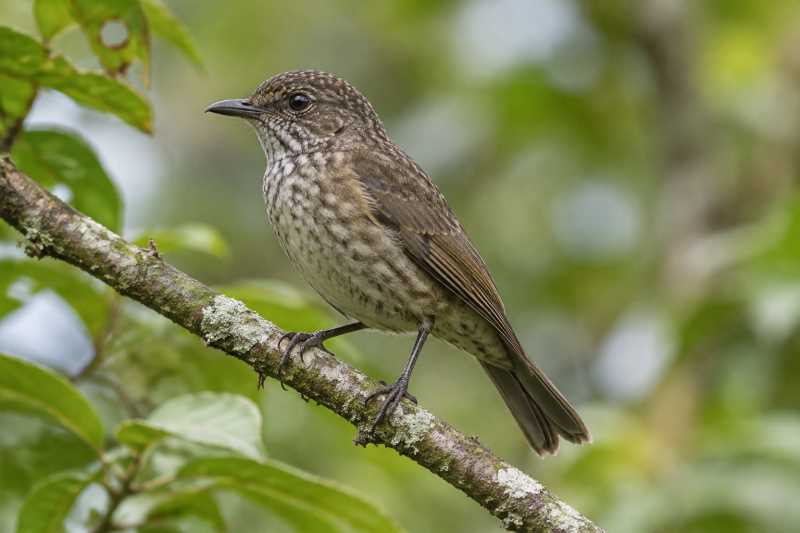
The Mottled Berryhunter is a medium-sized bird, measuring approximately 20 cm in length. Its plumage displays a remarkable blend of colors, providing effective camouflage against the forest backdrop. The upperparts are predominantly olive-green, while the underparts exhibit a mottled pattern of gray and white, hence the name ‘Mottled’ Berryhunter. The bird’s eyes are encircled by a striking white ring, adding to its distinctive appearance.
Despite its relatively plain coloration, the Mottled Berryhunter possesses an elegance that is appreciated by those fortunate enough to observe it in the wild. The intricate patterns on its feathers play a crucial role in its survival, helping it to remain inconspicuous amidst the dense forest foliage.
Feeding Behavior and Diet
As its name suggests, the Mottled Berryhunter primarily feeds on berries and other small fruits. It is an adept forager, using its keen eyesight to locate food among the forest’s dense vegetation. The bird’s diet is not exclusively frugivorous; it also consumes insects and small invertebrates, which supplement its nutritional intake.
The feeding behavior of the Mottled Berryhunter is characterized by its methodical approach. It often forages alone or in pairs, moving quietly through the underbrush while meticulously picking fruits and insects from branches and leaves. This cautious foraging strategy not only helps it avoid predators but also minimizes competition for food resources.
Reproduction and Lifespan
The breeding behavior of the Mottled Berryhunter remains largely undocumented, a testament to its elusive nature. However, it is believed that like many other bird species in New Guinea, it follows a monogamous breeding system. The nesting season likely coincides with the period of abundant food availability, ensuring that chicks have sufficient resources for growth and development.
Due to the scarcity of detailed studies, the lifespan and reproductive success of the Mottled Berryhunter remain speculative. Further research is needed to gain a comprehensive understanding of its life history traits and reproductive strategies.
Conservation Status and Threats
The Mottled Berryhunter is currently classified as Least Concern by the International Union for Conservation of Nature (IUCN). However, its restricted range and the ongoing threat of habitat loss due to logging and agricultural expansion pose significant risks to its population.
Conservation efforts aimed at preserving the montane forests of New Guinea are crucial for the survival of this species. Protecting its habitat not only benefits the Mottled Berryhunter but also supports the rich biodiversity that these forests harbor. Community-based conservation initiatives and sustainable land-use practices are essential to mitigate the impacts of human activities on this unique ecosystem.
Conclusion
The Mottled Berryhunter, with its enigmatic presence and captivating behavior, is a testament to the wonders of New Guinea’s avian diversity. While much about this bird remains a mystery, its existence highlights the importance of conserving the world’s most biodiverse and ecologically significant habitats. By understanding and protecting species like the Mottled Berryhunter, we ensure that future generations can appreciate the natural beauty and complexity of our planet’s ecosystems.
Related posts