Willard’s Sooty Boubou: An Elusive Jewel of the African Forests
The avian world is replete with fascinating species, each with its own unique charm and ecological significance. Among these is the enigmatic Willard’s Sooty Boubou (Laniarius willardi), a bird that has captivated ornithologists and birdwatchers alike since its relatively recent discovery. This article delves into the world of this elusive species, exploring its habitat, behaviors, and the conservation challenges it faces.
Discovery and Classification
Willard’s Sooty Boubou was first described in 2010 by a team of researchers led by ornithologist Jason D. Weckstein. The bird was named in honor of esteemed ornithologist David E. Willard, whose contributions to the field have been invaluable. The discovery was significant as it highlighted the continuous potential for new findings in biodiversity, even in well-studied regions like Africa.
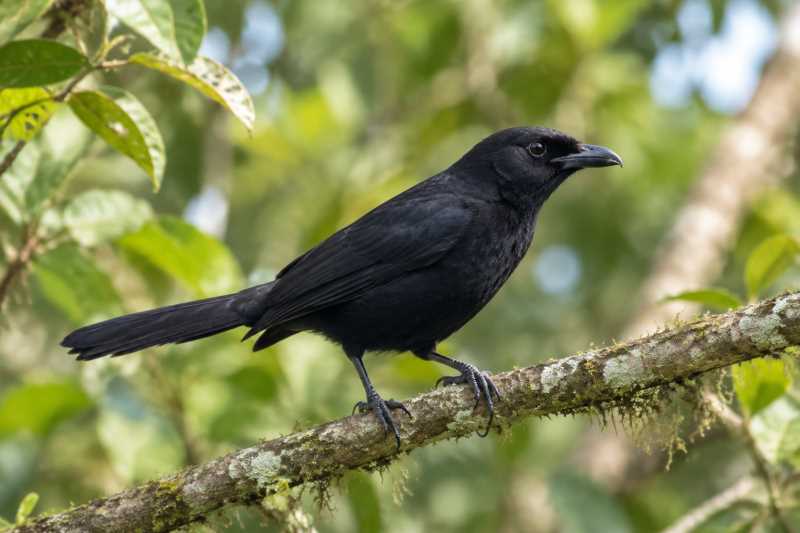
The species is closely related to other members of the Laniarius genus, which are known for their striking calls and vibrant plumage. However, Willard’s Sooty Boubou stands out due to its predominantly sooty black coloring, a characteristic that gives it its name.
Habitat and Distribution
Willard’s Sooty Boubou is endemic to the montane forests of the Albertine Rift, a region that extends across several countries, including Uganda, Rwanda, and the Democratic Republic of Congo. These dense, high-altitude forests provide the perfect backdrop for this secretive bird, which thrives in the understory where it can navigate the terrain with ease.
The Albertine Rift is known for its rich biodiversity and is considered one of Africa’s most important eco-regions. However, it is also under constant threat from human activities, which poses a significant risk to the species that inhabit it, including Willard’s Sooty Boubou.
Behavior and Ecology
The behavior of Willard’s Sooty Boubou aligns with that of other bushshrikes. It is a shy and elusive bird, often heard rather than seen. Its call is a series of melodious whistles that can be quite distinctive once learned. These vocalizations play a crucial role in communication, especially during the breeding season.
Like other members of its genus, Willard’s Sooty Boubou is an insectivore. It forages in the understory, deftly picking off insects from leaves and branches. This feeding behavior not only supports its nutritional needs but also aids in controlling insect populations, showcasing the bird’s ecological importance.
Conservation Status and Challenges
Currently, Willard’s Sooty Boubou is classified as "Least Concern" by the International Union for Conservation of Nature (IUCN). However, this status does not mean the species is free from threats. Deforestation, driven by agriculture, logging, and human settlement, continues to encroach upon its habitat. Climate change also poses a long-term threat, potentially altering the delicate balance of its montane forest home.
Conservation efforts are crucial to ensuring the survival of Willard’s Sooty Boubou. Protecting its natural habitat through the establishment of protected areas and sustainable land-use practices is essential. Furthermore, raising awareness about the bird and its habitat can foster community involvement in conservation initiatives.
The Role of Research and Citizen Science
Research plays a pivotal role in understanding and conserving Willard’s Sooty Boubou. Continued studies on its behavior, ecology, and population dynamics are necessary to inform conservation strategies. Additionally, citizen science has emerged as a valuable tool in this regard. Birdwatchers and local communities can contribute to monitoring efforts, providing crucial data that can aid researchers and conservationists.
Conclusion
Willard’s Sooty Boubou is a testament to the wonders of avian biodiversity. Its discovery underscores the importance of ongoing exploration and research in uncovering the Earth’s hidden treasures. As we strive to protect our planet’s natural heritage, the story of this small, soot-colored bird serves as a reminder of the delicate balance that sustains life in the world’s most biodiverse regions.
Through concerted conservation efforts and a commitment to sustainable practices, we can ensure that Willard’s Sooty Boubou, along with countless other species, continues to thrive in the forests of the Albertine Rift, enriching our understanding of the natural world.
Related posts