The Graceful Honeyeater: A Jewel of Australian Avifauna
The Graceful Honeyeater (Microptilotis gracilis), a small and nimble bird found in the lush landscapes of northern Australia and Papua New Guinea, is a remarkable representative of the Meliphagidae family. Known for its agile movements and delicate appearance, this species plays a significant role in the ecosystems it inhabits, contributing to both pollination and the general health of its natural environment.
Habitat and Distribution
The Graceful Honeyeater is predominantly found in the tropical and subtropical forests of northern Queensland, Australia, and extends its range through the forested areas of Papua New Guinea. These birds thrive in a variety of forested environments, including lowland rainforests, mangroves, and occasionally in coastal areas. They are well-adapted to life in these dense, humid regions, where they can often be observed flitting energetically through the canopy.
Physical Characteristics
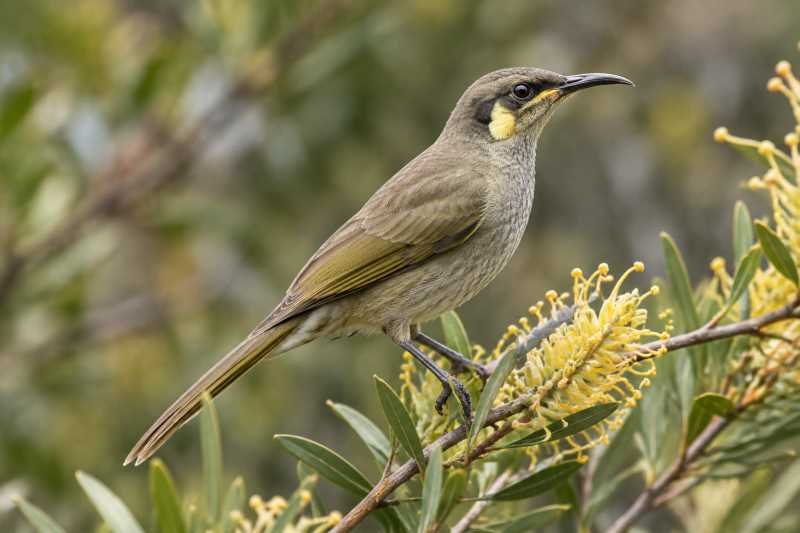
As its name suggests, the Graceful Honeyeater is an exemplar of elegance and poise. Measuring approximately 15 centimeters in length, it is characterized by its slender body and relatively long, curved bill. The plumage is predominantly olive-green, with a subtle yellow wash on the underparts, which provides excellent camouflage among the foliage. A distinguishing feature is the bird’s soft, white throat and slight black markings around the eyes, giving it a gentle yet alert expression.
Behavior and Diet
The Graceful Honeyeater is a diurnal bird, most active during the early morning and late afternoon. It is primarily a nectarivore, feeding on the nectar of various flowering plants, which it accesses using its specialized brush-tipped tongue. This feeding behavior not only sustains the bird but also facilitates pollination, making the Graceful Honeyeater an essential component of its ecosystem. In addition to nectar, it supplements its diet with small insects and spiders, providing a balanced intake of nutrients.
Socially, these birds are known for their relatively solitary nature, although they can sometimes be seen in pairs or small family groups, especially during the breeding season. They are not particularly aggressive, but will defend their feeding territories from other honeyeaters and nectar-feeding competitors.
Vocalizations
The calls of the Graceful Honeyeater are a distinctive feature, adding to the soundscape of its forested habitats. The vocalizations are typically high-pitched and include a series of tinkling notes that can be quite melodious. These calls serve various functions, including territory defense and mate attraction. The Graceful Honeyeater’s song is often heard throughout its range, especially during the breeding season when males are most vocal.
Breeding and Lifespan
Breeding occurs mainly from August to January, coinciding with the availability of abundant food resources. The nest is a delicate cup, expertly woven from grasses and spider webs, and is typically placed in a dense shrub or low tree. The female lays one to two eggs, which she incubates for about two weeks. Both parents participate in feeding the hatchlings, providing a diet rich in nectar and insects.
The lifespan of the Graceful Honeyeater in the wild is not well-documented, but like many small birds, it is likely to range from several years to a decade, depending on environmental conditions and predation pressures.
Conservation Status
Currently, the Graceful Honeyeater is classified as a species of Least Concern by the International Union for Conservation of Nature (IUCN). While its populations are stable, ongoing threats such as habitat destruction and climate change could potentially impact its numbers in the future. Conservation efforts focused on habitat protection and restoration are essential to ensuring the continued survival of this species.
Importance in the Ecosystem
Beyond its aesthetic and acoustic contributions, the Graceful Honeyeater plays a crucial ecological role. As a pollinator, it aids in the reproduction of various plant species, contributing to the health and diversity of its habitat. This ecological service is vital for the maintenance of tropical forest ecosystems, which are among the most biodiverse on the planet.
Conclusion
The Graceful Honeyeater is a small bird with a big impact. Its delicate beauty and significant ecological role underscore the importance of conserving its natural habitats. As we continue to learn more about this remarkable species, it serves as a reminder of the intricate connections that sustain life on Earth and the importance of preserving our natural heritage for future generations.
Related posts