The Enigmatic Black-and-white Tody-Flycatcher: A Closer Look at Poecilotriccus capitalis
The avian world is rich with diversity, offering a plethora of species that captivate ornithologists and bird enthusiasts alike. Among these intriguing species is the Black-and-white Tody-Flycatcher, or Poecilotriccus capitalis, a small bird that stands out due to its striking plumage and unique behaviors. This article delves into the fascinating world of the Black-and-white Tody-Flycatcher, exploring its habitat, behavior, and the challenges it faces in the wild.
Taxonomy and Identification
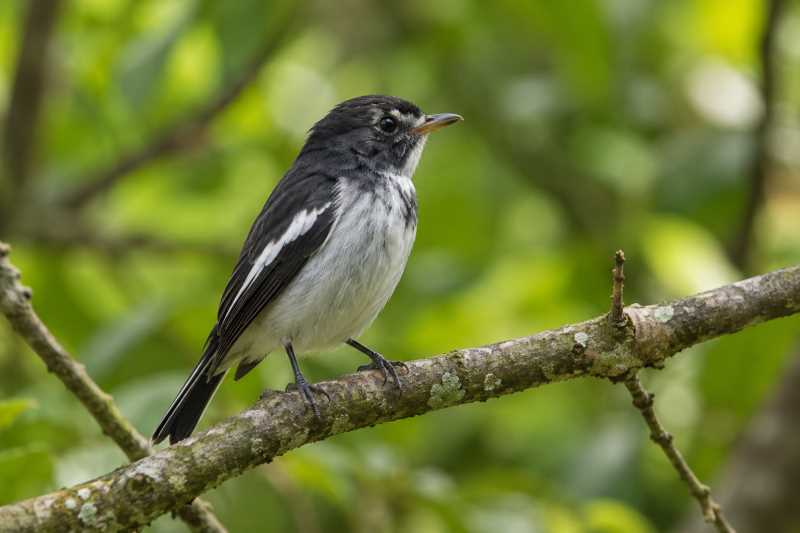
The Black-and-white Tody-Flycatcher belongs to the Tyrannidae family, which is the largest family of birds, comprising over 400 species known as tyrant flycatchers. Its scientific name, Poecilotriccus capitalis, reflects its distinct appearance and taxonomic classification. The bird is characterized by its contrasting black-and-white plumage, with a predominantly white body accented by a black cap, wings, and tail. This stark coloration not only makes it an attractive species but also aids in its identification in the wild.
Measuring approximately 9 to 10 centimeters in length, this diminutive bird possesses a compact body, short wings, and a relatively long tail. Its small size and distinctive coloration make it a delight to observe, often attracting the attention of birdwatchers and researchers.
Habitat and Distribution
The Black-and-white Tody-Flycatcher is native to South America, with its range predominantly covering parts of the Amazon Basin. Countries such as Brazil, Colombia, Peru, and Ecuador are home to this species, where it inhabits tropical and subtropical moist lowland forests. The bird is often found in the undergrowth or mid-levels of the forest, where it can forage for insects and other arthropods.
This species prefers dense, humid environments, thriving in areas with rich vegetation that provide ample cover and feeding opportunities. The preservation of these habitats is crucial for the survival of the Black-and-white Tody-Flycatcher, as deforestation and habitat destruction pose significant threats to its population.
Behavior and Diet
The Black-and-white Tody-Flycatcher is an insectivore, primarily feeding on small insects and spiders. Its feeding strategy involves perching quietly before darting swiftly to capture its prey in mid-air or plucking it from foliage. This active foraging behavior is characteristic of the Tyrannidae family, showcasing the bird’s agility and keen eyesight.
Socially, the Black-and-white Tody-Flycatcher is often observed in pairs or small family groups. It is known for its vocalizations, which are a series of high-pitched calls used for communication between mates and signaling territory boundaries. These calls are an essential aspect of its behavior, serving to reinforce pair bonds and deter intruders.
Reproduction and Lifecycle
Breeding for the Black-and-white Tody-Flycatcher typically takes place during the rainy season when food resources are abundant. The species practices monogamy, with pairs forming long-term bonds. Nesting occurs in low shrubs or small trees, where the female constructs a cup-shaped nest using plant fibers, leaves, and spider webs.
The female lays a clutch of two to three eggs, which she incubates for approximately two weeks. Both parents are involved in feeding and caring for the chicks, which fledge about two weeks after hatching. The high level of parental care ensures a better survival rate for the offspring, despite the challenges posed by predators and environmental factors.
Conservation Status and Threats
Currently, the Black-and-white Tody-Flycatcher is classified as Least Concern by the International Union for Conservation of Nature (IUCN). However, like many species that inhabit the Amazon rainforest, it faces threats from habitat destruction due to logging, agriculture, and urban development. The ongoing deforestation in the Amazon poses a significant risk to its habitat, potentially leading to population declines in the future.
Conservation efforts are crucial to ensure the long-term survival of the Black-and-white Tody-Flycatcher. Protecting its habitat through sustainable forestry practices, creating protected areas, and raising awareness about the importance of biodiversity are vital steps in preserving this species.
Conclusion
The Black-and-white Tody-Flycatcher, with its striking appearance and fascinating behavior, is a testament to the rich biodiversity of the Amazon rainforest. Understanding and appreciating such species is essential for fostering a deeper connection with nature and promoting conservation efforts. By safeguarding the habitats of birds like the Black-and-white Tody-Flycatcher, we contribute to the preservation of the planet’s ecological balance and the myriad of life forms that depend on it.
In conclusion, while the Black-and-white Tody-Flycatcher may be small in size, its role in the ecosystem and its contribution to biodiversity are immense. Continued research and conservation efforts will be key to ensuring that future generations can enjoy the beauty and wonder of this remarkable bird.
Related posts