The Scale-crested Pygmy Tyrant: A Jewel of the Neotropics
The Scale-crested Pygmy Tyrant (Lophotriccus pileatus) is a captivating yet elusive bird that inhabits the rich biodiversity of the Neotropical forests. This diminutive avian species, belonging to the family Tyrannidae, is a testament to nature’s ability to blend functionality with aesthetics. Despite its small size, the Scale-crested Pygmy Tyrant plays a significant role in its ecosystem and offers fascinating insights into avian life.
Taxonomy and Description
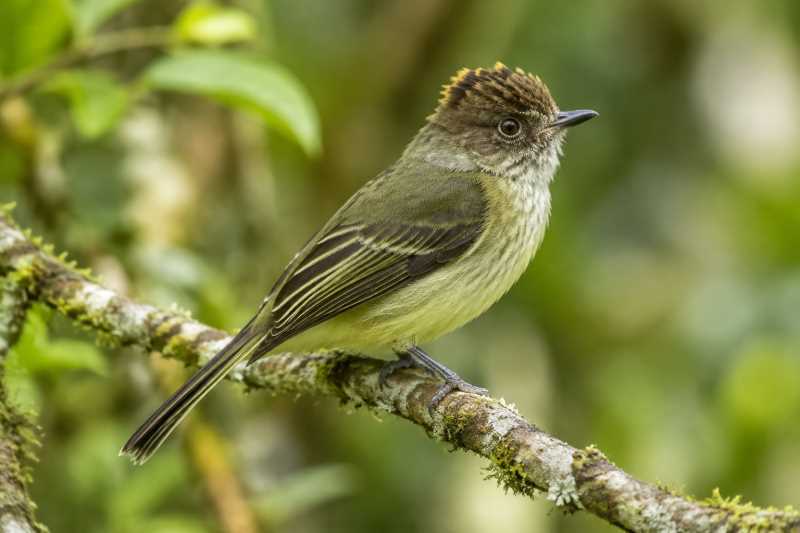
Lophotriccus pileatus was first described in the mid-19th century, and it has since intrigued ornithologists and bird watchers alike. This bird is characterized by its small stature, measuring approximately 9 cm in length, making it one of the smallest members of the tyrant flycatcher family. The Scale-crested Pygmy Tyrant is named for its distinctive crest, which comprises scale-like feathers that can be raised or lowered depending on its mood or activity.
Its plumage is predominantly olive-green, which provides excellent camouflage against the foliage of its forest habitat. The bird’s underparts are lighter, with a subtle yellowish tint. Its most striking feature, however, is the scale-like crest on its head, which is often raised as a display mechanism, possibly to deter predators or to attract mates.
Habitat and Distribution
The Scale-crested Pygmy Tyrant is typically found in the subtropical and tropical moist lowland forests of Central and South America. Its range extends from Honduras and Nicaragua, through Costa Rica and Panama, and down into western Colombia and Ecuador. The bird prefers humid forest environments, often inhabiting the understory and mid-story levels where it can forage in relative safety.
The preservation of these forest habitats is crucial for the survival of the Scale-crested Pygmy Tyrant, as deforestation and habitat fragmentation pose significant threats to its populations. Conservation efforts are necessary to protect the dense, humid forests that this species calls home.
Behavior and Ecology
The Scale-crested Pygmy Tyrant is an insectivore, feeding primarily on small insects and arthropods. Its foraging behavior is characterized by short, agile flights from perch to perch as it searches for prey among the foliage. Despite their small size, these birds exhibit remarkable agility, darting through the underbrush with precision.
This species is typically solitary or found in pairs, although it can sometimes be seen joining mixed-species feeding flocks. Such flocks provide safety in numbers and increase foraging efficiency, as birds of different species work together to flush out prey.
Breeding behavior of the Scale-crested Pygmy Tyrant is not extensively documented, but it is believed to follow general patterns observed in other members of the Tyrannidae family. Nests are likely constructed in concealed locations within dense vegetation, providing protection from predators. Both parents are typically involved in the care of their young, from incubation to feeding.
Vocalizations and Communication
Vocal communication plays a crucial role in the life of the Scale-crested Pygmy Tyrant. Its calls are a series of high-pitched notes, sometimes described as "tick-tick-tick" or similar variations. These calls serve multiple purposes, including mate attraction, territory defense, and communication between parents and offspring.
The bird’s song is relatively simple compared to other songbirds, but its clarity and persistence make it a recognizable aspect of its presence in the forest. Vocalizations are especially important in dense forest environments, where visual contact between individuals can be limited.
Conservation Status and Challenges
Currently, the Scale-crested Pygmy Tyrant is listed as of "Least Concern" by the International Union for Conservation of Nature (IUCN). However, this does not mean the species is free from threats. Habitat destruction due to agriculture, logging, and urbanization remains a significant concern across its range.
Conservation strategies for this species include habitat protection and restoration. Efforts to create and maintain protected areas, alongside sustainable forestry practices, are vital for ensuring the continued survival of the Scale-crested Pygmy Tyrant and countless other species that share its habitat.
Conclusion
The Scale-crested Pygmy Tyrant is a fascinating example of the rich biodiversity found within the Neotropical forests. Its small size and elusive nature make it a challenging yet rewarding subject for study. Protecting this species requires concerted conservation efforts focused on preserving its natural habitat. As we continue to learn more about the Scale-crested Pygmy Tyrant, we are reminded of the intricate connections within ecosystems and the importance of maintaining biodiversity for future generations.
By safeguarding the environments these birds inhabit, we not only preserve a single species but also protect the myriad forms of life that contribute to the vibrancy and health of tropical ecosystems.
Related posts