The Marañón Crescentchest: A Jewel of the Andes
Nestled in the rugged landscapes of northwestern Peru, the Marañón Crescentchest (Melanopareia maranonica) is a bird of unique beauty and ecological significance. This elusive species, belonging to the family Melanopareiidae, holds a special place in the rich tapestry of South American avifauna. With its distinct crescent-shaped chest markings and vibrant plumage, the Marañón Crescentchest is not only a subject of fascination for ornithologists but also a symbol of the biodiversity found in the Andean region.
Habitat and Distribution
The Marañón Crescentchest is predominantly found in the upper Marañón Valley, a region characterized by its diverse topography and climate. This bird thrives in dry, deciduous forests and scrublands, areas that are often interspersed with patches of dense vegetation. The altitudinal range of its habitat varies from 600 to 2,200 meters above sea level, which provides a unique set of ecological niches for the bird to exploit.
The Marañón Valley is part of the larger Andean mountain range, which acts as a natural barrier and contributes to the region’s distinct ecological zones. This geographical isolation is a key factor in the evolution of many endemic species, including the Marañón Crescentchest. The bird’s limited distribution makes it particularly vulnerable to habitat destruction and environmental changes.
Physical Characteristics
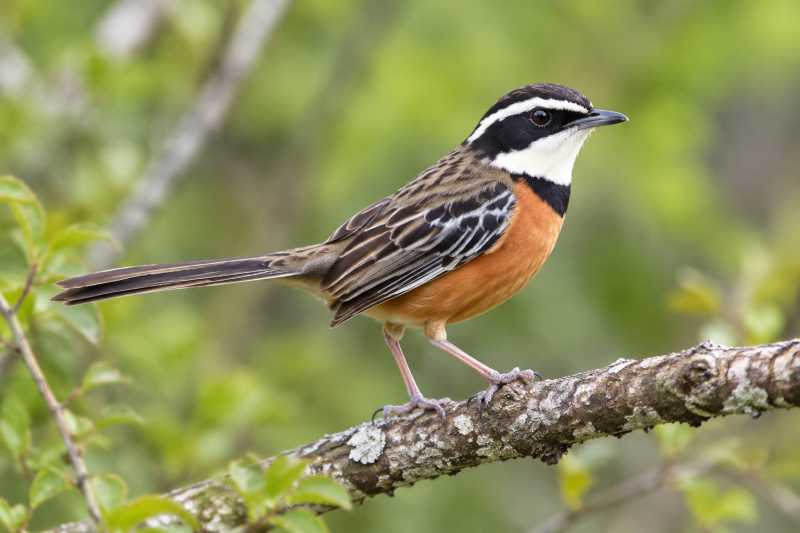
The Marañón Crescentchest is a small bird, measuring approximately 16 centimeters in length. It is easily recognizable by its strikingly patterned plumage. The upper parts are a blend of browns and grays, providing excellent camouflage against the forest floor. The most distinctive feature, however, is the crescent-shaped band of black feathers across its chest, which is bordered by a vibrant yellow or orange hue. This crescent marking not only gives the bird its name but also serves as a visual cue in its social interactions.
The bird’s beak is short and stout, adapted for a diet primarily consisting of insects and other small invertebrates. Its legs are strong, facilitating agile movements through the underbrush as it forages for food.
Behavior and Ecology
Marañón Crescentchests are known for their secretive nature, often remaining hidden in dense vegetation. They are solitary or found in pairs, rarely forming larger groups. This behavior is likely an adaptation to their environment, where stealth and discretion are crucial for avoiding predators and human encroachment.
The bird’s diet is largely insectivorous, with a preference for beetles, caterpillars, and spiders. Foraging typically occurs on the ground where these prey items are abundant. The Marañón Crescentchest is also known to engage in ‘anting’ behavior, where it allows ants to crawl over its body, possibly as a method of removing parasites.
Vocal communication is an important aspect of the Marañón Crescentchest’s behavior. They produce a series of melodious whistles and trills, which are used for mate attraction and territory defense. The complexity of their songs is a subject of study, providing insights into the communication systems of avian species.
Conservation Status
The Marañón Crescentchest is currently classified as Near Threatened by the International Union for Conservation of Nature (IUCN). The primary threat to its survival is habitat loss due to agricultural expansion, logging, and infrastructure development. The conversion of forested areas into farmland and pastureland has significantly reduced the available habitat for this species.
Conservation efforts are underway to protect the remaining pockets of natural habitat in the Marañón Valley. Local and international organizations are working to promote sustainable land-use practices, reforestation, and the establishment of protected areas. Additionally, community involvement is being encouraged to raise awareness about the importance of preserving the region’s unique biodiversity.
Conclusion
The Marañón Crescentchest is more than just a bird; it is a symbol of the delicate balance of ecosystems in the Andean region. Its presence is a testament to the rich biodiversity of this area and highlights the need for continued conservation efforts. By protecting the Marañón Crescentchest and its habitat, we are not only preserving a species but also the intricate web of life that supports countless other organisms.
As research continues, the Marañón Crescentchest will undoubtedly provide further insights into the complexities of avian ecology and the challenges faced by species in our rapidly changing world. It is our responsibility to ensure that future generations have the opportunity to witness the beauty and wonder of this remarkable bird.
Related posts