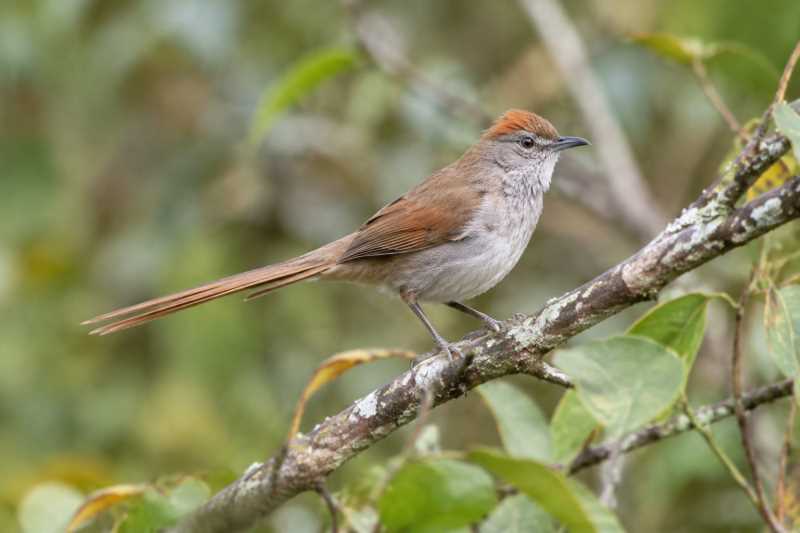
The Pale-breasted Spinetail: An Exploration of Habitat, Behavior, and Conservation
The Pale-breasted Spinetail (Synallaxis albescens) is a small but captivating bird native to South America. It is a part of the vast Furnariidae family, which is renowned for its diversity and adaptability. This article delves into the distinctive characteristics, habitat preferences, and conservation status of this intriguing species.
Physical Characteristics
The Pale-breasted Spinetail is aptly named for its pale underparts that contrast with its more richly colored upperparts. Its plumage varies from greyish-brown to reddish-brown on the back, wings, and tail. The bird measures approximately 15 to 17 centimeters in length and weighs around 10 to 15 grams. Its slender body and long tail aid in navigation through dense vegetation, a skill essential for its survival.
Habitat and Distribution
This spinetail is widely distributed across South America, inhabiting countries such as Argentina, Bolivia, Brazil, Colombia, Paraguay, Peru, Uruguay, and Venezuela. It thrives in a variety of environments ranging from subtropical and tropical regions to dry shrublands and lowland forests. The adaptability of the Pale-breasted Spinetail to different habitats is a testament to its resilience, yet it prefers areas with dense undergrowth and thickets, which offer both food and protection from predators.
Behavior and Diet
The Pale-breasted Spinetail is known for its active and restless behavior. It is often observed flitting through foliage in search of food. Its diet primarily consists of insects and other small invertebrates, which it gleans from leaves and branches. The bird’s foraging technique is characterized by quick, darting movements and an ability to cling to vertical surfaces.
One of the most remarkable aspects of the Pale-breasted Spinetail’s behavior is its vocalizations. It produces a series of harsh, rasping calls that are typical of the Synallaxis genus. These calls play a crucial role in territory establishment and maintenance, as well as in communication between mates.
Reproduction and Nesting
The breeding season of the Pale-breasted Spinetail varies depending on its geographic location, which is common among widely distributed species. Generally, it breeds during the rainy season when food availability is high. The species is monogamous, with pairs forming long-term bonds.
Nesting takes place in a domed structure made from twigs and plant matter, which the birds construct in dense vegetation or thorny bushes. These nests have a side entrance and are well camouflaged to protect against predators. The female typically lays two to three eggs, which both parents incubate. After hatching, the chicks remain in the nest for a few weeks, during which both parents partake in feeding and caring for the young.
Conservation Status
Currently, the Pale-breasted Spinetail is classified as a species of Least Concern by the IUCN Red List. Despite facing threats from habitat destruction and fragmentation, its wide range and adaptability have allowed it to maintain stable population levels. However, ongoing deforestation and land-use changes in parts of its range pose potential risks to its habitat.
Conservation efforts for the Pale-breasted Spinetail should focus on habitat preservation and restoration, particularly in regions where deforestation is rampant. Encouraging sustainable land-use practices and establishing protected areas can help mitigate the impact of human activities on this species’ habitat.
Conclusion
The Pale-breasted Spinetail is a testament to the resilience and adaptability of the Furnariidae family. Its ability to thrive in diverse habitats across South America highlights the importance of preserving these ecosystems. Understanding and appreciating the ecological role of such species can inspire conservation efforts that ensure their survival for future generations. As with many avian species, the Pale-breasted Spinetail is an integral part of the tapestry of biodiversity that enriches our planet.
By fostering a deeper understanding of the Pale-breasted Spinetail and its environment, we can contribute to the broader conservation goals that seek to protect the intricate web of life that sustains us all.
Related posts