Introduction
The Rio Branco Antbird (Cercomacra carbonaria) is a mesmerizing avian species that captivates ornithologists and bird enthusiasts alike. This small yet distinctive bird is endemic to the white-sand forests of Brazil’s Amazon Basin, specifically in the regions surrounding the Rio Branco river. Known for its striking appearance and unique behaviors, the Rio Branco Antbird serves as a symbol of the rich biodiversity found within the Amazon rainforest.
Taxonomy and Classification
The Rio Branco Antbird belongs to the family Thamnophilidae, which comprises over 200 species of antbirds. These birds are known for their association with ant swarms, often following them to feed on insects and other small creatures disturbed by the ants’ movement. The genus Cercomacra, to which this species belongs, is characterized by slender bodies and relatively long tails, distinguishing them from other antbird genera.
Physical Description
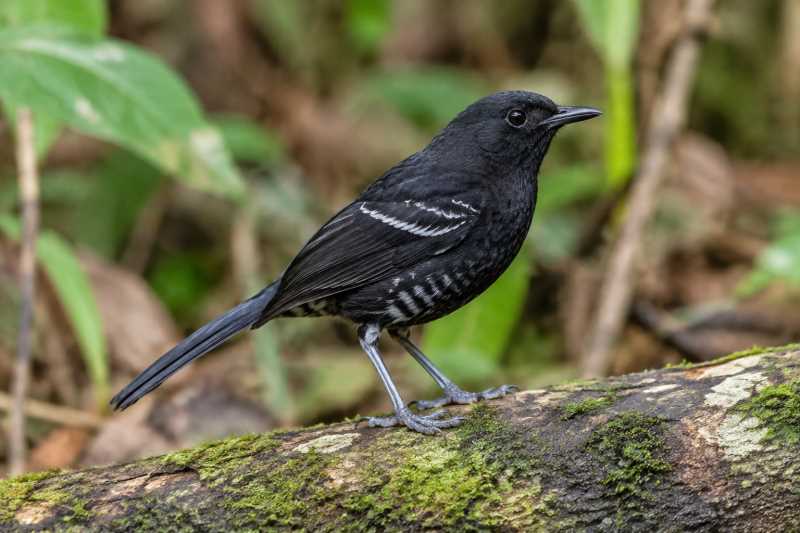
The Rio Branco Antbird is a relatively small bird, measuring approximately 13 to 15 centimeters in length. Males and females exhibit sexual dimorphism, a common feature among antbirds. The male Rio Branco Antbird is particularly striking, with its glossy black plumage, which stands in stark contrast to the dense greenery of its habitat. The female, on the other hand, is less conspicuous, exhibiting a more muted brown coloration, which provides effective camouflage.
Vocalizations and Behavior
Vocal communication plays a vital role in the life of the Rio Branco Antbird. Both males and females are known for their distinctive calls, which are used to establish territory, attract mates, and communicate with each other. The male’s song is a series of clear, melodious whistles, while the female responds with shorter, softer notes. These vocalizations are crucial for maintaining pair bonds and coordinating activities, especially during the breeding season.
The Rio Branco Antbird is an insectivorous species, primarily feeding on arthropods and small invertebrates. They display a unique foraging behavior, often following swarms of army ants to capture prey that is flushed out by the ants’ movement. This behavior not only showcases their adaptability but also highlights the complex ecological interactions within the rainforest.
Habitat and Distribution
The Rio Branco Antbird is endemic to the Amazon Basin, with its range confined to the white-sand forests near the Rio Branco river in northern Brazil. These forests are characterized by nutrient-poor soils, which support a unique assemblage of plant and animal species adapted to these conditions. The antbird’s habitat is highly specialized, relying on the dense undergrowth and the presence of army ant swarms for foraging.
Conservation Status
The International Union for Conservation of Nature (IUCN) currently lists the Rio Branco Antbird as Near Threatened. The primary threat to this species is habitat loss due to deforestation and land conversion for agriculture and cattle ranching. The white-sand forests where they reside are particularly vulnerable, as they are often overlooked in conservation efforts due to their perceived low economic value.
Conservation strategies for the Rio Branco Antbird must prioritize habitat preservation and restoration. Efforts to expand protected areas and implement sustainable land-use practices are crucial to safeguarding this species and the unique ecosystem it inhabits. Additionally, raising awareness about the ecological importance of white-sand forests can help garner support for conservation initiatives.
Research and Monitoring
Ongoing research and monitoring are essential for understanding the ecology and behavior of the Rio Branco Antbird. Field studies focusing on their vocalizations, breeding habits, and interactions with other species provide valuable insights into their role within the ecosystem. Furthermore, tracking population trends and assessing the impacts of environmental changes are vital for informing conservation strategies.
Technological advancements, such as bioacoustic monitoring and satellite imagery, have enhanced researchers’ ability to study these elusive birds in their natural habitat. By combining traditional fieldwork with innovative techniques, scientists can gather comprehensive data to support conservation efforts.
Conclusion
The Rio Branco Antbird is a remarkable species that embodies the intricate beauty and complexity of the Amazon rainforest. As a symbol of biodiversity, its conservation is not only crucial for preserving a single species but also for maintaining the ecological balance of its habitat. Through concerted efforts in research, habitat protection, and public engagement, it is possible to ensure a future where the Rio Branco Antbird continues to thrive in its natural environment.
References
- BirdLife International. (2021). Species factsheet: Cercomacra carbonaria.
- Zimmer, K. J., & Isler, M. L. (2003). Family Thamnophilidae (typical antbirds). In: del Hoyo, J., Elliott, A., & Christie, D. A. (eds.). Handbook of the Birds of the World.
- IUCN Red List of Threatened Species. (2021). Cercomacra carbonaria: The IUCN Red List of Threatened Species.
Acknowledgments
We extend our gratitude to the field researchers and conservationists working tirelessly to study and protect the Rio Branco Antbird. Their dedication and passion are invaluable in the fight to conserve the Amazon’s unique biodiversity.
Related posts