The Enigmatic Whyte’s Barbet: A Lesser-Known Gem of African Avifauna
Whyte’s Barbet (Stactolaema whytii) is a captivating yet relatively obscure species of bird that inhabits the lush landscapes of Central and Southern Africa. With its vibrant plumage and melodious calls, this bird holds a special place in the ecosystem and the hearts of ornithologists and birdwatchers. Despite its allure, Whyte’s Barbet is not as widely known as other members of the Lybiidae family, making it a fascinating subject for those keen on exploring the rich tapestry of African birdlife.
Taxonomy and Classification
Whyte’s Barbet belongs to the order Piciformes, which includes woodpeckers, toucans, and honeyguides. Within this order, it is classified under the family Lybiidae, commonly known as the African barbets. This family is characterized by their stout bodies, large heads, and heavy bills. The genus Stactolaema, to which Whyte’s Barbet belongs, includes several species of barbets that are predominantly found in Africa.
The species was named in honor of Alexander Whyte, a Scottish naturalist who made significant contributions to the study of African wildlife during the late 19th and early 20th centuries. His extensive work in Malawi and surrounding regions helped bring attention to various species, including this distinctive barbet.
Physical Characteristics
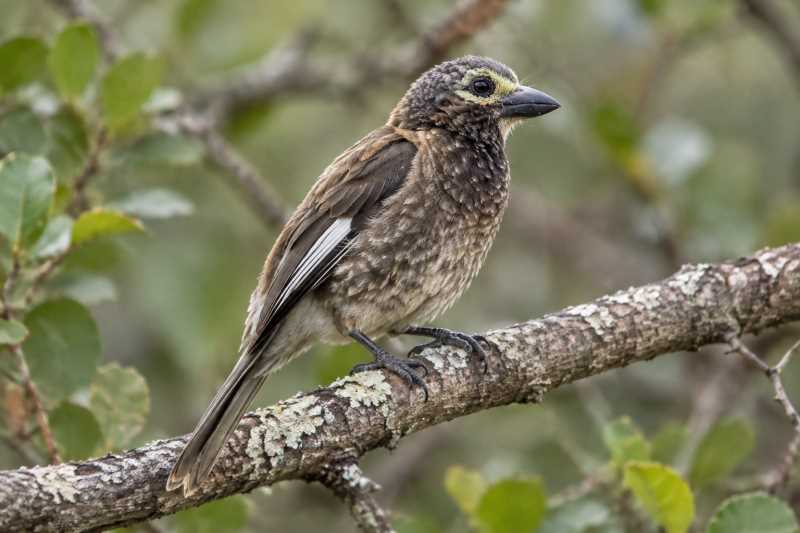
Whyte’s Barbet is a medium-sized bird, measuring approximately 20 cm (7.9 inches) in length. Its plumage is a striking blend of colors, with a dominant olive-green back, wings, and tail that provide excellent camouflage in its leafy habitat. The bird’s underparts are a contrasting pale yellow, often accented with subtle streaks of brown.
One of the most distinguishing features of Whyte’s Barbet is its head, which is adorned with a vivid combination of red and yellow patches. The facial region is marked by a bold red forehead and crown, while the throat and breast exhibit a vibrant yellow hue. These colors not only serve as an attraction during mating displays but also play a role in species recognition among these birds.
The barbet’s robust bill is another notable feature, designed for its feeding habits. This powerful beak is well-suited for foraging fruits, which comprise a significant portion of its diet, as well as for excavating nest cavities in tree trunks.
Habitat and Distribution
Whyte’s Barbet is primarily found in the miombo woodlands, a type of savanna ecosystem characterized by the dominance of miombo trees (Brachystegia species). These woodlands stretch across several countries in Central and Southern Africa, including Malawi, Mozambique, Tanzania, and Zambia.
These birds thrive in areas that offer a mix of dense foliage and open spaces, which provide ample opportunities for feeding and nesting. They are generally non-migratory, choosing to reside within their established territories year-round. However, some seasonal movements may occur in response to food availability and environmental conditions.
Behavior and Ecology
Whyte’s Barbet is known for its social behavior and often forms small groups or pairs. These birds are highly vocal, communicating with each other through a series of calls that vary in pitch and rhythm. Their calls are not only a means of maintaining contact but also play a crucial role in defending territory and attracting mates.
The diet of Whyte’s Barbet is predominantly frugivorous, consisting mainly of figs, berries, and other soft fruits. However, they are opportunistic feeders and may occasionally consume insects and small invertebrates. This dietary flexibility allows them to adapt to varying food resources throughout the year.
Breeding typically occurs during the wet season when food is abundant. Whyte’s Barbets are monogamous, with pairs collaborating closely in nest building and chick rearing. They excavate nest holes in the soft wood of dead trees or branches, where the female lays two to four eggs. Both parents participate in incubation and feeding the chicks, ensuring a high degree of parental investment.
Conservation Status and Challenges
Currently, Whyte’s Barbet is classified as a species of "Least Concern" by the International Union for Conservation of Nature (IUCN). This status reflects its relatively stable population across its range. However, like many other species, Whyte’s Barbet faces threats from habitat destruction due to logging, agriculture, and human settlement expansion.
Conservation efforts aimed at preserving miombo woodlands are crucial for the long-term survival of this species. Initiatives that promote sustainable land-use practices and raise awareness about the ecological importance of these habitats can help mitigate the impact of human activities.
Conclusion
Whyte’s Barbet may not be as renowned as some of its avian counterparts, but it is undoubtedly a remarkable species with much to offer to those willing to delve into its world. From its vibrant plumage to its melodious calls, this barbet is a testament to the rich biodiversity of Africa’s miombo woodlands. By understanding and protecting such species, we not only preserve the intricacies of natural ecosystems but also ensure that future generations can appreciate these avian wonders.
Related posts