The Enigmatic White-rumped Kingfisher: A Jewel of the Avian World
The White-rumped Kingfisher, scientifically known as Caridonax fulgidus, is an enigmatic and exquisite species of bird that captivates ornithologists and bird enthusiasts alike. Endemic to the lush and biodiverse islands of Indonesia, this bird is a member of the Alcedinidae family and holds a special place in the intricate tapestry of the region’s avifauna. Despite its stunning appearance and intriguing habits, it remains one of the lesser-studied birds, largely due to its elusive nature and restricted range.
Habitat and Distribution
The White-rumped Kingfisher is predominantly found in the forests of Indonesia, specifically on the islands of Sumbawa and Flores. These islands provide the perfect backdrop for this bird’s existence, with their dense tropical forests, rich in both flora and fauna. The bird often inhabits lowland and hill forests, preferring areas with proximity to water bodies. This preference is typical of kingfishers, given their diet primarily consists of aquatic prey.
The limited geographical range of the White-rumped Kingfisher makes it particularly vulnerable to habitat destruction. The ongoing deforestation and land conversion for agriculture in Indonesia pose significant threats to its habitat, emphasizing the need for conservation efforts to preserve these areas.
Physical Characteristics
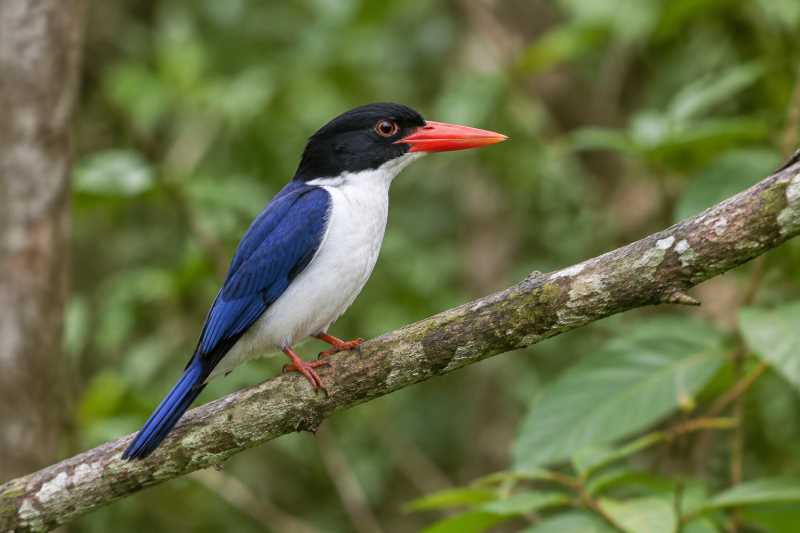
The White-rumped Kingfisher is notable for its striking appearance. It measures approximately 25 centimeters in length, making it a medium-sized kingfisher. Its most distinctive feature is, as its name suggests, the white patch on its rump, which stands out against its otherwise vibrant plumage. The bird’s upperparts are a vivid blue, while its underparts are a contrasting white. The combination of these colors, along with a robust, coral-red bill, gives it a regal appearance.
In addition to its striking coloration, the White-rumped Kingfisher has a strong, sturdy build typical of kingfishers, with a large head and short legs. Its wings are moderately long, allowing it to navigate through the dense forest canopies with agility and ease.
Behavior and Diet
Much like its relatives, the White-rumped Kingfisher is known for its solitary and territorial nature. It is often found perched quietly on branches, scanning the surroundings for prey. This bird is primarily carnivorous, with a diet consisting of insects, small reptiles, and crustaceans. Its hunting technique is typical of kingfishers; it dives headfirst into water or swoops down from a perch to capture prey.
During the breeding season, which coincides with the rainy season in Indonesia, the White-rumped Kingfisher becomes more vocal. Its calls, a series of sharp whistles, are used to establish territory and attract mates. Nests are typically built in tree cavities or abandoned termite mounds, providing a safe environment for raising young.
Conservation Status
Currently, the White-rumped Kingfisher is classified as Near Threatened on the IUCN Red List. The primary threat to its survival is habitat loss due to deforestation and human encroachment. Conservationists stress the importance of protecting the remaining forested areas on the islands of Sumbawa and Flores to ensure the continued survival of this beautiful species.
Efforts to conserve the White-rumped Kingfisher are part of broader initiatives to preserve Indonesia’s rich biodiversity. These efforts include creating protected areas, promoting sustainable land use practices, and increasing awareness about the importance of conserving endangered species.
Conclusion
The White-rumped Kingfisher is a remarkable example of the natural beauty and diversity found in Indonesia’s forests. Its vibrant plumage and fascinating behavior make it a true jewel of the avian world. As we continue to study and understand this species, it becomes increasingly clear that preserving its habitat is crucial not only for the kingfisher itself but for the myriad other species that share its environment.
In a world where biodiversity is under constant threat, the White-rumped Kingfisher stands as a symbol of the delicate balance of ecosystems. Protecting this bird means preserving the intricate web of life that sustains us all, highlighting the interconnectedness of nature and the need for concerted conservation efforts.
As awareness grows, so too does the hope that future generations will have the opportunity to witness the splendor of the White-rumped Kingfisher in its natural habitat, a testament to the wonders of our natural world and the relentless beauty of life.
Related posts