The Enigmatic Brown-headed Paradise Kingfisher: A Jewel of New Guinea’s Avifauna
The Brown-headed Paradise Kingfisher, or Tanysiptera danae, stands as a vibrant testament to the biodiversity and ecological richness of New Guinea. This bird, with its distinctive plumage and captivating presence, is a fascinating subject for ornithologists and bird enthusiasts alike.
Taxonomy and Distribution
Belonging to the Alcedinidae family, the Brown-headed Paradise Kingfisher is a member of the paradise kingfishers, a group known for their striking appearance and unique habitat preferences. Tanysiptera danae is endemic to the tropical rainforests of New Guinea, predominantly found in the lowland and hill forests. Its distribution is largely confined to the island’s southern region, where it thrives in the lush, dense canopy.
This species was first described by the renowned ornithologist Walter Rothschild in 1901. Since then, it has intrigued researchers with its limited range and specialized habitat requirements. The Brown-headed Paradise Kingfisher shares its genus with several other paradise kingfishers, all of which are characterized by their elongated tails and vibrant coloration.
Physical Characteristics
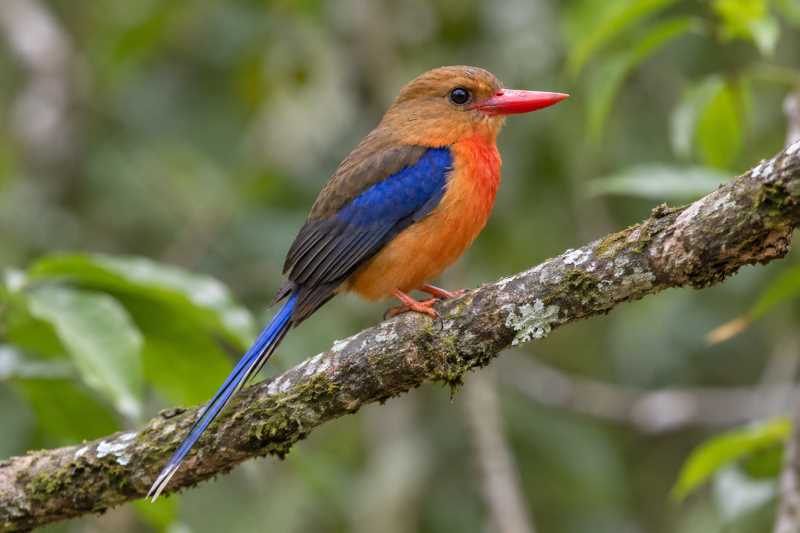
The Brown-headed Paradise Kingfisher is a medium-sized bird, measuring approximately 25-30 cm from beak to tail. Its most striking feature is its iridescent plumage. The bird’s head is adorned with a rich brown hue, contrasting beautifully with its bright blue back and wings. The underparts are predominantly white, providing a dramatic contrast to the rest of its vivid plumage.
One of the most distinctive traits of the Tanysiptera danae is its long, elegant tail, which can measure up to 15 cm. This tail, along with its bright colors, is not merely ornamental; it plays a crucial role in courtship displays and territorial behaviors. The bird’s beak is stout and black, perfectly adapted for its diet and feeding habits.
Behavior and Ecology
The Brown-headed Paradise Kingfisher is primarily insectivorous, feeding on a diverse array of insects and small invertebrates. It employs a sit-and-wait hunting strategy, perching quietly before swooping down to capture its prey with precision. This hunting technique is facilitated by its excellent vision and rapid flight capabilities.
In terms of social behavior, this kingfisher is relatively solitary, except during the breeding season when pairs form monogamous bonds. Nesting occurs in tree cavities, often abandoned by woodpeckers or naturally occurring in old trees. The female lays a clutch of 2-3 eggs, which both parents incubate and care for until fledging.
Conservation Status and Threats
Currently, the Brown-headed Paradise Kingfisher is classified as ‘Least Concern’ by the International Union for Conservation of Nature (IUCN). However, its habitat is under increasing threat from deforestation and habitat degradation. The expansion of agricultural land and logging activities in New Guinea poses a significant risk to the pristine forests that are crucial for the survival of this species.
Conservation efforts are vital to ensuring the long-term survival of Tanysiptera danae. Protecting its habitat through the establishment of reserves and sustainable land-use practices is essential. Additionally, raising awareness about the ecological importance of these birds can foster community involvement in conservation initiatives.
Cultural Significance
In the regions where it is found, the Brown-headed Paradise Kingfisher holds cultural significance for indigenous communities. Often considered a symbol of beauty and vitality, this bird features in local folklore and is revered for its striking appearance. Such cultural ties can be instrumental in garnering local support for conservation efforts.
Conclusion
The Brown-headed Paradise Kingfisher is not only a symbol of New Guinea’s rich biodiversity but also a reminder of the delicate balance needed to maintain ecological harmony. As pressures on its habitat continue to mount, it becomes increasingly important to implement conservation strategies that preserve the environments these birds call home. By appreciating the beauty and ecological role of Tanysiptera danae, we can foster a deeper connection to the natural world and inspire action to protect it for future generations.
References
- BirdLife International. (2023). Species factsheet: Tanysiptera danae.
- IUCN Red List of Threatened Species. (2023). Tanysiptera danae.
- Local cultural insights from New Guinea communities.
The Brown-headed Paradise Kingfisher, with its stunning appearance and vital ecological role, is a treasure of New Guinea’s avian world. As we strive to preserve its habitat, let us celebrate the wonder of this magnificent bird.
Related posts