The Enchanting World of the Common Paradise Kingfisher (Tanysiptera galatea): A Detailed Exploration
The Common Paradise Kingfisher, scientifically known as Tanysiptera galatea, is a remarkable avian species renowned for its striking beauty and ecological significance. Native to the expansive, biodiverse realms of New Guinea and its surrounding islands, this bird captures the fascination of ornithologists and nature enthusiasts alike due to its vibrant plumage and unique behavioral patterns.
Habitat and Distribution
The Common Paradise Kingfisher is predominantly found in the lowland tropical rainforests of New Guinea, as well as in adjacent archipelagos, including the Aru Islands and the islands of Eastern Indonesia. These regions offer the kingfisher an ideal habitat characterized by dense forest cover and abundant water sources, which are crucial for its survival and breeding practices.
This bird is particularly adapted to life in such lush environments, often seen inhabiting the edges of these forests where it can easily hunt for food. The presence of dense foliage provides ample cover, allowing the kingfisher to remain elusive and protected from potential predators.
Physical Characteristics
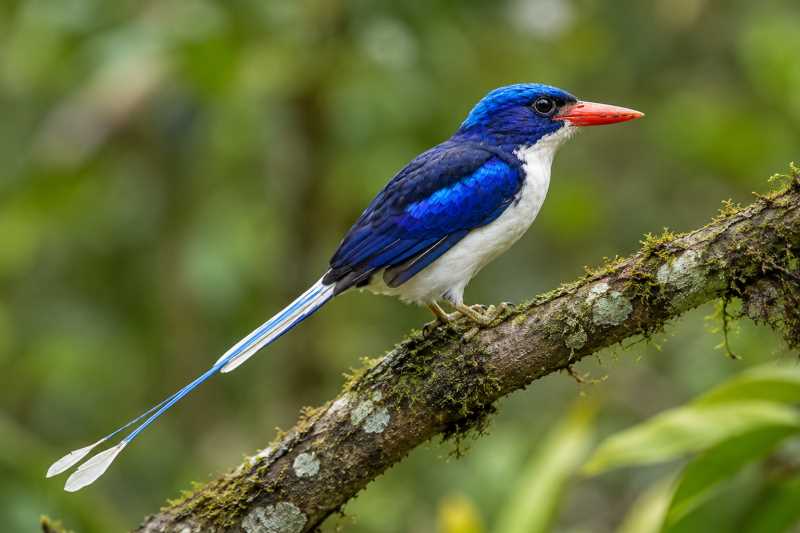
The Common Paradise Kingfisher is distinguished by its stunning physical appearance. Its plumage is a blend of vivid colors, with a vibrant blue or turquoise back, a white underbelly, and a striking red bill. One of the most remarkable features of this kingfisher is its elongated tail feathers, which can extend significantly beyond its body length, adding an elegant flair to its overall appearance.
Mature birds typically measure between 30 to 35 centimeters in length, including their tail feathers. Males and females are quite similar in appearance, although males may possess slightly more pronounced coloration, a common trait among many bird species for attracting mates.
Diet and Feeding Behavior
The diet of the Common Paradise Kingfisher primarily consists of insects and small invertebrates, which it skillfully hunts in its forested habitat. Utilizing its sharp eyesight and agile flight, the kingfisher is an adept predator. It often perches silently on low branches, scanning the ground for movement before swooping down to capture its prey with precision.
In addition to insects, these kingfishers may occasionally consume small reptiles and amphibians, diversifying their diet based on availability. Their hunting techniques and dietary preferences play a vital role in controlling insect populations, highlighting their importance in maintaining ecological balance.
Breeding and Nesting
The breeding season for the Common Paradise Kingfisher typically occurs during the wet season when food resources are most abundant. These birds are known for their monogamous pairing habits, forming lasting bonds with their mates.
Nesting primarily takes place in tree cavities or burrows dug into earthen banks, which provide safety and shelter for their eggs and young. A typical clutch consists of two to four eggs, which are incubated by both parents. This cooperative approach extends to feeding and caring for the hatchlings, ensuring their survival and eventual fledging.
Conservation Status and Threats
Currently, the Common Paradise Kingfisher is classified as a species of "Least Concern" by the International Union for Conservation of Nature (IUCN). Despite this favorable status, it faces several threats that could impact its populations in the long term.
Habitat loss due to deforestation and land development poses a significant risk to these birds, as their natural habitats are increasingly encroached upon by human activities. Additionally, climate change impacts, such as altered rainfall patterns, may affect their breeding seasons and food availability.
Conservation efforts aimed at preserving their natural habitats and mitigating the effects of climate change are essential to ensure the long-term survival of this enchanting species.
Cultural Significance and Human Interaction
The Common Paradise Kingfisher holds cultural significance for the indigenous communities of New Guinea, where it is often regarded as a symbol of beauty and tranquility. Its presence in these regions is celebrated in local folklore and art, highlighting the deep connection between the people and their natural environment.
Birdwatchers and ecotourists are drawn to the regions where these kingfishers reside, contributing to local economies and promoting awareness of the need for conservation.
Conclusion
The Common Paradise Kingfisher, with its breathtaking appearance and ecological importance, stands as a testament to the diversity and wonder of avian life in the tropical rainforests of New Guinea. Protecting its habitat and understanding its behaviors are crucial steps in preserving not only this beautiful bird but also the intricate ecosystems it inhabits.
Through ongoing research and conservation efforts, we can ensure that future generations will continue to marvel at the beauty and grace of the Common Paradise Kingfisher, a true jewel of the avian world.
Related posts