The Enigmatic Middle American Screech Owl: A Comprehensive Overview
The Middle American Screech Owl (Megascops guatemalae) is a captivating nocturnal bird that graces the forests of Central and South America with its presence. Known for its distinctive vocalizations and diverse range of habitats, this owl species is a subject of fascination for ornithologists and bird enthusiasts alike. In this article, we delve into the unique characteristics, habitats, behavior, and conservation status of the Middle American Screech Owl.
Characteristics and Identification
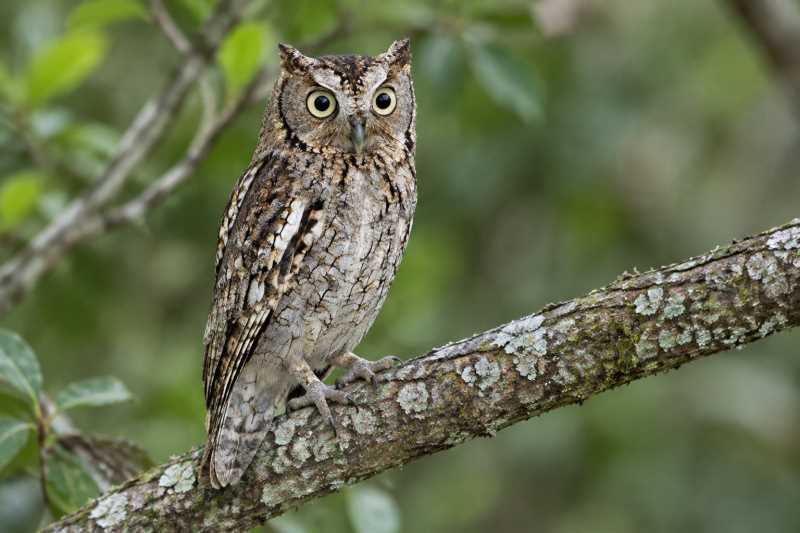
The Middle American Screech Owl is a small, robust bird, typically measuring between 20 to 23 centimeters in length, with a wingspan ranging from 55 to 65 centimeters. It exhibits a wide variety of plumage colors, from gray and brown to reddish hues, allowing it to blend seamlessly into its forest environment. This remarkable camouflage is further enhanced by its intricate pattern of streaks and bars.
A distinctive feature of the Megascops guatemalae is its ear tufts, which are not ears but feathered tufts that add to its cryptic appearance. These tufts can be raised or lowered, potentially aiding in communication or intimidation. The owl’s large, forward-facing eyes are adapted for excellent night vision, essential for its nocturnal lifestyle.
Habitat and Distribution
The Middle American Screech Owl inhabits a diverse array of environments, ranging from tropical and subtropical forests to semi-open wooded areas. Its geographical range extends from southern Mexico through Central America, reaching as far south as Ecuador and northern Peru. This adaptability to different habitats is a testament to the species’ resilience and versatility.
Preferring altitudes ranging from sea level to about 2,500 meters, the Middle American Screech Owl is often found in lowland and foothill forests. It is also known to inhabit plantations and secondary growth areas, demonstrating its ability to thrive in both pristine and altered landscapes.
Behavior and Diet
As a nocturnal predator, the Middle American Screech Owl is most active during the night, utilizing its acute hearing and exceptional vision to hunt for prey. Its diet is varied, consisting mainly of insects, small mammals, birds, and occasionally reptiles and amphibians. This diverse diet reflects its opportunistic feeding behavior and adaptability to different environmental conditions.
The owl is known for its distinctive vocalizations, which include a series of trills and hoots. These sounds play a crucial role in communication, particularly during the breeding season when males call to attract females and establish territories. The vocal nature of the Middle American Screech Owl makes it easier to detect in dense forests, despite its camouflaged plumage.
Reproduction and Lifespan
The breeding season for the Middle American Screech Owl typically occurs during the dry season, from January to May, although this can vary depending on the specific geographical location. The species is monogamous, with pairs often returning to the same nesting site year after year.
Nests are usually located in tree cavities, abandoned woodpecker holes, or artificial nest boxes. The female lays a clutch of two to four eggs, which she incubates for about 26 to 30 days. During this period, the male provides food for the female and the young. Once hatched, the chicks remain in the nest for approximately four to five weeks before fledging.
The lifespan of the Middle American Screech Owl in the wild is not well-documented, but like many small owl species, it is believed to live for up to 10 years or more under optimal conditions.
Conservation Status and Threats
Currently, the Middle American Screech Owl is classified as Least Concern by the International Union for Conservation of Nature (IUCN). However, it faces several threats that could impact its population in the future. Habitat destruction due to deforestation, agricultural expansion, and urbanization poses significant challenges to its survival.
Despite these threats, the species’ adaptability to a range of habitats and its presence in several protected areas provide some assurance of its continued existence. Conservation efforts focusing on habitat preservation and reducing deforestation rates are crucial for maintaining healthy populations of the Middle American Screech Owl.
Conclusion
The Middle American Screech Owl is a remarkable species that embodies the resilience and adaptability of wildlife in the face of environmental changes. Its distinctive characteristics and behaviors continue to captivate those who study and admire it. By understanding and addressing the challenges it faces, we can ensure that this enigmatic owl remains a vital part of its ecosystem for generations to come.
Related posts