The Enigmatic Sandy Scops Owl: A Glimpse into the Life of Otus icterorhynchus
In the vast, verdant landscapes of central and western Africa, one might encounter the elusive Sandy Scops Owl (Otus icterorhynchus). This small, enigmatic bird, often overshadowed by its more flamboyant relatives, offers a fascinating glimpse into the biodiversity of Africa’s forested regions. With its distinctive sandy plumage and haunting calls, the Sandy Scops Owl is a marvel of nature, worthy of exploration and conservation.
Physical Characteristics
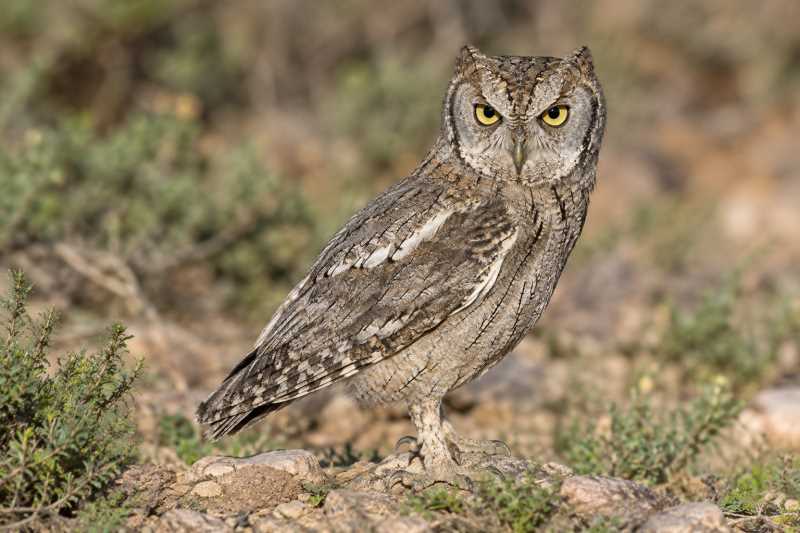
The Sandy Scops Owl is a diminutive species, typically measuring about 16 to 19 centimeters in length. Its plumage, a blend of sandy and earthy tones, offers excellent camouflage against the backdrop of dry leaves and tree bark. The owl’s most striking feature is its bright yellow eyes, which stand out against its muted feathers. These piercing eyes are not just for show; they are adapted for exceptional night vision, essential for its nocturnal lifestyle.
Another notable characteristic is the owl’s rounded head with small ear tufts, which are not always visible. The beak is relatively short and hooked, ideal for grasping prey. Unlike some of its larger relatives, the Sandy Scops Owl’s call is a soft, rhythmic series of hoots, often heard at dusk or during the night.
Habitat and Distribution
The Sandy Scops Owl is predominantly found in the lowland rainforests and woodlands of central and western Africa. Its range extends from Sierra Leone and Liberia in the west, through Ivory Coast and Ghana, reaching as far east as Cameroon and the Democratic Republic of Congo. The owl favors dense, humid forests but can also be found in secondary growth and wooded savannas.
These habitats provide the owl with ample opportunities for hunting and nesting. The dense foliage offers protection from predators and a rich supply of insects, small mammals, and other prey. However, the Sandy Scops Owl is increasingly threatened by habitat loss due to deforestation and agricultural expansion.
Behavior and Diet
As a nocturnal predator, the Sandy Scops Owl is most active during the night. It employs its acute sense of hearing and sharp eyesight to locate prey in the dark. Its diet primarily consists of insects, such as beetles and moths, but it also hunts small rodents and birds. The owl’s hunting strategy involves perching silently on a branch, waiting patiently before swooping down on its unsuspecting prey.
During the day, the Sandy Scops Owl roosts quietly in the dense foliage, relying on its camouflaged plumage to remain hidden from potential threats. This behavior also aids in conserving energy for its nighttime activities.
Reproduction and Lifespan
The breeding season of the Sandy Scops Owl varies depending on its geographical location, but it generally coincides with the start of the rainy season. This timing ensures that there is an abundance of food available for the growing chicks. The owl typically nests in tree cavities or abandoned nests of other birds.
A typical clutch consists of two to three eggs, which are incubated by the female for about three to four weeks. Both parents take part in feeding the chicks, which fledge approximately four to five weeks after hatching. While detailed studies on their lifespan are limited, it is estimated that Sandy Scops Owls can live up to ten years in the wild.
Conservation Status
Currently, the Sandy Scops Owl is classified as ‘Least Concern’ by the International Union for Conservation of Nature (IUCN). However, its populations are thought to be declining due to ongoing habitat destruction. The conversion of forests for agriculture and logging, combined with increasing human encroachment, poses significant threats to its habitat.
Conservation efforts are crucial to ensure the survival of this species. Protecting the remaining forest habitats and promoting sustainable land-use practices are vital steps in preserving the biodiversity of the regions where the Sandy Scops Owl resides. Additionally, further research is needed to better understand the species’ ecology and population dynamics.
The Importance of Awareness and Education
Raising awareness about the Sandy Scops Owl and its role in the ecosystem is essential for its conservation. These owls play a crucial part in controlling insect and rodent populations, maintaining the ecological balance within their habitats. Educational programs that highlight the importance of preserving forest ecosystems can foster a greater appreciation and understanding of these often-overlooked creatures.
In conclusion, the Sandy Scops Owl is a captivating species that embodies the rich biodiversity of Africa’s forests. While it faces challenges from habitat loss, conservation efforts and increased awareness can help secure a future for this remarkable bird. By protecting the natural world, we ensure that the Sandy Scops Owl, along with countless other species, continues to thrive and enchant future generations.
Related posts