The Enigmatic Bare-eyed Rail: A Closer Look at Gymnocrex plumbeiventris
The Bare-eyed Rail, scientifically known as Gymnocrex plumbeiventris, is a fascinating yet elusive bird species that has captivated ornithologists and bird enthusiasts alike. Found primarily in the dense tropical forests of New Guinea and nearby islands, this species is known for its striking appearance and secretive nature. Despite its elusive behavior, the Bare-eyed Rail plays a significant role in its ecosystem, contributing to the biodiversity of the region.
Physical Characteristics
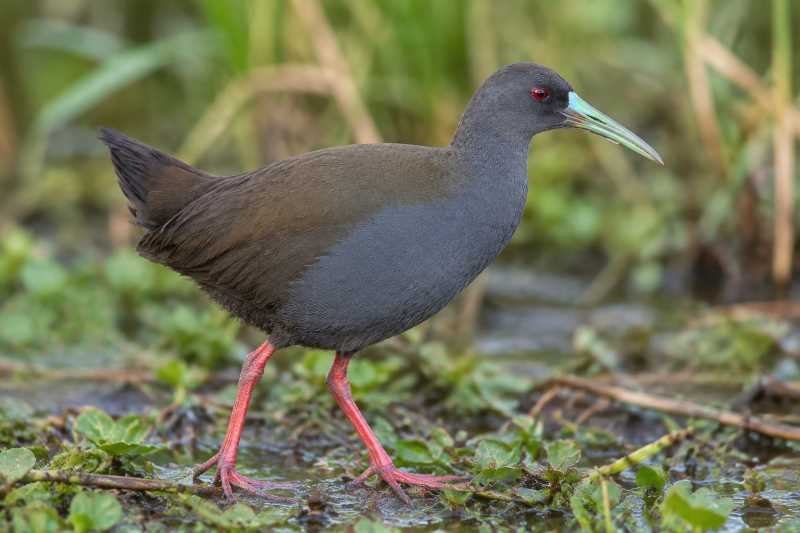
One of the most distinctive features of the Bare-eyed Rail is its physical appearance. As its name suggests, this bird species is characterized by its bare, red eyes, which stand out against its generally muted plumage. The bird’s body is predominantly grey, blending seamlessly with the moist, shadowy undergrowth of its habitat. It has a robust body, adapted for its life on the forest floor, with strong legs that allow it to maneuver through dense vegetation with ease.
The Bare-eyed Rail exhibits sexual dimorphism, though it is subtle compared to other bird species. Males are generally larger than females, with a more pronounced curvature to their bills, which they use effectively to forage for food.
Habitat and Distribution
The Bare-eyed Rail is predominantly found in the lowland rainforests of New Guinea and its surrounding islands. These forests provide the perfect environment for the rail, offering ample cover and a rich supply of food. The bird thrives in areas with dense vegetation, often near streams or in swampy regions where it can forage for invertebrates, seeds, and small reptiles.
Due to its preference for dense forest habitats, the Bare-eyed Rail is rarely observed, making it a species of great interest to researchers. Its elusive nature, combined with the remote locations it inhabits, has resulted in limited data about its population trends and ecological requirements.
Behavior and Ecology
The Bare-eyed Rail is primarily a ground-dwelling bird, spending most of its time foraging in the leaf litter and underbrush of the forest floor. It is a shy and secretive bird, often heard rather than seen, as it moves through the undergrowth with agility and stealth.
Vocalizations are a key aspect of the Bare-eyed Rail’s behavior. The bird is known for its distinctive calls, which are often used to communicate with potential mates or to establish territory. These vocalizations are more frequently heard during the breeding season when the birds are more active.
Breeding habits of the Bare-eyed Rail remain largely undocumented due to its reclusive nature. However, it is believed that the species practices monogamy, with pairs working together to build nests and rear their young. Nests are typically constructed on the ground, hidden among dense vegetation to protect against predators.
Conservation Status
The conservation status of the Bare-eyed Rail is currently classified as Least Concern by the International Union for Conservation of Nature (IUCN). However, this classification does not imply that the species faces no threats. Habitat destruction, particularly due to deforestation and land conversion for agriculture, poses a significant risk to the rail’s natural environment.
Conservation efforts are crucial to ensure the continued survival of the Bare-eyed Rail. Protecting the remaining tracts of rainforest in New Guinea and surrounding areas is essential. Efforts to curb deforestation and promote sustainable land use practices can help preserve the natural habitats that these birds depend on.
The Importance of the Bare-eyed Rail
Despite its elusive nature, the Bare-eyed Rail plays an important role in the ecosystems it inhabits. As a part of the food web, it helps control insect populations and disperses seeds, contributing to the health and diversity of the forest environment. The presence of the Bare-eyed Rail is also an indicator of forest health, as its survival depends on undisturbed, dense vegetation.
For ornithologists and conservationists, understanding and protecting the Bare-eyed Rail is a priority. Studying this bird can offer insights into the health of tropical forest ecosystems and highlight the broader impacts of environmental changes on wildlife.
Conclusion
The Bare-eyed Rail, with its unique characteristics and secretive lifestyle, is a captivating subject for study and conservation. While much remains to be discovered about this enigmatic bird, what is clear is its importance to biodiversity and ecosystem health in its native habitat. By prioritizing conservation efforts and sustainable practices, we can ensure that the Bare-eyed Rail continues to thrive in the dense forests of New Guinea, serving as a symbol of the rich natural heritage of the region.
The continued exploration and documentation of species like the Bare-eyed Rail underscore the importance of preserving our planet’s biodiversity, reminding us of the intricate and interconnected web of life that sustains us all.
Related posts