Introduction
The Samoan Flycatcher, also scientifically known as Myiagra albiventris, is a small yet captivating bird species native to the lush, tropical islands of Samoa. This species is part of the Monarchidae family, known for their vibrant plumage and agile flight. The Samoan Flycatcher plays a crucial role in the ecological balance of its habitat, contributing to insect control and serving as an indicator of environmental health.
Taxonomy and Classification
The Samoan Flycatcher belongs to the Monarchidae family, which encompasses a variety of monarch flycatchers. This family is characterized by their striking appearance and distinctive behaviors. The genus Myiagra includes several species of flycatchers, but Myiagra albiventris is unique to the Samoan islands. Its binomial nomenclature reflects its geographical and morphological uniqueness, with "albiventris" referring to its white belly—a feature that distinguishes it from other species within the genus.
Physical Description
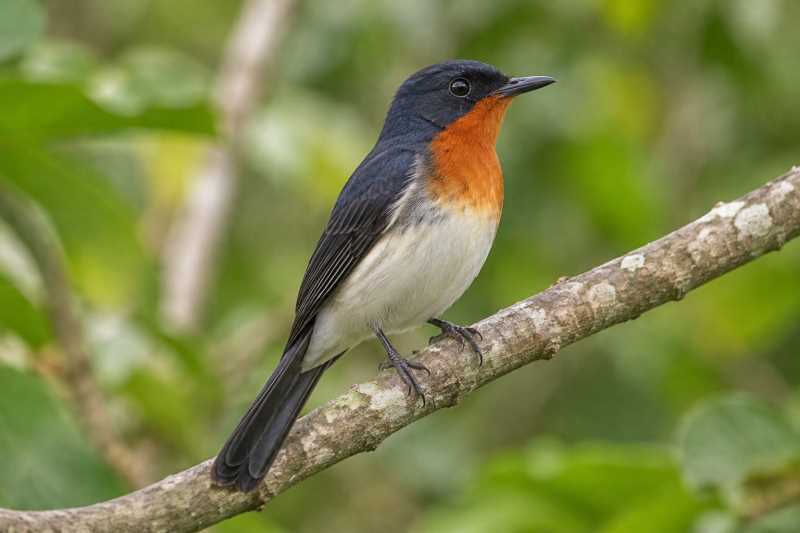
The Samoan Flycatcher is a small bird, measuring around 15 centimeters in length. It boasts a striking plumage with a combination of blue, black, and white colors. The males typically exhibit a glossy blue-black upper body and head, contrasted by a bright white underbelly. Females, while similar, are generally duller in coloration, with a more subdued grayish-blue tone. Both genders have a distinctive forked tail and a short, sharp bill adapted for insect catching.
Habitat and Distribution
This species is endemic to the islands of Samoa, primarily found on Upolu and Savai’i islands. It inhabits a variety of forested environments, ranging from primary rainforests to secondary regrowths and plantations. The bird prefers dense foliage and is often seen flitting through the canopy in search of insects. While it has a limited geographical range, the Samoan Flycatcher is relatively adaptable to different forest conditions, which has aided its survival amid habitat changes.
Behavior and Ecology
The Samoan Flycatcher is an active and agile bird, known for its energetic foraging behavior. It primarily feeds on insects, capturing them mid-flight with remarkable precision. This flycatching technique not only serves its dietary needs but also assists in controlling insect populations, benefiting the ecological health of its habitat. The bird is often observed in pairs or small family groups, displaying territorial behavior, especially during the breeding season.
Breeding and Lifespan
Breeding season for the Samoan Flycatcher occurs during the wet season, from November to April. During this time, males engage in elaborate displays to attract females, showcasing their plumage and vocal abilities. Nests are typically built in the forks of trees, using twigs, leaves, and spider webs. The female lays about two to three eggs, which she incubates for approximately two weeks. Both parents are involved in feeding and caring for the chicks until they fledge. The average lifespan of the Samoan Flycatcher in the wild is around five to seven years, although this can vary based on environmental conditions and predation pressures.
Conservation Status
The Samoan Flycatcher is currently listed as a species of Least Concern by the International Union for Conservation of Nature (IUCN). However, like many island endemics, it faces threats from habitat loss, invasive species, and climate change. Deforestation for agriculture and development poses a significant threat to its natural habitat. Additionally, invasive predators such as rats and feral cats pose risks to eggs and juvenile birds. Conservation efforts are crucial to ensuring the long-term survival of the species, focusing on habitat preservation and controlling invasive species.
Cultural Significance
In Samoan culture, birds hold significant symbolic value, often associated with freedom and communication between the spiritual and physical worlds. The Samoan Flycatcher, with its vibrant presence, is a part of this rich cultural tapestry. While not as prominent in folklore as some other bird species, it is nonetheless appreciated for its beauty and ecological role.
Research and Studies
Research on the Samoan Flycatcher has primarily focused on its ecological role and adaptation strategies. Studies have highlighted its importance in pest control and as a bioindicator for forest health. Ongoing research aims to understand better its response to environmental changes and conservation strategies. The limited range of this species makes it particularly susceptible to changes in its habitat, emphasizing the need for detailed ecological studies and monitoring.
Conclusion
The Samoan Flycatcher (Myiagra albiventris) is an integral part of Samoa’s biodiversity. Its vibrant presence and ecological contributions underscore the importance of conservation efforts to protect its habitat and ensure its survival. As environmental challenges increase, understanding and preserving such species is vital not only for ecological health but also for maintaining the cultural heritage of the Samoan islands. Continued research and conservation initiatives are crucial to safeguarding this endemic species for future generations.
References
- International Union for Conservation of Nature (IUCN) Red List
- Studies on the ecological role of Myiagra albiventris
- Cultural texts and folklore of Samoa
Related posts