Discovering the Claret-breasted Fruit Dove: A Jewel of the Avian World
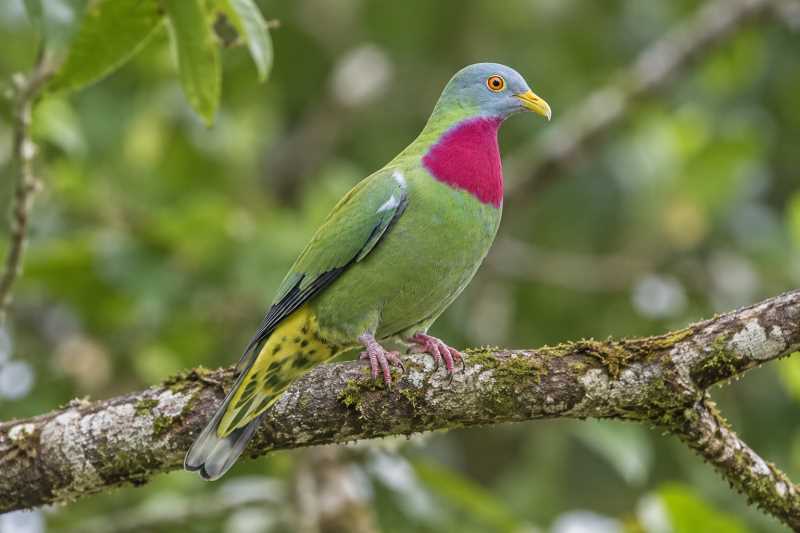
In the vibrant tapestry of avian biodiversity, the Claret-breasted Fruit Dove (Ptilinopus viridis) stands out as a gem, not only for its striking appearance but also for its ecological significance. Native to the lush forests of the Australasian region, this bird epitomizes the intricate beauty and complex ecosystems of tropical habitats.
Habitat and Distribution
The Claret-breasted Fruit Dove primarily inhabits the subtropical and tropical moist lowland forests of Indonesia, Papua New Guinea, and the Solomon Islands. These regions, rich in biodiversity, provide the dense foliage and abundant fruiting trees that are crucial for the dove’s survival. The bird’s reliance on such specific habitats underscores the importance of conserving these forests, which face threats from deforestation and habitat fragmentation.
Physical Characteristics
The Claret-breasted Fruit Dove is a medium-sized bird, measuring about 24 to 27 centimeters in length. Its plumage is an artistic blend of colors, with the most distinctive feature being its claret-red breast, which gives the species its name. The rest of its body is a harmonious mix of green, orange, and purple hues, providing excellent camouflage among the forest canopy. This vivid coloration is not just for show; it plays a crucial role in mating displays and territorial defense.
Diet and Feeding Behavior
As frugivores, Claret-breasted Fruit Doves primarily feed on a variety of fruits, with figs being a significant part of their diet. They are known to be important seed dispersers, contributing to the health and regeneration of their forest ecosystems. By consuming fruits and excreting the seeds in different locations, these doves facilitate plant diversity and forest sustainability. Their feeding behavior is typically solitary, although they may sometimes be observed in pairs or small groups when food resources are abundant.
Reproduction and Lifespan
The breeding season of the Claret-breasted Fruit Dove varies depending on its geographical location but generally corresponds with times of fruit abundance. The doves build simple nests high in the forest canopy, where the female usually lays a single, white egg. Both parents share the responsibility of incubation and feeding the hatchling, demonstrating a strong pair bond. The lifespan of these doves in the wild is not well-documented, but they are believed to live for several years, as is typical for pigeons and doves.
Conservation Status
The International Union for Conservation of Nature (IUCN) currently lists the Claret-breasted Fruit Dove as a species of Least Concern, indicating that, for now, it faces no immediate threat of extinction. However, the ongoing destruction of their natural habitat and the impact of climate change present long-term challenges. Conservation efforts are needed to ensure these birds continue to thrive, emphasizing habitat protection and sustainable land-use practices.
Importance in Ecosystems
Beyond their captivating beauty, Claret-breasted Fruit Doves play an essential role in their ecosystems. As seed dispersers, they help maintain the genetic diversity and structure of tropical forests. This function is crucial for the health of the forest and the myriad of species that depend on it. Their presence can also indicate the overall health of their habitat, making them valuable indicators for environmental monitoring.
Challenges and Conservation Efforts
The primary challenge facing the Claret-breasted Fruit Dove is habitat loss due to logging, agriculture, and urban expansion. Conservation organizations are working to address these issues through initiatives that promote the preservation of natural habitats and raise awareness about the species. Local and international collaborations are vital in these efforts, as is the engagement of local communities in conservation activities. Sustainable tourism and eco-friendly practices can also contribute to the protection of these birds and their habitats.
Conclusion
The Claret-breasted Fruit Dove is a testament to the rich biodiversity found within the tropical forests of the Australasian region. Its vivid colors and ecological role as a seed disperser highlight the interconnectedness of life in these ecosystems. Protecting such species is not just about preserving their beauty but also ensuring the health and sustainability of the natural world. As we advance in our understanding of these ecosystems, it is imperative that we foster conservation efforts that respect and protect the intricate balance of nature.
In a world where the loss of biodiversity is a growing concern, the Claret-breasted Fruit Dove serves as a reminder of the beauty and complexity of life that we stand to lose. By valuing and conserving such species, we not only preserve their legacy but also safeguard the future of our planet’s diverse ecosystems.
Related posts