The White-capped Fruit Dove: A Jewel of the Pacific
In the heart of the Pacific Ocean, a splendid avian gem graces the lush tropical islands with its vibrant presence – the White-capped Fruit Dove, scientifically known as Ptilinopus dupetithouarsii. This species, belonging to the Columbidae family, is a remarkable example of nature’s artistry, with its striking plumage and vital ecological role.
Taxonomy and Distribution
The White-capped Fruit Dove is a member of the genus Ptilinopus, which comprises approximately 50 species of fruit doves. These birds are predominantly found in Southeast Asia and the Pacific islands. Ptilinopus dupetithouarsii is specifically endemic to the French Polynesian islands, particularly the Marquesas and the Society Islands. The species was named in honor of Admiral Abel Aubert du Petit-Thouars, a 19th-century French naval officer who explored the region, thus lending his name to the scientific nomenclature.
Physical Characteristics
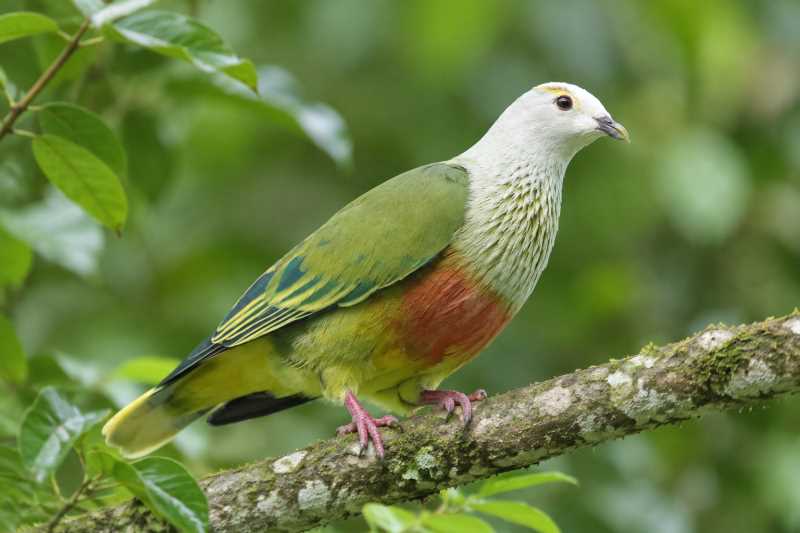
The White-capped Fruit Dove is a medium-sized bird, measuring between 24 and 26 centimeters in length. Its most distinctive feature is the striking white crown that contrasts sharply with its vibrant green body, which occasionally exhibits a metallic sheen. The underparts are a softer, pale green, while the wings are adorned with darker, greenish-blue feathers. The bird’s eyes are encircled by an orange-red ring, and its bill is yellowish, adding to its exotic appearance.
Males and females are similar in appearance, though females may exhibit slightly duller coloration. Juveniles are often mistaken for females due to their more subdued plumage, which gradually brightens as they mature.
Habitat and Behavior
The White-capped Fruit Dove is primarily a forest dweller, inhabiting tropical and subtropical moist broadleaf forests. It favors the dense canopy cover of lowland forests but can also be found in montane regions. These doves are arboreal, spending most of their time perched in trees, where they forage for fruit. The species is known to be especially fond of figs and other small fruits, which they consume whole, later dispersing the seeds through their droppings.
These doves are generally solitary or found in pairs, though they may occasionally gather in small flocks when food is abundant. Their flight is swift and direct, characterized by rapid wing beats interspersed with short glides.
Reproduction and Lifespan
The breeding season of the White-capped Fruit Dove varies depending on its geographical location but is generally observed from October to April. These birds are monogamous, forming long-term pair bonds. The female typically lays a single white egg, which both parents incubate over approximately 18 to 20 days. The nest is a simple platform of twigs and leaves, often situated high in the forest canopy for protection from predators.
Upon hatching, the chick is altricial, requiring substantial parental care. Both parents participate in feeding the chick, regurgitating a nutritious, milky substance known as "crop milk" during the early stages of development. Fledging occurs about two to three weeks after hatching, although juveniles may remain dependent on their parents for some time thereafter.
Conservation Status
Currently, the White-capped Fruit Dove is listed as Least Concern by the International Union for Conservation of Nature (IUCN). However, like many island species, it is vulnerable to habitat loss and degradation, primarily due to deforestation and the introduction of invasive species. Climate change also poses a long-term threat, potentially altering the delicate ecosystems these birds rely on.
Conservation efforts in the region aim to protect the remaining forest habitats and control invasive species, ensuring that the White-capped Fruit Dove continues to thrive. Ecotourism and educational programs have also been implemented to raise awareness of the species and its ecological importance.
Ecological Significance
The White-capped Fruit Dove plays a crucial role in its ecosystem as an effective seed disperser. By consuming and subsequently excreting seeds, these doves facilitate forest regeneration and plant diversity. Their presence is an indicator of healthy forest ecosystems, highlighting the interconnectedness of species within these environments.
Cultural Importance
In addition to its ecological role, the White-capped Fruit Dove holds cultural significance for the indigenous peoples of the Pacific islands. Often depicted in local art and folklore, the bird symbolizes beauty and the rich natural heritage of the region.
Conclusion
The White-capped Fruit Dove, with its striking appearance and important ecological role, is indeed a jewel of the Pacific. Preserving this species and its habitat is crucial, not only for maintaining biodiversity but also for safeguarding the cultural heritage of the islands it inhabits. Through continued conservation efforts and public awareness, we can ensure that this avian marvel continues to grace the forests of the Pacific for generations to come.
Related posts