The Enigmatic Tasmanian Boobook: A Comprehensive Look at the Island’s Unique Owl
The Tasmanian Boobook, scientifically known as Ninox leucopsis, is a captivating species of owl native to Tasmania. This island-dwelling bird, part of the Strigidae family, is a subspecies of the Australian Boobook (Ninox boobook), distinguished by its unique adaptations to the Tasmanian environment. Known for its characteristic call and elusive nature, the Tasmanian Boobook plays a significant role in the island’s ecosystem and cultural heritage.
Appearance and Identification
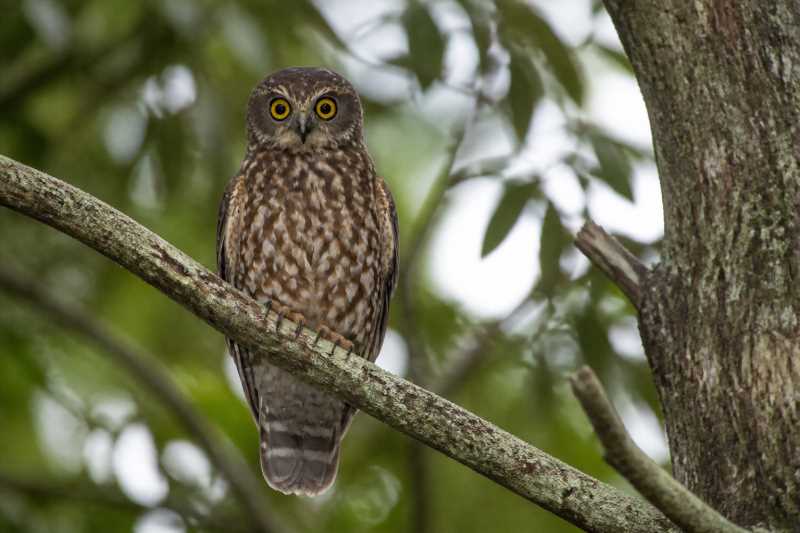
The Tasmanian Boobook is a medium-sized owl, measuring around 27 to 36 centimeters in length, with a wingspan of approximately 75 to 100 centimeters. Its plumage is predominantly brown, displaying a mottled pattern that provides excellent camouflage against the bark of Tasmanian trees. The face is marked by a prominent white facial disk and large, expressive dark eyes that are crucial for night vision. This owl’s feet are feathered down to the toes, a feature that helps insulate against the cold Tasmanian nights.
While similar in appearance to its mainland counterparts, the Tasmanian Boobook can be differentiated by subtle variations such as a slightly paler overall coloration and its distinctive call. This call, often described as a double hoot, is a defining characteristic of the species, echoing through the dense forests and bushland of Tasmania.
Habitat and Distribution
The Tasmanian Boobook is endemic to Tasmania, where it inhabits a variety of wooded environments. These include old-growth forests, rainforests, and woodlands, as well as more open areas such as farmlands and urban parks. This adaptability in habitat selection is a testament to the species’ resilience and versatility.
Despite its adaptability, the Tasmanian Boobook is most frequently associated with mature forests, where it finds an abundance of prey and nesting sites. These owls are primarily nocturnal, spending their days roosting among dense foliage and becoming active at dusk. Their distribution is widespread across the island, although they tend to be more numerous in areas with less human disturbance.
Diet and Hunting Behavior
The Tasmanian Boobook is a carnivorous predator, preying on a variety of small animals. Its diet primarily consists of insects, small mammals such as rodents, and occasionally small birds. The owl’s hunting technique involves a combination of perch-and-pounce tactics and low, silent flights through the underbrush, facilitated by its broad wings and soft feathers that minimize noise.
The owl’s acute hearing and excellent night vision allow it to locate prey with great precision, even in the darkest conditions. Once a target is identified, the Tasmanian Boobook swoops down with remarkable speed and accuracy, using its sharp talons to capture its meal.
Breeding and Lifecycle
Breeding season for the Tasmanian Boobook typically occurs between late winter and early spring. During this time, males establish territories and attract females with their distinctive calls. Once a pair forms, they select a nesting site, often a tree hollow, which provides shelter and protection for their young.
Females lay a clutch of two to three eggs, which are incubated for about 30 days. Both parents participate in feeding and caring for the chicks, which fledge approximately six weeks after hatching. Juveniles remain with their parents for several months, learning vital hunting and survival skills before venturing out on their own.
Conservation Status and Threats
Currently, the Tasmanian Boobook is not considered to be under significant threat, and its population is stable. However, like many wildlife species, it faces potential risks from habitat loss due to logging, agricultural expansion, and urban development. Conservation efforts aimed at preserving Tasmania’s diverse habitats are crucial to maintaining healthy populations of this and other native species.
Predation by introduced species, such as cats and foxes, also poses a threat, particularly to young owls and eggs. Conservationists emphasize the importance of controlling these invasive species to protect the Tasmanian Boobook and other indigenous wildlife.
Cultural Significance
The Tasmanian Boobook holds a special place in the cultural and natural heritage of Tasmania. Its haunting call is a familiar sound in the night, often associated with the wilderness and mystery of the island’s landscapes. The owl features in Indigenous Tasmanian folklore and is a symbol of the island’s rich biodiversity.
As Tasmania continues to attract nature enthusiasts and researchers alike, the Tasmanian Boobook remains a subject of fascination, embodying the delicate balance of the island’s ecosystems. Its continued presence is a testament to the resilience of nature and the importance of conservation efforts in preserving Tasmania’s unique wildlife for future generations.
In conclusion, the Tasmanian Boobook is more than just an owl; it is a vital component of Tasmania’s natural environment and cultural identity. Protecting this enigmatic bird ensures that its call will continue to echo through the forests of Tasmania, a reminder of the island’s enduring beauty and ecological significance.
Related posts