Introduction
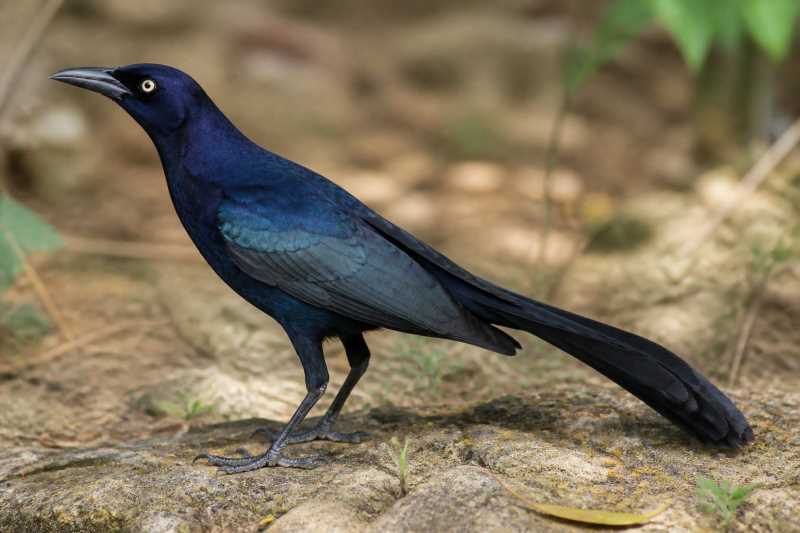
The Great-tailed Grackle (Quiscalus mexicanus), a member of the Icteridae family, is a striking and adaptable bird native to the Americas. Known for its iridescent plumage and distinctive vocalizations, this species has garnered attention both for its beauty and its adaptability to urban environments. As the Great-tailed Grackle continues to expand its range, it provides a unique opportunity to study avian adaptation and the impacts of urbanization on wildlife.
Taxonomy and Description
The Great-tailed Grackle belongs to the order Passeriformes, which encompasses over half of all bird species. Within the Icteridae family, it shares lineage with other blackbirds, orioles, and cowbirds. The species is scientifically known as Quiscalus mexicanus.
Physically, the Great-tailed Grackle is a large bird, with males reaching up to 46 cm in length, including their namesake long tails, which can measure up to half of their total body length. The males display a glossy black plumage with iridescent hues of purple, blue, and green, while females are generally smaller and exhibit a more subdued brown coloration. This sexual dimorphism is a common trait in the bird world, often linked to mating displays and roles.
Distribution and Habitat
Originally native to Central America, the Great-tailed Grackle has expanded its range significantly over the past century. Its current range extends from the southern United States through Mexico and Central America to northern South America. This expansion is attributed to the bird’s ability to thrive in a variety of habitats, including marshes, agricultural fields, and urban areas.
The species is particularly adept at exploiting human-altered landscapes. Urbanization has provided these birds with new opportunities for food and nesting sites, allowing them to thrive in cities and towns where they can often be seen foraging in parking lots, parks, and open fields. Their adaptability to different environments makes them a fascinating subject for ecological study.
Behavior and Diet
Great-tailed Grackles are known for their social behavior, often seen in large flocks that can number in the hundreds. This social structure provides multiple benefits, including increased protection from predators and enhanced foraging opportunities. They are omnivorous, feeding on a diverse diet that includes insects, small vertebrates, fruits, seeds, and human food scraps.
One of the most interesting aspects of their behavior is their vocalization. Great-tailed Grackles are highly vocal birds, producing a wide array of calls that range from whistles to harsh squawks. These vocalizations play a crucial role in communication within flocks and are also used in mating displays. The complexity and variety of their calls are subjects of ongoing research, providing insights into avian communication.
Reproduction and Lifespan
Breeding season for the Great-tailed Grackle typically coincides with the warmer months, although in some regions, it can occur year-round. Males engage in elaborate displays to attract females, showcasing their iridescent plumage and vocal prowess. Females are responsible for building the nest, which is typically constructed in trees or shrubs and made of twigs, grass, and other plant materials.
A typical clutch consists of three to five eggs, which are incubated by the female for about two weeks. Once hatched, the chicks are altricial, meaning they are born relatively undeveloped and require extensive parental care. Both parents participate in feeding the offspring, and the young fledge approximately 20 days after hatching.
The lifespan of a Great-tailed Grackle in the wild is around 10 to 15 years, although this can vary depending on environmental conditions and predation pressures.
Human Interaction and Cultural Significance
The Great-tailed Grackle’s close association with human environments has led to a variety of interactions, both positive and negative. In some areas, their adaptability and abundance have resulted in them being considered pests, particularly in agricultural settings where they may feed on crops. Conversely, in urban areas, they are often appreciated for their striking appearance and engaging behavior.
Culturally, the Great-tailed Grackle holds significance in various indigenous traditions and folklore across its range. In some cultures, they are seen as symbols of adaptability and resourcefulness, reflecting their ability to thrive in diverse environments.
Conservation Status
Currently, the Great-tailed Grackle is classified as a species of Least Concern by the International Union for Conservation of Nature (IUCN). This status is due to their large and expanding range, as well as their ability to adapt to a wide array of habitats. However, like all wildlife, they face potential threats from habitat loss, pollution, and climate change.
Conservation efforts focus on monitoring population trends and ensuring the preservation of their natural habitats. Continued research into their ecological role and interactions with human environments is essential for understanding how to balance their conservation with human interests.
Conclusion
The Great-tailed Grackle serves as a remarkable example of avian adaptability and resilience. Its successful expansion across the Americas highlights the complex interplay between wildlife and human-altered landscapes. As urbanization continues to shape the natural world, the Great-tailed Grackle offers valuable insights into the future of wildlife in an increasingly urbanized planet. Understanding and appreciating this adaptable species can lead to better conservation strategies and a deeper appreciation for the rich tapestry of life with which we share our environment.
Related posts