The Sumatran Green Pigeon: A Jewel of the Avian Kingdom
The Sumatran Green Pigeon, scientifically known as Treron oxyurus, is a fascinating bird species that inhabits the lush, tropical forests of Sumatra, Indonesia. This avian gem is a member of the Columbidae family, which encompasses pigeons and doves worldwide. Despite its relatively obscure presence in the global ornithological community, the Sumatran Green Pigeon boasts a unique charm and ecological significance that deserve recognition.
Habitat and Distribution
Native to the Indonesian island of Sumatra, the Sumatran Green Pigeon thrives in subtropical or tropical moist lowland forests. These birds are almost exclusively arboreal, spending the majority of their lives in the forest canopy. Their habitat preference underscores the importance of forest conservation efforts, as deforestation poses a significant threat to their survival.
Sumatra, the sixth-largest island in the world, offers a diverse range of ecosystems, from mangroves to mountain forests. The Sumatran Green Pigeon primarily occupies the lowland forests, which are rich in fruit-bearing trees that provide their main food source. They can also be found in secondary forests and occasionally venture into surrounding plantations, showcasing their adaptability to different environments as long as adequate food sources are available.
Physical Characteristics
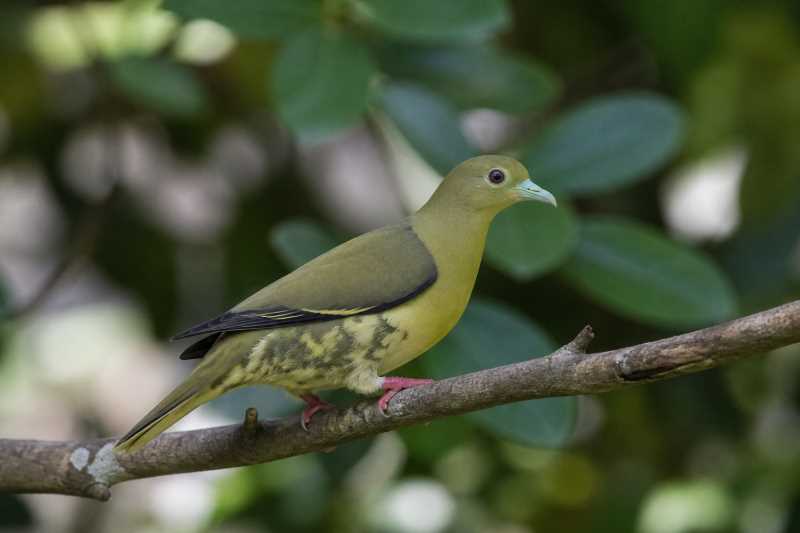
The Sumatran Green Pigeon is a medium-sized bird, measuring approximately 25 to 30 centimeters in length. Its plumage is predominantly green, a characteristic feature of the genus Treron. This vibrant green coloration not only serves as camouflage against the lush foliage but also contributes to its striking appearance.
Males and females are similar in appearance, although subtle differences exist. Males typically exhibit a slightly brighter and more vivid coloration, while females have a more subdued tone. The birds have a distinctive yellowish-green breast and a grayish crown. Their eyes are a deep red, adding a touch of contrast to their overall appearance.
One of the most distinguishing features of the Sumatran Green Pigeon is its tail, which is relatively long and tapers to a point, giving rise to its species name "oxyurus," meaning "sharp tail" in Greek. This unique tail shape is not only an identifying characteristic but also assists in maneuvering through the dense forest canopies.
Diet and Feeding Habits
The diet of the Sumatran Green Pigeon is primarily frugivorous, consisting mainly of various fruits and berries. They play a crucial role in the ecosystem as seed dispersers. By consuming fruits and excreting the seeds in different locations, these birds contribute to the propagation of numerous plant species, thus maintaining the biodiversity of their habitat.
Their feeding habits are quite fascinating. Sumatran Green Pigeons are known to swallow fruits whole, thanks to their specialized digestive system that can handle large seeds. They often feed in flocks, which can provide safety in numbers against potential predators.
Behavior and Social Structure
Sumatran Green Pigeons are social birds, often found in small flocks. Their social structure is relatively simple, with no complex hierarchies observed. These flocks can consist of just a few individuals or may grow larger, especially when feeding in fruit-abundant areas. The presence of a large flock can be a spectacular sight, with flashes of green darting through the forest canopy.
Communication among these pigeons is primarily through vocalizations. Their calls are soft and melodious, often described as a gentle cooing. These calls serve multiple purposes, including mating calls and alert signals to warn of approaching danger.
Reproduction and Lifecycle
The breeding season for the Sumatran Green Pigeon typically coincides with the fruiting season, ensuring an ample food supply for the young. Like many pigeons, they are monogamous, forming long-lasting pair bonds. The courtship behavior involves a series of displays by the male, including bowing and cooing to attract the female.
Nesting usually occurs in the dense foliage of tall trees, providing protection from predators. The female lays one to two eggs, which both parents incubate. After about two weeks, the eggs hatch, and the chicks are fed a diet of regurgitated fruit by both parents. The young pigeons fledge after approximately three weeks, though they remain dependent on their parents for some time.
Conservation Status and Threats
The International Union for Conservation of Nature (IUCN) currently lists the Sumatran Green Pigeon as a species of "Least Concern." However, this does not imply that the species is free from threats. The primary concern for these birds is habitat loss due to deforestation and land conversion for agriculture, palm oil plantations, and other human activities.
Conservation efforts are crucial to ensure the survival of the Sumatran Green Pigeon. Protecting their natural habitat, promoting sustainable land-use practices, and raising awareness about the ecological importance of these birds are vital steps in preserving their future.
Conclusion
The Sumatran Green Pigeon is more than just a vibrant feathered inhabitant of Sumatra’s forests; it is an integral part of the ecosystem. Its role in seed dispersal highlights the interconnectedness of life within these tropical forests. Ensuring its survival is not only a matter of preserving a single species but also safeguarding the broader ecological integrity of its habitat.
Increased awareness and concerted conservation efforts can help protect the Sumatran Green Pigeon and its environment. By appreciating the beauty and ecological significance of this species, we take a step toward preserving the rich biodiversity of our planet. The Sumatran Green Pigeon stands as a reminder of the wonders of nature that thrive in the remote corners of our world, deserving our attention and protection.
Related posts