The Spotted Crocias: An Avian Marvel of the Montane Forests
The Spotted Crocias (Laniellus albonotatus) is an enigmatic bird species that has fascinated ornithologists and bird enthusiasts alike. Endemic to the lush, montane forests of Java, Indonesia, this bird represents both the beauty and fragility of biodiversity within its habitat. With its distinctive plumage and elusive nature, the Spotted Crocias is a true emblem of the region’s avifauna.
Taxonomy and Description
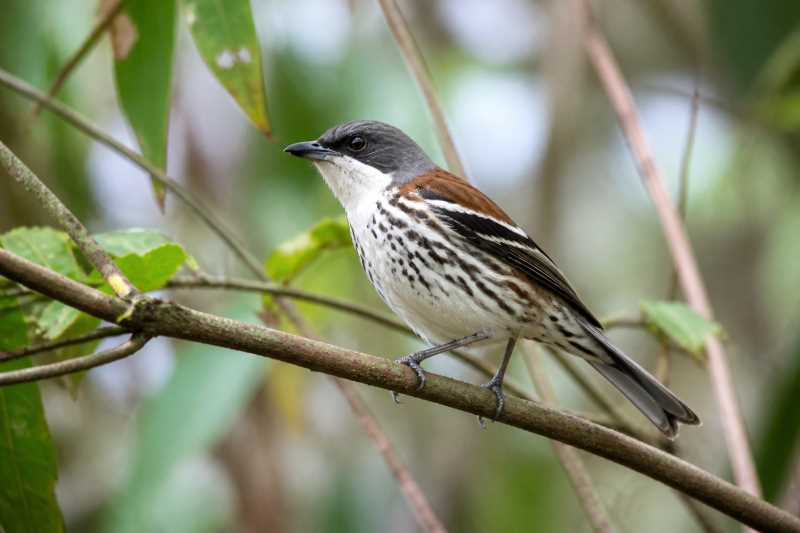
Belonging to the Leiothrichidae family, the Spotted Crocias was first described by ornithologist Charles Lucien Bonaparte in 1850. This bird is medium-sized, measuring approximately 25 centimeters in length. Its most striking features are its ash-grey plumage adorned with white spots, which provide excellent camouflage among the dense forest foliage.
The Spotted Crocias exhibits sexual monomorphism, meaning males and females appear similar. Both genders have a white supercilium and a dark line through the eye, coupled with a blackish tail that has white tips. The bird’s underparts are a lighter grey, contributing to its subtle elegance.
Habitat and Distribution
The Spotted Crocias is found exclusively in the montane forests of western Java, usually at elevations between 800 and 2,400 meters above sea level. These forests are characterized by high humidity and dense vegetation, providing the perfect environment for this bird’s survival. The restricted range of the Spotted Crocias makes it particularly vulnerable to habitat loss.
Java’s montane forests are a biodiversity hotspot, home to many endemic species. However, these areas face significant threats from deforestation, agricultural expansion, and human encroachment. The loss of habitat not only affects the Spotted Crocias but also the myriad of species that depend on these forests for survival.
Behavior and Ecology
The Spotted Crocias is a social bird, often seen in small flocks of up to 15 individuals. These flocks are sometimes mixed with other bird species, a behavior that provides safety in numbers and increases foraging efficiency. The bird is known for its melodious song, a series of clear whistles that resonate through the forest.
Feeding primarily on insects, the Spotted Crocias plays a vital role in controlling insect populations within its habitat. It forages in the mid to upper canopy, adeptly picking insects off leaves and branches. The bird’s diet also occasionally includes fruits and berries, making it an important seed disperser and contributing to the health and regeneration of its forest environment.
Conservation Status
The International Union for Conservation of Nature (IUCN) lists the Spotted Crocias as Near Threatened. The primary threat to its survival is habitat destruction. The montane forests of Java are under intense pressure from human activities, including logging and conversion to agricultural land.
Conservation efforts are crucial for the protection of the Spotted Crocias. These efforts include habitat preservation and restoration, alongside environmental education and awareness campaigns to highlight the importance of these birds and their habitats. Protected areas and national parks play a significant role in safeguarding the remaining forest tracts essential for the survival of this species.
The Role of the Spotted Crocias in Culture and Science
The Spotted Crocias, while not as celebrated in local folklore as some other species, holds great importance in the scientific community. Its presence is often an indicator of the health of its montane forest habitat. Studying this bird provides insights into the ecological dynamics of these regions and helps inform conservation strategies.
Birdwatchers and ecotourists are increasingly visiting Java to catch a glimpse of this rare bird, contributing to the local economy and underscoring the potential for sustainable tourism as a conservation tool. By fostering a greater appreciation and understanding of the Spotted Crocias, conservationists hope to garner more support for its protection.
Conclusion
The Spotted Crocias is not just a bird; it is a symbol of the rich biodiversity that the montane forests of Java hold. Protecting this species requires a concerted effort to preserve its natural habitat and mitigate the threats it faces. With proper conservation measures, there is hope that future generations will continue to marvel at the beauty and ecological significance of the Spotted Crocias.
In summary, the Spotted Crocias serves as a reminder of the intricate connections within ecosystems and the role each species plays in maintaining environmental balance. Its survival hinges on our ability to value and protect the natural world, ensuring that these remarkable birds continue to grace the forests of Java with their presence.
Related posts