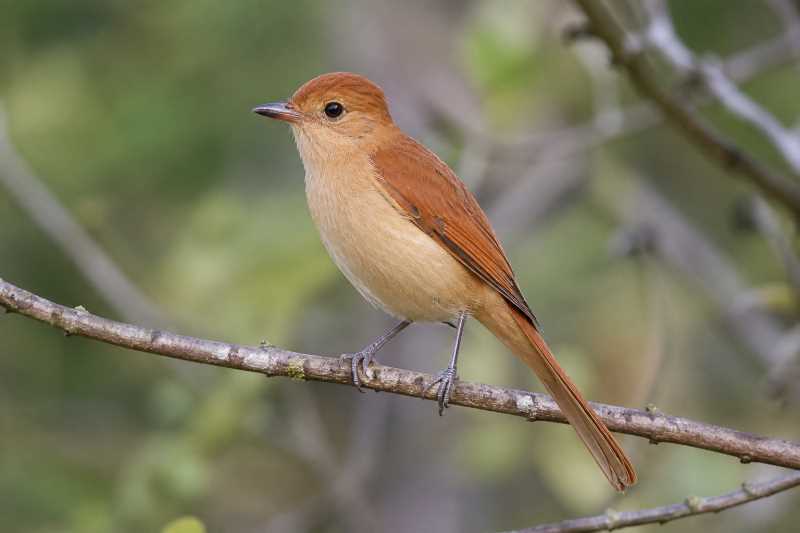
The Enigmatic Rufous Casiornis: A Detailed Exploration
The Rufous Casiornis (Casiornis rufus) is a fascinating avian species that captures the attention of ornithologists and birdwatchers alike. Belonging to the Tyrannidae family, this bird is a testament to the diversity and complexity of life found in the Neotropical ecozones. Its distinctive coloration and unique behaviors make it an intriguing subject for those interested in avian biology and ecology.
Taxonomy and Classification
The Rufous Casiornis is part of the Tyrant flycatcher family, which includes over 400 species distributed across the Americas. Within this vast family, Casiornis rufus is one of the two species classified under the genus Casiornis, the other being the Ash-throated Casiornis (Casiornis fuscus). First described by the renowned French ornithologist Louis Jean Pierre Vieillot in 1816, the Rufous Casiornis has since maintained its status as a distinct species, easily recognizable by its rufous plumage.
Physical Description
True to its name, the Rufous Casiornis is characterized by its vibrant rufous or reddish-brown plumage. The bird’s upperparts, including the head, back, and wings, showcase this striking color, while the underparts are typically a paler shade. One of the most distinguishing features is its relatively short tail and rounded wings, which contribute to its overall compact appearance. Measuring approximately 16 to 18 centimeters in length and weighing around 25 to 30 grams, the Rufous Casiornis is a medium-sized bird within its family.
Habitat and Distribution
The Rufous Casiornis is primarily found in the dry, deciduous forests and savannas of South America. Its range spans several countries, including Brazil, Bolivia, Paraguay, and Argentina. The bird thrives in environments where open woodland and scrubby areas are prevalent, often seen perched on low branches or foraging for insects among the foliage. Its preference for these habitats makes it particularly vulnerable to habitat destruction and environmental changes, posing challenges for conservation efforts.
Behavioral Patterns
Despite its relatively widespread distribution, the Rufous Casiornis is known for its elusive nature. It often remains hidden within dense vegetation, making it a challenge for birdwatchers to observe. However, during the breeding season, its presence becomes more noticeable as males engage in vocal displays to attract mates. The species is known for its melodious songs, which consist of a series of whistles and notes that resonate through the forest.
The Rufous Casiornis is predominantly insectivorous, feeding on a variety of insects such as beetles, caterpillars, and flies. It employs a sit-and-wait strategy, perching silently before swooping down to capture its prey. This feeding behavior is typical of many Tyrant flycatchers, showcasing their adaptability and skill as aerial hunters.
Reproduction and Life Cycle
Breeding for the Rufous Casiornis typically occurs during the wet season when food resources are abundant. The species is monogamous, with pairs often returning to the same nesting sites each year. Nests are constructed in trees or shrubs, using materials such as twigs, grasses, and leaves to create a secure environment for the eggs. Clutch sizes usually range from two to three eggs, which are incubated by both parents.
The incubation period lasts approximately two weeks, after which the chicks hatch and are fed by both parents. The young fledge within three weeks, but they continue to rely on their parents for food and protection until they are fully independent.
Conservation Status
Currently, the Rufous Casiornis is classified as a species of Least Concern by the International Union for Conservation of Nature (IUCN). However, its dependence on specific habitats means that it is susceptible to threats such as deforestation and habitat fragmentation. Conservation efforts aimed at preserving its natural habitat are crucial for ensuring the long-term survival of this species.
Conclusion
The Rufous Casiornis is a remarkable bird that highlights the rich biodiversity of the Neotropical region. Its striking appearance, coupled with its secretive nature, makes it a subject of interest for both amateur birdwatchers and seasoned ornithologists. Understanding the ecology and behavior of this species is essential for its conservation and for appreciating the intricate web of life that exists within its habitats.
As we continue to explore and document the wonders of avian life, the Rufous Casiornis stands as a reminder of the beauty and complexity of nature, urging us to protect the environments that support such incredible biodiversity.
Related posts