
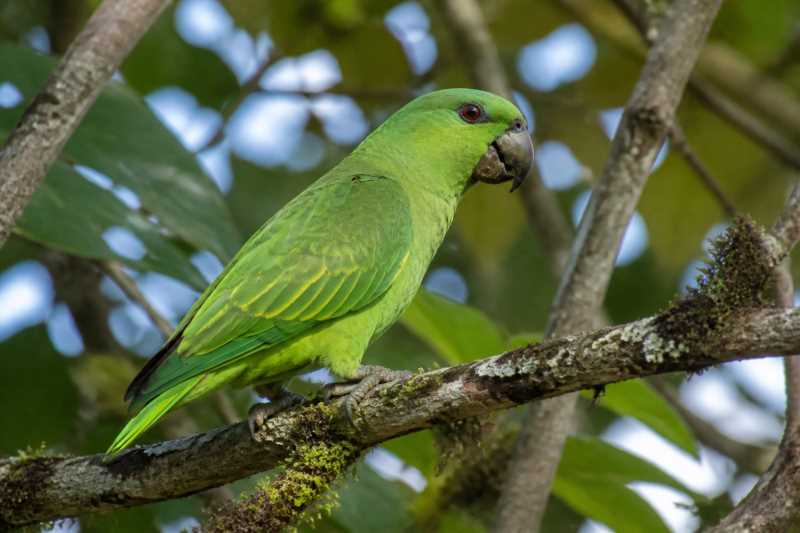
Unveiling the Short-tailed Parrot: A Vibrant Jewel of the Amazon
The Amazon rainforest, with its sprawling canopies and rich biodiversity, is home to a multitude of avian species that capture the imagination of ornithologists and bird enthusiasts alike. Among these is the Short-tailed Parrot, scientifically known as Graydidascalus brachyurus, a vibrant and captivating bird that stands out not only for its striking appearance but also for its unique ecological role within its habitat.
Taxonomy and Morphology
The Short-tailed Parrot belongs to the order Psittaciformes, which encompasses all parrots, and is the sole species within the genus Graydidascalus. This bird is relatively small compared to its cousins, measuring approximately 24 cm in length. True to its name, the Short-tailed Parrot features a noticeably short tail, which is one of its distinguishing characteristics.
Its plumage is predominantly bright green, providing effective camouflage among the lush greenery of the rainforest. The bird’s most striking features are its head and neck, which are adorned with a lighter, more vivid shade of green. Its wings and tail feathers are edged with blue, adding a splash of color that makes it a visual delight. The parrot’s beak is robust and curved, typical of most parrots, aiding in its feeding habits.
Habitat and Distribution
Graydidascalus brachyurus is native to the Amazon Basin, predominantly found in the lowland rainforests of Brazil, Colombia, Ecuador, Peru, and Venezuela. It thrives in the humid tropical climates of these regions, where it inhabits both primary and secondary forests. The parrot’s adaptability to different forest types highlights its ecological versatility.
Despite its relatively restricted range, the Short-tailed Parrot is not currently considered at risk. Its population is believed to be stable, although ongoing deforestation and habitat fragmentation pose potential threats that could affect its numbers in the future.
Behavior and Diet
The Short-tailed Parrot is a social creature, often seen in small flocks that can number up to 30 individuals. These flocks are usually observed foraging together, displaying a high level of social interaction and cooperation. Their calls are a series of high-pitched, melodious whistles, which serve both as a means of communication and as a way to maintain cohesion within the flock.
In terms of diet, the Short-tailed Parrot is primarily frugivorous, feeding on a variety of fruits, seeds, and nuts. Its strong beak is perfectly adapted for cracking open hard shells to access the nutritious seeds within. This feeding behavior plays a crucial role in seed dispersal, making the Short-tailed Parrot an important ecological agent in maintaining the health and diversity of the rainforest.
Breeding and Reproduction
The breeding season for the Short-tailed Parrot typically coincides with the wet season, when food resources are abundant. These parrots nest in tree cavities, which provide a safe and sheltered environment for their young. The female usually lays between two to four eggs, which are incubated for about 24 to 26 days.
Once hatched, the chicks are altricial, meaning they are born relatively undeveloped and require significant parental care. Both parents are involved in feeding and nurturing the young, ensuring they have the best chance of survival. Fledging occurs about 8 to 10 weeks post-hatching, at which point the juveniles begin to explore their surroundings and gradually integrate into the flock.
Conservation and Challenges
While the Short-tailed Parrot is currently listed as Least Concern by the International Union for Conservation of Nature (IUCN), the ongoing threats of habitat destruction and climate change cannot be ignored. The expansion of agricultural activities, logging, and infrastructure development continue to encroach upon the Amazon rainforest, resulting in habitat loss and fragmentation.
Conservation efforts aimed at preserving the Amazon rainforest are critical not only for the Short-tailed Parrot but also for the myriad of species that rely on this ecosystem. Initiatives to protect large areas of rainforest, along with sustainable development practices, are essential to ensure the long-term survival of these vibrant birds and the biodiversity of the region.
Conclusion
The Short-tailed Parrot is a testament to the rich avian diversity of the Amazon Basin. Its vibrant plumage, social behavior, and ecological role make it a fascinating subject for study and admiration. As we continue to learn more about this species and its environment, it becomes increasingly evident that the conservation of such unique creatures is of paramount importance.
In preserving the habitat of the Short-tailed Parrot, we not only protect a single species but also contribute to the broader effort of safeguarding the Amazon rainforest and its unparalleled biodiversity. The Short-tailed Parrot, with its bright plumage and spirited nature, serves as a symbol of the natural beauty and complexity of the ecosystems it inhabits.
Related posts


