The Elusive Beauty of the Outback: The Letter-winged Kite (Elanus scriptus)
In the vast, arid expanses of the Australian outback, a unique raptor quietly thrives, embodying both mystery and elegance—the Letter-winged Kite (Elanus scriptus). This nocturnal bird of prey, renowned for its striking appearance and elusive nature, is a fascinating subject for ornithologists and bird enthusiasts alike.
Appearance and Identification
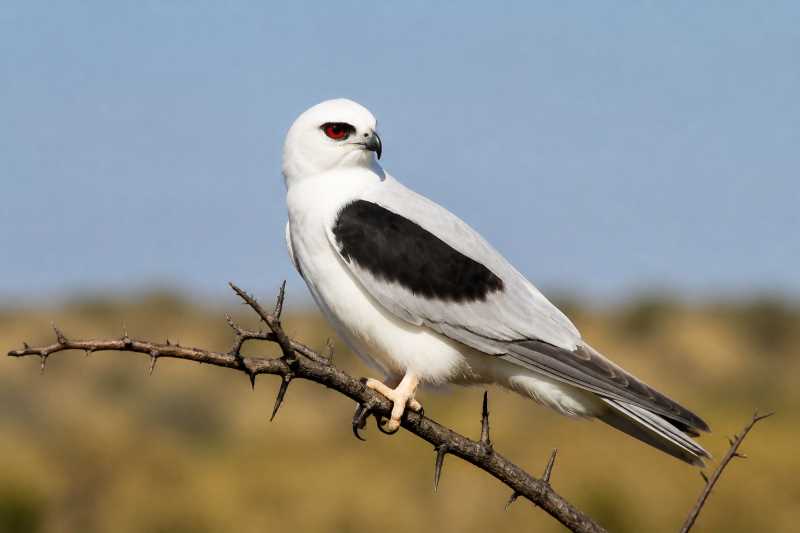
The Letter-winged Kite is distinguished by its striking plumage and characteristic wing markings. With a wingspan ranging from 90 to 100 centimeters, these kites are medium-sized raptors with predominantly pale grey and white plumage. The bird’s most defining feature is the distinctive black markings on its underwings, which resemble the letter ‘M’ when in flight—hence the name "Letter-winged." Its large, red eyes and a hooked beak are typical of nocturnal birds of prey, designed for hunting in low light conditions.
The kite’s tail is short and squared, and its flight is buoyant and graceful, making it a captivating sight as it glides silently across the twilight sky. Its overall appearance is similar to the Black-shouldered Kite (Elanus axillaris), but the Letter-winged Kite is primarily active at night, a behavioral trait that sets it apart from its diurnal relative.
Habitat and Distribution
The Letter-winged Kite is endemic to Australia, primarily inhabiting the interior regions of the continent. Its preferred habitats are arid and semi-arid environments, including open plains, grasslands, and shrublands. During periods of abundance, these kites can be found in large numbers in areas with high populations of their primary prey—small mammals such as rodents.
The distribution of the Letter-winged Kite can be quite variable, largely dictated by the availability of prey. In times of drought or food scarcity, these birds may disperse widely, sometimes appearing in coastal regions or even urban areas. However, their core habitat remains the remote inland regions, where they are most frequently observed during population booms.
Behavior and Ecology
One of the most intriguing aspects of the Letter-winged Kite is its nocturnal hunting behavior. Unlike most raptors, which hunt primarily during the day, these kites are primarily active at night. They have evolved keen eyesight adapted to low-light conditions, allowing them to hunt effectively under the cover of darkness.
Their diet consists mainly of small mammals, particularly the Long-haired Rat (Rattus villosissimus), which experiences population explosions in certain years. During these times, the Letter-winged Kite can breed prolifically, taking advantage of the abundant food supply. Breeding pairs may lay up to six eggs in a single clutch, with both parents sharing responsibilities for incubation and feeding the chicks.
The Letter-winged Kite is also known for its communal roosting behavior, often gathering in large groups during non-breeding seasons. This communal lifestyle offers protection from predators and facilitates communication among individuals, contributing to their survival in the harsh outback environment.
Conservation Status and Threats
Currently, the Letter-winged Kite is classified as a species of "Least Concern" by the International Union for Conservation of Nature (IUCN). However, its population is subject to significant fluctuations due to its reliance on boom-and-bust cycles of its prey populations. During times of low prey availability, their numbers can decline sharply, raising concerns about their long-term conservation status.
Threats to the Letter-winged Kite include habitat destruction and fragmentation, primarily due to agricultural development and land clearing. Climate change also poses a potential threat, as changing weather patterns could affect the availability of prey and suitable nesting sites.
Conservation efforts for the Letter-winged Kite focus on habitat preservation and monitoring population trends. Ensuring the protection of large tracts of native vegetation in the outback is crucial for maintaining the ecological balance necessary for these kites to thrive.
The Beauty of Adaptation
The Letter-winged Kite is a testament to the incredible adaptability of wildlife in the face of challenging environmental conditions. Its nocturnal habits, communal behavior, and opportunistic breeding strategy highlight the species’ resilience and resourcefulness.
For bird enthusiasts and researchers, the Letter-winged Kite offers a unique glimpse into the intricate web of life within Australia’s outback. Observing these kites in their natural habitat is not only a thrilling experience but also a reminder of the delicate balance that sustains our planet’s diverse ecosystems.
As we continue to study and protect the Letter-winged Kite, we gain valuable insights into the interconnectedness of species and the importance of preserving the habitats that sustain them. In doing so, we ensure that future generations can marvel at the majestic flight of the Letter-winged Kite across the Australian skies.
Related posts