The Enigmatic Grey Noddy: A Comprehensive Overview
Introduction
The Grey Noddy, scientifically known as Anous albivitta, is a captivating seabird that has intrigued ornithologists and birdwatchers alike. Belonging to the family Laridae, this bird is a member of the tern subfamily Sterninae. The Grey Noddy is predominantly found in the subtropical and tropical regions of the Pacific Ocean, with its presence recorded across various island territories.
Taxonomy and Nomenclature
The Grey Noddy was first described by zoologists in the 19th century, and since then, it has been subject to various taxonomic classifications. Initially grouped with other noddies, recent genetic studies have confirmed its unique evolutionary path, distinguishing it from its relatives. The name ‘Noddy’ is derived from the bird’s characteristic head-nodding behavior, which can be observed during courtship and social interactions.
Physical Characteristics
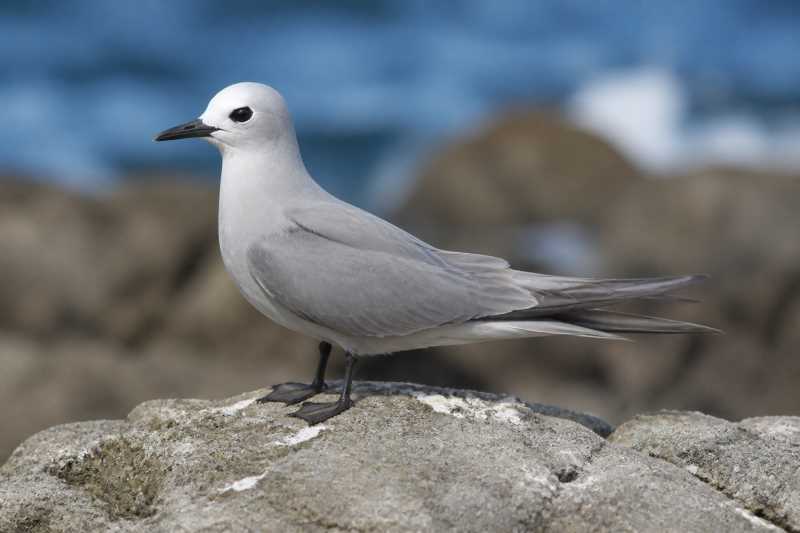
The Grey Noddy is a medium-sized bird, typically measuring between 35 to 40 cm in length, with a wingspan ranging from 65 to 72 cm. The plumage is predominantly grey, with a lighter shade on the underparts. One of the distinguishing features of the Grey Noddy is its white forehead and crown, which contrasts sharply with its darker body. The bird’s tail is relatively short and forked, and its beak is slender and black.
Distribution and Habitat
Grey Noddies have a wide distribution across the Pacific Ocean. They are known to inhabit island groups such as the Marquesas, the Society Islands, and the Tuamotu Archipelago. These birds prefer nesting on rocky islets and coral atolls, where they can find ample food supply and minimal predation risk. The Grey Noddy’s habitat is mainly coastal, although it spends a significant amount of time foraging at sea, often forming large flocks.
Behavior and Ecology
Grey Noddies are social birds, often seen in large colonies, especially during the breeding season. They exhibit a unique nodding behavior that is believed to be a form of communication among individuals. Their diet consists mainly of small fish and squid, which they catch by plunge-diving into the water. The birds are known for their remarkable agility in flight, which aids them in capturing prey.
Breeding and Nesting
Breeding occurs in large colonies on isolated islands, where the Grey Noddy can nest without significant disturbance. The breeding season varies depending on the geographic location, but it generally aligns with periods of abundant food supply. The nests are simple structures made of twigs and seaweed, often placed on rocky ledges or in small crevices. Both parents participate in incubation, which lasts about 35 days. Chicks are semi-precocial at birth, meaning they are relatively mature and mobile but still depend on their parents for feeding and protection.
Conservation Status
Currently, the Grey Noddy is classified as Least Concern by the International Union for Conservation of Nature (IUCN). However, certain island populations may face threats from habitat destruction, invasive species, and climate change. Conservation efforts are focused on protecting nesting sites and controlling invasive species that pose a threat to the bird’s habitat.
Human Interaction and Cultural Significance
In some Pacific cultures, the Grey Noddy holds cultural significance and is often featured in folklore and local traditions. Historically, indigenous communities have relied on the bird as a food source and as an indicator of marine health.
Conclusion
The Grey Noddy is a fascinating species that plays a vital role in the Pacific ecosystem. Its unique behaviors, social structure, and adaptability make it a subject of interest for continued scientific study. Protecting its habitat is crucial to ensuring the survival of this seabird, which, despite its current stability, may face challenges in the future due to environmental changes.
The Grey Noddy stands as a testament to the beauty and complexity of seabird life, reminding us of the intricate balance that exists within our planet’s ecosystems.
References
- BirdLife International. (2022). Species factsheet: Anous albivitta.
- del Hoyo, J., Elliott, A., & Sargatal, J. (Eds.). (1996). Handbook of the Birds of the World, Vol. 3.
- Schreiber, E. A., & Burger, J. (2002). Biology of Marine Birds.
- Whittow, G. C. (1997). The Ecology and Behavior of Seabirds.
Related posts