The Straight-billed Hermit: A Jewel of the Tropical Forests
In the rich, biodiverse tapestry of the tropical forests of South America, the Straight-billed Hermit (Phaethornis bourcieri) emerges as a fascinating subject of study for ornithologists and bird enthusiasts alike. This small, enigmatic hummingbird is notable not only for its distinctive straight bill but also for its role in the ecosystem as a pollinator, its unique behaviors, and its contribution to the vibrant avian diversity of its habitat.
Taxonomy and Distribution
The Straight-billed Hermit belongs to the family Trochilidae, which encompasses all hummingbirds. It is one of the various species within the genus Phaethornis, commonly referred to as hermits. These birds are predominantly found in the lowland forests of northern South America, with significant populations in countries such as Brazil, Colombia, Ecuador, and Peru. The species thrives in humid forest environments, often occupying the understory and forest edges, where it can find both shelter and abundant food sources.
Physical Characteristics
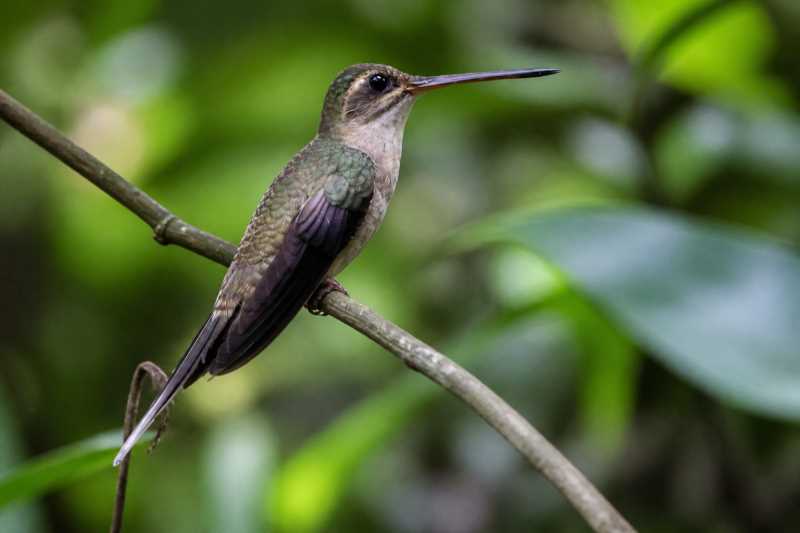
As its name suggests, the Straight-billed Hermit is characterized by its straight, slender bill, which sets it apart from other hermits that generally possess more curved bills. This morphological feature allows the Straight-billed Hermit to access nectar from a variety of flowering plants, making it a versatile forager. The bird typically measures about 10 to 12 centimeters in length and weighs around 3 to 4 grams. Its plumage is a blend of muted earthy tones, with a bronzy-green back, a rufous tail tipped with white, and a buffy throat and belly. These colors provide excellent camouflage in its forest environment.
Behavior and Ecology
The Straight-billed Hermit is a solitary bird, often seen flitting through the forest, feeding on nectar from flowers with its rapid wing beats. It plays a critical role as a pollinator, transferring pollen as it moves from one flower to another. This behavior not only sustains the bird but also supports the reproductive cycles of numerous plant species, contributing to the health and diversity of the forest ecosystem.
In addition to nectar, this hummingbird also feeds on small insects and spiders, providing a source of protein essential for its diet. The bird’s feeding habits are marked by a methodical approach, often following a trap-lining route where it visits a specific sequence of flowers repeatedly throughout the day.
Reproduction and Lifespan
The breeding season of the Straight-billed Hermit varies geographically but often coincides with the rainy season when food resources are abundant. The female is solely responsible for building the nest, incubating the eggs, and caring for the young. Nests are typically constructed from plant fibers, spider silk, and other natural materials, often positioned on the underside of large leaves or in well-concealed locations to protect from predators.
Each breeding cycle results in the laying of two tiny, white eggs. After an incubation period of about 15 to 19 days, the eggs hatch, and the chicks are cared for by the mother until they fledge a few weeks later. The lifespan of a Straight-billed Hermit in the wild can range from 3 to 5 years, though this can be influenced by environmental factors and predation.
Conservation Status
Currently, the Straight-billed Hermit is classified as a species of Least Concern by the International Union for Conservation of Nature (IUCN). However, like many forest-dependent species, it faces threats from habitat loss due to deforestation and human encroachment. Conservation efforts aimed at preserving tropical forests are crucial to ensuring the survival of this and other species that rely on these habitats.
The Role of the Straight-billed Hermit in the Ecosystem
The ecological importance of the Straight-billed Hermit cannot be overstated. As a pollinator, it helps maintain the genetic diversity of plant populations and facilitates the production of fruits and seeds that serve as food for various other forest creatures. Its presence is an indicator of the health of its environment, making it a valuable species for ecological monitoring and conservation strategies.
In conclusion, the Straight-billed Hermit is a remarkable example of the intricate relationships that sustain tropical ecosystems. Its unique adaptations and behaviors highlight the complexity and beauty of nature, encouraging continued research and conservation efforts to protect the delicate balance of life within the world’s tropical forests.
Related posts