The Mountain Velvetbreast: A Jewel of the Andes
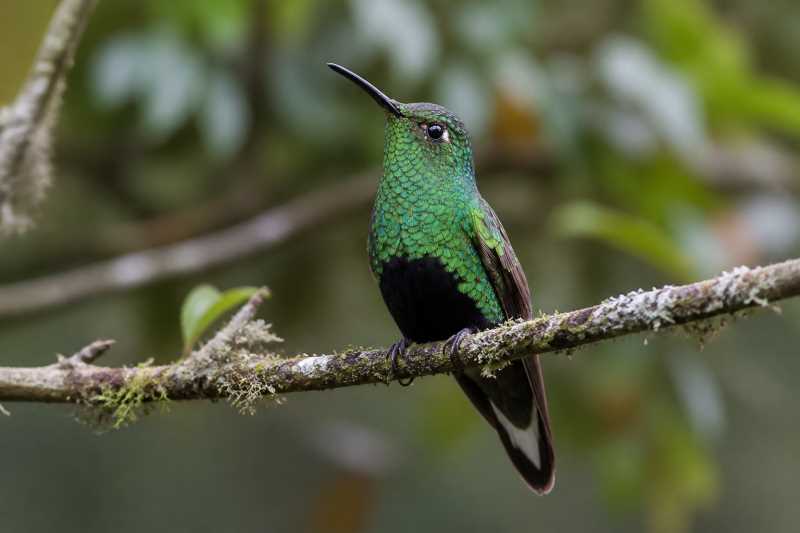
The Mountain Velvetbreast (Lafresnaya lafresnayi) is a captivating hummingbird species that enchants bird enthusiasts and ornithologists alike. Found primarily in the Andean regions of South America, this small yet resplendent bird boasts a beautiful plumage and intriguing behaviors that make it a subject of interest for scientific study and birdwatching expeditions.
Taxonomy and Description
Belonging to the family Trochilidae, the Mountain Velvetbreast is one of the unique gems of the Andean avian community. This species was first described by Jules Bourcier in 1847 and named in honor of the French ornithologist Frédéric de Lafresnaye. The bird displays sexual dimorphism, with the males being slightly more vibrant in color than the females.
The Mountain Velvetbreast’s plumage is a striking combination of vibrant green and velvet-like purples, giving it an iridescent quality that changes with the light. Adult males typically exhibit a shimmering green back and crown, complemented by a rich, velvety purple throat and breast, hence the name ‘velvetbreast.’ Females, on the other hand, are generally more subdued, with a mix of green and gray tones that lend them a more muted appearance.
Habitat and Distribution
The Mountain Velvetbreast is predominantly found in the high-altitude cloud forests of the Andes, ranging from Venezuela and Colombia in the north to Peru in the south. These birds thrive at elevations between 1,200 and 3,400 meters, where the dense foliage and abundant flowering plants provide ample feeding opportunities. The cloud forests present a unique ecosystem characterized by high humidity and frequent mist, offering a perfect sanctuary for these birds.
This species is highly adapted to its mountainous habitat, where it navigates through the dense vegetation with remarkable agility. The Mountain Velvetbreast has evolved to exploit the nectar resources of a variety of flowering plants, using its slender, curved bill to reach deep into flowers and extract their sweet sustenance.
Feeding and Behavior
Like many hummingbirds, the Mountain Velvetbreast relies primarily on nectar for its energy, although it will also consume insects and spiders to supplement its diet with protein. The bird’s feeding behavior is characterized by rapid, hovering flight, allowing it to maintain a stationary position while feeding on flowers. This ability to hover is facilitated by their rapid wingbeats, which can reach up to 80 times per second.
Aside from feeding, these birds are also known for their territorial nature. Male Mountain Velvetbreasts often stake out feeding territories rich in nectar-producing flowers, defending them vigorously against intruders. This behavior is crucial for attracting mates, as a territory abundant in food resources is an attractive prospect for potential female partners.
Breeding and Nesting
The breeding season of the Mountain Velvetbreast varies depending on the locality and availability of resources, but it generally coincides with the peak flowering periods of their habitat. The male performs elaborate courtship displays to attract a female, showcasing its iridescent plumage and demonstrating its prowess in flight.
Once a pair has bonded, the female takes on the responsibility of nesting and rearing the young. The nest is usually constructed from plant fibers, moss, and lichen, intricately woven together to form a small cup-like structure. It is typically situated on a branch or in a sheltered spot to protect the eggs from predators and the elements.
The female lays a clutch of typically two eggs, which she incubates for about 16 to 19 days. After hatching, the chicks remain in the nest for approximately three weeks, during which the mother diligently provides them with food and care until they are ready to fledge.
Conservation Status and Threats
Despite its relatively wide distribution, the Mountain Velvetbreast is not immune to the threats facing many bird species today. Habitat loss due to deforestation, agricultural expansion, and climate change are significant concerns that could impact their populations.
Currently, the Mountain Velvetbreast is listed as Least Concern by the International Union for Conservation of Nature (IUCN). However, the continued degradation of its habitat poses a potential threat to its long-term survival. Conservation efforts focused on preserving the cloud forests of the Andes are crucial to ensuring the future of this species and the myriad of other organisms that share its ecosystem.
Conclusion
The Mountain Velvetbreast is a stunning representative of the rich biodiversity found in the Andes. Its vibrant colors, intricate behaviors, and adaptability to its environment make it a fascinating subject for study and a beloved sight for birdwatchers. While it currently enjoys a stable population status, ongoing conservation efforts are essential to safeguard its habitat and ensure that future generations can continue to marvel at this jewel of the mountains.
Related posts