The Enigmatic Lesser Green Leafbird: A Jewel of Southeast Asian Forests
The Lesser Green Leafbird (Chloropsis cyanopogon) is a captivating species, renowned for its vibrant plumage and melodious song. Endemic to the lush tropical forests of Southeast Asia, this avian gem is a subject of interest among ornithologists and birdwatchers alike. In this article, we delve into the characteristics, habitat, and conservation concerns surrounding the Lesser Green Leafbird, shedding light on its ecological significance and the challenges it faces in the modern world.
Taxonomy and Description
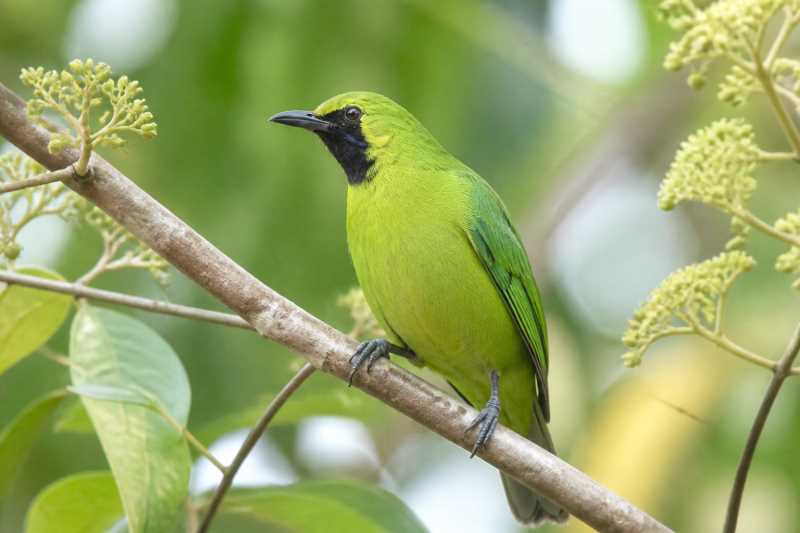
Belonging to the family Chloropseidae, the Lesser Green Leafbird is often confused with its close relative, the Greater Green Leafbird. However, it can be distinguished by its slightly smaller size and specific plumage characteristics. Adult males boast a striking emerald green color, with a distinctive black mask covering their eyes and throat. In contrast, females and juveniles display a more subdued green coloration, lacking the pronounced black markings.
These birds are generally small, measuring approximately 17 to 18 centimeters in length, with a slender build that aids their agility in dense forest canopies. Their powerful, slightly curved bills are adapted for a diet rich in fruits and insects, making them crucial players in their ecosystem’s food web.
Habitat and Distribution
The Lesser Green Leafbird inhabits a range of forested environments, from lowland rainforests to montane regions, thriving at elevations up to 1,500 meters. Its distribution spans across the Malay Peninsula, Sumatra, and Borneo, with occasional sightings reported in parts of Thailand and Myanmar.
These birds are highly dependent on dense, undisturbed forest habitats, where they find ample food resources and nesting sites. Unfortunately, habitat loss due to deforestation poses a significant threat to their populations. As forests are cleared for agriculture, logging, and urban development, the Lesser Green Leafbird’s habitat is increasingly fragmented, leading to isolated populations and reduced genetic diversity.
Behavior and Ecology
The Lesser Green Leafbird is primarily frugivorous, feeding on a diverse array of fruits, including figs, berries, and drupes. This diet is supplemented by insects and nectar, making them important pollinators and seed dispersers within their ecosystems. As they forage, these birds play a critical role in maintaining the health and diversity of tropical forests.
Social by nature, Lesser Green Leafbirds are often observed in pairs or small family groups. They communicate through a series of melodious calls and songs, which serve to reinforce pair bonds and establish territory. During the breeding season, which varies depending on the region, these birds engage in complex courtship displays, characterized by aerial acrobatics and vocal duets.
Nests are typically constructed high in the canopy, using a mix of twigs, leaves, and other plant materials. Females lay two to three eggs per clutch, which both parents incubate. After hatching, the chicks are diligently cared for by both parents until they fledge, usually within two to three weeks.
Conservation Status and Efforts
The International Union for Conservation of Nature (IUCN) currently lists the Lesser Green Leafbird as Near Threatened, primarily due to habitat loss and fragmentation. Conservation efforts are focused on protecting and restoring the bird’s natural habitats, with various organizations working to curb deforestation and promote sustainable land-use practices.
In addition to habitat conservation, there is a growing emphasis on community engagement and education. Local communities play a pivotal role in conservation, and efforts are underway to raise awareness about the importance of preserving forest ecosystems and their avian inhabitants.
Conclusion
The Lesser Green Leafbird is a vibrant symbol of Southeast Asia’s rich biodiversity. Its presence in the forest canopy is a testament to the ecological richness of these regions and the intricate relationships that sustain them. However, the challenges posed by habitat destruction require urgent attention and concerted action to ensure that future generations can continue to marvel at this avian jewel.
By understanding and addressing the threats facing the Lesser Green Leafbird, we can contribute to the preservation of one of nature’s most enchanting creatures and the vital ecosystems they inhabit. Through conservation efforts, education, and sustainable practices, we can help secure a future where the Lesser Green Leafbird continues to thrive in its natural habitat.
Related posts