Rufous-vented Paradise Flycatcher: A Jewel of African Avifauna
The avian world is replete with species that captivate with their beauty, behavior, and ecological significance. Among these is the Rufous-vented Paradise Flycatcher (Terpsiphone rufocinerea), a bird that graces the forests of Central and West Africa with its striking appearance and melodious calls. This article delves into the captivating world of this enchanting species, exploring its habitat, behavior, conservation status, and the role it plays in the rich tapestry of African biodiversity.
Taxonomy and Physical Description
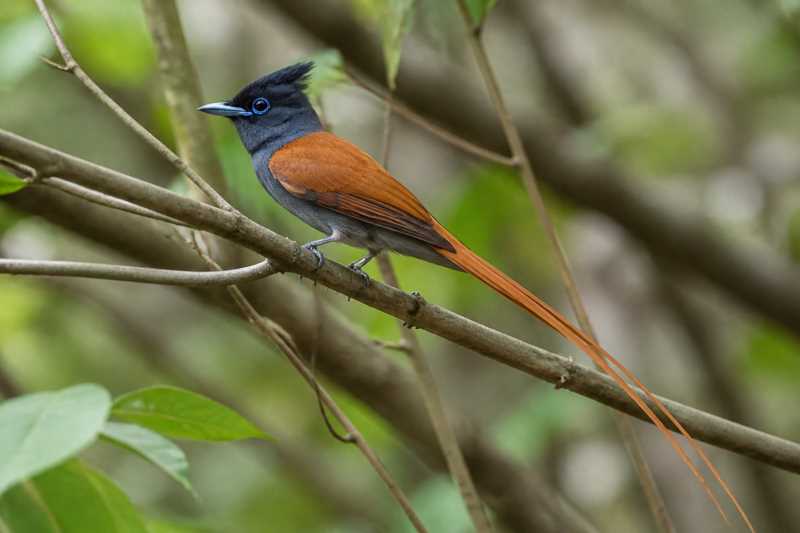
The Rufous-vented Paradise Flycatcher belongs to the family Monarchidae, a group of passerine birds known for their elaborate plumage and dynamic foraging techniques. The scientific name, Terpsiphone rufocinerea, reflects its distinctive coloration—‘rufocinerea’ suggesting the rufous and gray elements that characterize its appearance.
Adult males are particularly noteworthy for their long, elegant tail streamers, which can extend up to 30 centimeters beyond their body. This tail feature, combined with their vibrant rufous underparts and contrasting ashy gray upperparts, makes them a visual spectacle in the dappled forest light. Females and juveniles, while lacking the extravagant tail feathers, possess a charm of their own with more subdued but equally beautiful plumage.
Habitat and Distribution
This species is predominantly found in the lush, tropical forests of Central and West Africa. Its range extends through countries such as Nigeria, Cameroon, Gabon, and the Democratic Republic of Congo, where it inhabits primary and secondary forests, forest edges, and even wooded gardens. The Rufous-vented Paradise Flycatcher thrives in these environments due to the abundance of insects, which form the core of its diet.
Their presence in various forested habitats underscores the species’ adaptability, yet also highlights the importance of forest conservation in safeguarding their populations. As deforestation and habitat fragmentation continue to pose threats to tropical forests, the Rufous-vented Paradise Flycatcher serves as a poignant reminder of the interconnectedness of species and ecosystems.
Behavior and Ecology
The Rufous-vented Paradise Flycatcher is an insectivore, primarily feeding on a diet of flies, beetles, and other small invertebrates. It is known for its agile foraging behavior, often acrobatically flitting through the forest canopy in pursuit of prey. This foraging strategy not only highlights its adaptability but also its role in controlling insect populations, thereby maintaining ecological balance.
Socially, these birds are often observed in pairs or small family groups. Males are known for their territorial displays and melodious calls, which serve to attract mates and ward off rivals. These vocalizations, combined with their striking appearance, make the Rufous-vented Paradise Flycatcher a subject of admiration among birdwatchers and ornithologists alike.
Reproduction and Lifespan
Breeding typically occurs during the wet season, when food resources are abundant. The nest is a delicate cup-shaped structure, intricately woven from twigs, moss, and spider silk, and is usually positioned in a tree fork or dense shrubbery. Females lay a clutch of two to three eggs, which both parents take turns incubating.
The cooperative nature of their breeding behavior extends to chick rearing, with both parents actively involved in feeding and protecting the young. This biparental care ensures higher survival rates for the fledglings in the challenging forest environment.
Conservation Status and Challenges
Currently, the Rufous-vented Paradise Flycatcher is classified as Least Concern on the IUCN Red List. However, this status does not negate the challenges it faces, primarily stemming from habitat loss due to logging, agriculture, and urbanization. Conservation efforts focused on preserving forest habitats are crucial in ensuring the long-term survival of this species.
Local and international conservation organizations are working to promote sustainable land use practices and establish protected areas that can serve as sanctuaries for the Rufous-vented Paradise Flycatcher and countless other species that depend on forest ecosystems.
Conclusion
The Rufous-vented Paradise Flycatcher stands as a testament to the beauty and complexity of African avifauna. Its presence enriches the biodiversity of the regions it inhabits while its ecological role underscores the importance of conservation efforts in preserving our planet’s natural heritage. As we continue to unravel the mysteries of the natural world, the Rufous-vented Paradise Flycatcher will undoubtedly remain a symbol of the delicate balance that sustains life on Earth.
In understanding and protecting such species, we not only safeguard the future of these birds but also that of the intricate ecosystems they inhabit, ensuring that future generations can continue to marvel at their splendor.
Related posts