Eastern Olivaceous Flatbill: A Comprehensive Overview
The Eastern Olivaceous Flatbill (Rhynchocyclus olivaceus) is a fascinating avian species that has captured the attention of ornithologists and bird enthusiasts alike. Known for its distinct olive-green plumage and flat bill, this bird is a member of the Tyrannidae family, which includes tyrant flycatchers. This article delves into the various aspects of the Eastern Olivaceous Flatbill, exploring its habitat, behavior, diet, and conservation status.
Taxonomy and Identification
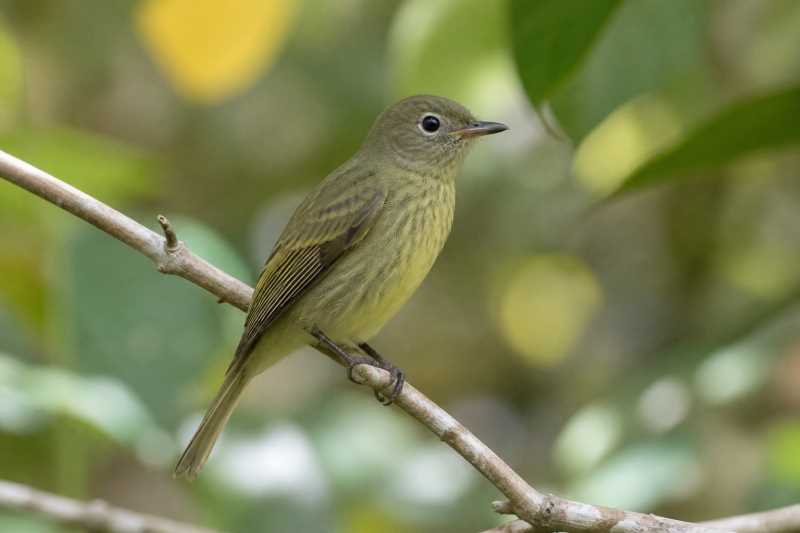
The Eastern Olivaceous Flatbill belongs to the genus Rhynchocyclus, which is comprised of several species of flatbills. Its scientific name, Rhynchocyclus olivaceus, reflects its olive-colored feathers. The bird is relatively small, with an average length of about 13 to 15 centimeters and a weight ranging from 14 to 18 grams. Its most distinguishing feature is the broad, flat bill, which is adapted for capturing insects.
In terms of appearance, the Eastern Olivaceous Flatbill sports a subtle yet striking olive-green coloration that provides excellent camouflage in its natural habitat. The underparts are typically lighter, with a pale yellow or cream hue. The wings and tail may exhibit darker shades of green or brown, adding to the bird’s overall cryptic look.
Habitat and Distribution
This species inhabits the Neotropical regions, with its range extending from Central America to northern South America. Countries such as Panama, Colombia, Venezuela, and Ecuador host significant populations of the Eastern Olivaceous Flatbill. It primarily resides in humid lowland forests, preferring areas with dense foliage that offer ample cover and feeding opportunities.
The bird is typically found at elevations ranging from sea level to about 1,200 meters, although it can occasionally be spotted at higher altitudes. Its habitat preference for dense forests makes it somewhat elusive, as it often remains hidden within the thick canopy, only revealing itself through its distinctive calls.
Behavior and Vocalizations
Eastern Olivaceous Flatbills are known for their solitary or paired lifestyle, rarely forming large flocks. They are active during the day, with peak activity occurring during the early morning and late afternoon. Their behavior is characterized by short, quick flights interspersed with periods of rest on perches.
The vocalizations of the Eastern Olivaceous Flatbill are an essential aspect of its behavior, primarily used for communication and territory establishment. Its call is a series of sharp, high-pitched notes that can be heard echoing through the forest. These calls are often repeated in quick succession, serving as a means of maintaining contact with mates or warding off potential competitors.
Diet and Feeding Habits
The diet of the Eastern Olivaceous Flatbill consists predominantly of insects, making it an insectivore. It employs a sit-and-wait strategy, perching silently until an unsuspecting insect comes within reach. With its broad bill, the flatbill can snatch prey with precision, often making quick, acrobatic maneuvers to catch its meal.
In addition to insects, this bird occasionally supplements its diet with small fruits and seeds. This opportunistic feeding behavior allows it to adapt to varying food availability within its environment, ensuring its survival even when insect populations fluctuate.
Reproduction and Lifespan
The breeding season for the Eastern Olivaceous Flatbill varies depending on its geographic location, but it generally coincides with the wet season when food is abundant. During this time, males establish territories and engage in courtship displays to attract females.
Nests are typically constructed in dense foliage, often in a concealed location to protect against predators. The female lays a clutch of two to three eggs, which are incubated for approximately two weeks. Both parents participate in feeding and caring for the hatchlings until they are ready to fledge.
The lifespan of the Eastern Olivaceous Flatbill in the wild is not well-documented, but similar species in the Tyrannidae family can live for several years under favorable conditions.
Conservation Status
Currently, the Eastern Olivaceous Flatbill is not considered to be at significant risk of extinction. The International Union for Conservation of Nature (IUCN) classifies it as a species of "Least Concern" due to its wide distribution and stable population numbers.
However, habitat loss poses a potential threat to this species, as deforestation and agricultural expansion continue to degrade its natural environment. Conservation efforts focused on preserving tropical forests and promoting sustainable land-use practices are vital to ensuring the long-term survival of the Eastern Olivaceous Flatbill.
Conclusion
The Eastern Olivaceous Flatbill is a remarkable bird with unique adaptations that enable it to thrive in the dense forests of the Neotropics. Its role as an insectivore highlights its importance in maintaining ecological balance within its habitat. Continued research and conservation efforts are crucial to safeguarding this species and its environment for future generations to appreciate and enjoy.
Related posts