Introduction
The New Guinea Broad-eared Horseshoe Bat (Rhinolophus euryotis) is an intriguing species that belongs to the Rhinolophidae family. Renowned for its unique physical characteristics and echolocation capabilities, this bat species plays a vital role in the ecosystems of New Guinea and surrounding regions. Despite its ecological importance, the New Guinea Broad-eared Horseshoe Bat remains relatively understudied, with many aspects of its life history and ecology still shrouded in mystery. This article delves into the various facets of this fascinating species, from its physical description to its conservation status, offering comprehensive insights for enthusiasts and researchers alike.
Physical Description
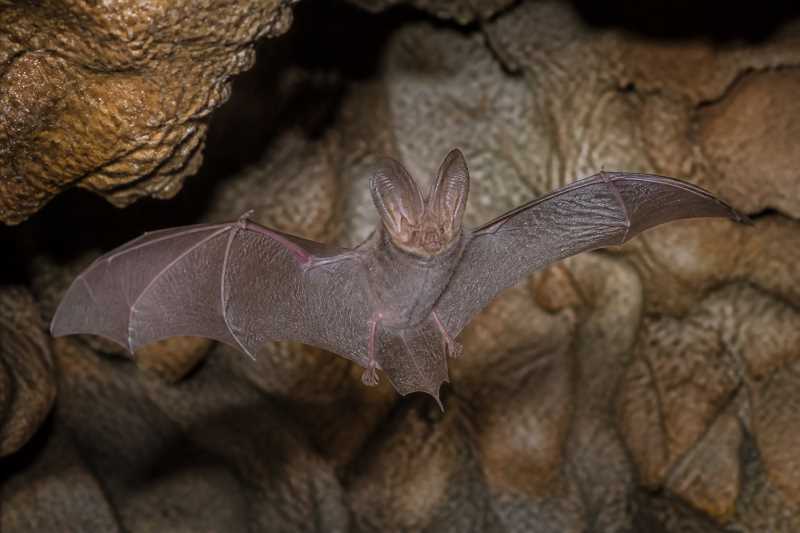
The New Guinea Broad-eared Horseshoe Bat is distinguished by its broad, distinctive noseleaf, which is typical of the Rhinolophidae family. This noseleaf is crucial for its echolocation, allowing the bat to navigate and hunt with precision in its nocturnal environment. The bat’s ears are notably broad, as suggested by its common name, and contribute to its acute sense of hearing.
This species exhibits a medium-sized body, with an average wingspan ranging from 30 to 40 centimeters. The fur of Rhinolophus euryotis is generally dark brown or reddish-brown, providing effective camouflage within its habitat. The underparts tend to be lighter, creating a subtle contrast that assists in thermoregulation.
The weight of an adult New Guinea Broad-eared Horseshoe Bat typically ranges between 8 to 12 grams, making it a relatively lightweight mammal. The bat’s wings are broad and equipped with a robust membrane that facilitates agile flight, necessary for capturing prey in dense forest environments.
Range and Habitat
Endemic to New Guinea, the New Guinea Broad-eared Horseshoe Bat inhabits a variety of forested environments. Its range primarily includes the lowland tropical rainforests and montane forests, where it finds abundant food sources and roosting sites.
The bat is adaptable to different forest elevations, ranging from sea level up to 2,000 meters. It favors areas with dense canopy cover, which provide shelter and breeding sites. These bats are also known to inhabit cave systems and hollow trees, which offer protection from predators and harsh weather conditions.
The region’s rich biodiversity supports a diverse community of organisms, with the New Guinea Broad-eared Horseshoe Bat playing a crucial role as both predator and prey within its ecosystem.
Behavior and Diet
Primarily nocturnal, the New Guinea Broad-eared Horseshoe Bat emerges at dusk to begin its nightly foraging activities. Echolocation is the primary sensory mechanism used to locate and capture prey, which mainly consists of insects. The bat’s diet includes moths, beetles, and other flying insects that are abundant in its habitat.
These bats are known for their agile flight patterns, often performing acrobatic maneuvers to catch prey mid-air. When not foraging, they roost in groups, which can range from small family units to larger colonies. Roosting sites are typically located in caves, under tree bark, or within dense foliage.
Social behavior among these bats includes vocal communication for coordinating group activities and maintaining social bonds. They also exhibit grooming behaviors, which aid in maintaining the health of their fur and wings.
Identification Tips (Field Recognition Cues)
Identifying the New Guinea Broad-eared Horseshoe Bat in the wild can be challenging due to its nocturnal habits and preference for dense habitats. However, certain features can aid in field recognition:
- Broad Ears and Noseleaf: The prominent noseleaf and broad ears are distinctive features that set this species apart from other bats in the region.
- Flight Pattern: Observing their flight pattern can be a clue; they often fly close to the ground with sudden, agile movements.
- Roosting Habits: Look for them in potential roosting sites like caves and dense foliage. They may be spotted resting during the day in these locations.
- Acoustic Identification: Utilizing bat detectors to capture their echolocation calls can provide a reliable method of identification, as their calls are unique to the species.
Conservation Status (With Threats and Protections)
The New Guinea Broad-eared Horseshoe Bat is currently listed as ‘Least Concern’ by the International Union for Conservation of Nature (IUCN). However, this status does not mean the species is free from threats. Habitat destruction, primarily due to logging and agricultural expansion, poses a significant threat to their populations.
Conservation efforts are crucial to ensure the preservation of their natural habitats. Protected areas and national parks in New Guinea play a vital role in safeguarding the ecosystems these bats depend on. Further research and monitoring are needed to better understand population dynamics and implement effective conservation strategies.
Frequently Asked Questions
1. What is the primary diet of the New Guinea Broad-eared Horseshoe Bat?
The New Guinea Broad-eared Horseshoe Bat primarily feeds on insects, including moths and beetles. They use echolocation to hunt and capture their prey efficiently during their nocturnal foraging activities.
2. Where can the New Guinea Broad-eared Horseshoe Bat be found?
This bat species is endemic to New Guinea, inhabiting lowland tropical rainforests and montane forests. They are adaptable to different forest elevations and can be found roosting in caves and hollow trees.
3. How does the New Guinea Broad-eared Horseshoe Bat contribute to its ecosystem?
As insectivores, these bats help control insect populations, contributing to the balance of their ecosystems. They also serve as prey for larger predators, maintaining the food web dynamics.
4. Are there any conservation efforts in place for the New Guinea Broad-eared Horseshoe Bat?
Yes, conservation efforts include habitat protection through national parks and protected areas. Ongoing research and monitoring are essential to understand population trends and threats.
5. What are the main threats facing the New Guinea Broad-eared Horseshoe Bat?
The primary threats include habitat destruction from logging and agricultural activities. Climate change and human disturbance also pose potential risks to their populations.
Related posts