The Medium Ground Finch: A Keystone of Evolutionary Study
The Medium Ground Finch (Geospiza fortis) stands as a captivating subject in the study of evolutionary biology. Native to the Galápagos Islands, this finch has played a pivotal role in shaping our understanding of natural selection and adaptive evolution. This article delves into the intricate life of the Medium Ground Finch, exploring its habitat, dietary habits, reproductive behaviors, and the broader implications of its evolutionary adaptations.
Introduction to the Medium Ground Finch
Discovered by Charles Darwin during his historic voyage on the HMS Beagle, the Medium Ground Finch is one of the iconic species that contributed to the formulation of Darwin’s theory of natural selection. These birds belong to the group known as Darwin’s finches, which comprises 15 species that have evolved to exploit different ecological niches within the Galápagos archipelago.
Habitat and Distribution
The Medium Ground Finch primarily inhabits the arid lowlands of several Galápagos Islands, including Santa Cruz, Floreana, and Isabela. These finches are well-adapted to the dry, scrubby environments where they forage for food. The islands’ unique climatic conditions, characterized by dramatic shifts between wet and dry seasons, play a significant role in shaping the ecological dynamics that drive the evolutionary changes observed in these birds.
Morphology and Physical Characteristics
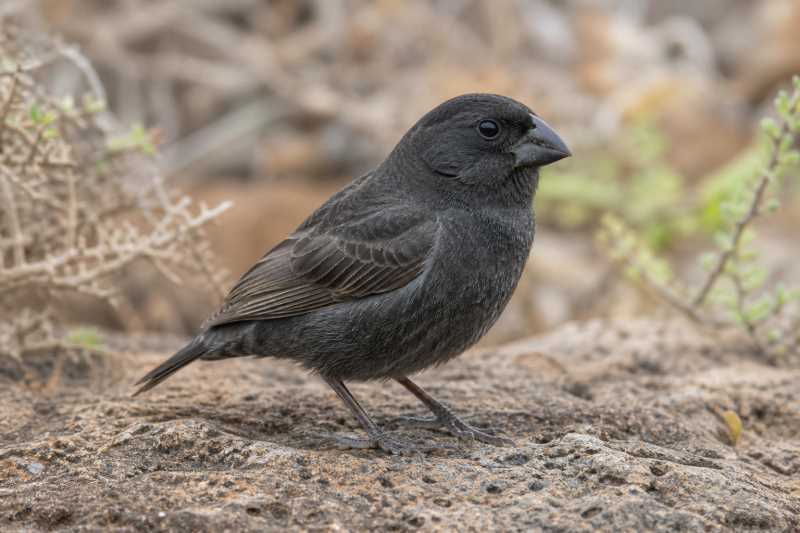
Medium Ground Finches are small birds, typically measuring about 12 to 13 centimeters in length. Their plumage is predominantly grayish-brown, providing excellent camouflage against the rocky, volcanic landscapes of the Galápagos. The most notable feature of these finches is their robust beak, which varies in size and shape, reflecting the dietary adaptations that have evolved over generations.
The beak size of Geospiza fortis is a classic example of adaptive radiation—a process where organisms diversify rapidly into a multitude of new forms, particularly when a change in the environment makes new resources available. On islands where the Medium Ground Finch coexists with other finch species, competition for food resources has driven the diversification of beak sizes to minimize niche overlap.
Dietary Habits and Feeding Strategies
The diet of the Medium Ground Finch is predominantly seed-based, but it also includes insects and fruit. The availability of food resources fluctuates with the seasons, leading to periods of intense competition. During the dry season, when food is scarce, the ability to exploit different food sources becomes crucial for survival.
The variability in beak size among Medium Ground Finches is directly related to their feeding strategies. Birds with larger, stronger beaks are able to crack open tougher seeds, while those with smaller beaks may specialize in softer seeds or insects. This variation not only affects individual survival but also plays a central role in the evolutionary dynamics of the population.
Reproductive Behavior and Life Cycle
Medium Ground Finches breed during the wet season, which typically runs from January to May. The onset of rains triggers an abundance of food resources, providing optimal conditions for raising offspring. Males establish territories and perform courtship displays to attract females, showcasing their plumage and singing complex songs.
Nest building is a collaborative effort, with both males and females participating. Females lay between three to five eggs per clutch, and both parents share the responsibility of incubating the eggs and feeding the hatchlings. The success of breeding efforts is closely linked to environmental conditions, with higher rates of offspring survival during wetter periods when food is abundant.
Evolutionary Significance and Research
The Medium Ground Finch has been the subject of extensive scientific research, most notably by Peter and Rosemary Grant, who have studied these finches for over four decades. Their work has provided profound insights into the mechanisms of natural selection, documenting how environmental changes can lead to rapid evolutionary shifts in beak size and shape.
One of the most significant observations made by the Grants was during a severe drought in 1977, which drastically reduced the availability of small seeds. Birds with larger beaks had a survival advantage as they could access the remaining larger seeds. This event led to a measurable change in the average beak size of the population within a single generation—a striking example of natural selection in action.
Conservation and Challenges
While the Medium Ground Finch is not currently classified as endangered, it faces several threats that could impact its population dynamics. These include habitat loss due to human activities, the introduction of invasive species, and the effects of climate change, which can alter the delicate balance of the Galápagos ecosystems.
Conservation efforts focus on preserving the natural habitats of the Galápagos Islands and controlling invasive species that threaten native wildlife. Understanding the ecological role and adaptive strategies of the Medium Ground Finch is crucial for developing effective conservation strategies.
Conclusion
The Medium Ground Finch is more than just a bird; it is a symbol of evolutionary resilience and adaptability. Its story continues to inspire scientists and nature enthusiasts alike, offering a window into the complex and ever-changing tapestry of life on Earth. As we continue to study and protect these remarkable creatures, we gain valuable insights into the processes that drive biological diversity and the intricate relationships that sustain our planet’s ecosystems.
The legacy of the Medium Ground Finch reminds us of the importance of preserving the natural world and the need to understand the evolutionary processes that shape the diversity of life. As we face global environmental challenges, the lessons learned from these small but mighty birds serve as a testament to the power of adaptation and the enduring legacy of Darwin’s groundbreaking work.
References
1. Grant, P. R., & Grant, B. R. (2002). “Unpredictable evolution in a 30-year study of Darwin’s finches.” Science, 296(5568), 707-711.
2. Grant, P. R., & Grant, B. R. (2006). “Evolution of character displacement in Darwin’s finches.” Science, 313(5784), 224-226.
3. Lack, D. (1947). “Darwin’s Finches.” Cambridge University Press.
4. Weiner, J. (1994). “The Beak of the Finch: A Story of Evolution in Our Time.” Knopf.
Related posts