Exploring the Little Tern: Nature’s Agile Navigator
The Little Tern (*Sternula albifrons*) is a small, charismatic seabird that has captured the interest of ornithologists and bird enthusiasts around the world. Known for its agile flight and distinctive breeding behaviors, this bird is a marvel of nature. In this article, we will delve into the various aspects of the Little Tern’s life, including its habitat, behavior, conservation status, and the challenges it faces in the modern world.
Description and Identification
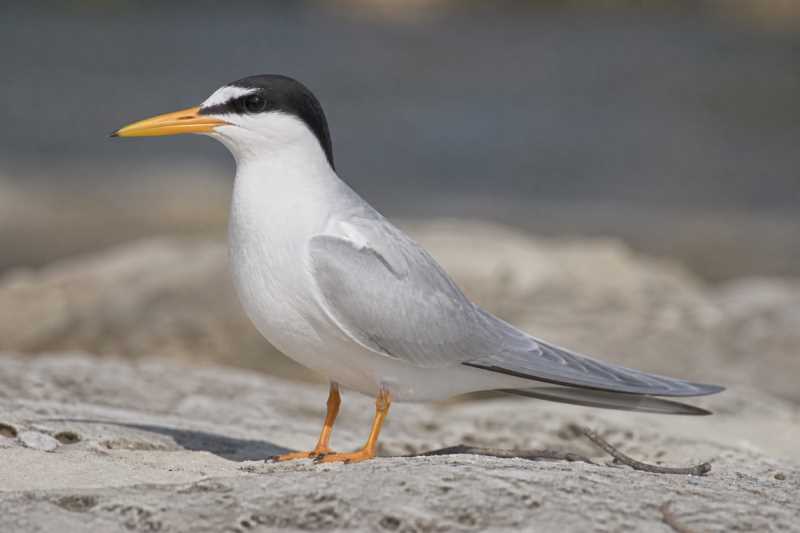
The Little Tern is one of the smallest species of the tern family, measuring approximately 21-25 cm in length with a wingspan ranging from 41-47 cm. This diminutive bird is easily identifiable by its slender, streamlined body, forked tail, and bright yellow bill tipped with black. During the breeding season, adults display a striking black cap that extends from the nape to the eyes, contrasting sharply with their white forehead. Their plumage is primarily white with pale grey on the upper parts, enhancing their overall delicate appearance.
Habitat and Distribution
Little Terns are widely distributed across Europe, Asia, and Australia. They are migratory birds, spending their breeding season in coastal regions, estuaries, and inland water bodies where they can find abundant food sources and suitable nesting sites. During the non-breeding season, they migrate to tropical and subtropical coastal regions, often traveling several thousand kilometers.
Their preferred habitats include sandy beaches, gravelly shores, saltmarshes, and lagoons. These environments provide the necessary resources for feeding and nesting, though they are increasingly threatened by human activities and climate change.
Feeding Behavior
Little Terns are primarily piscivorous, feeding on small fish and invertebrates. Their feeding technique is both fascinating and efficient. They exhibit remarkable aerial agility, hovering above the water surface before diving with precision to capture prey. This method of feeding requires excellent coordination and keen eyesight, traits that have evolved over time to aid in their survival.
In addition to fish, they occasionally consume crustaceans and insects, particularly when fish are scarce. Their diet can vary based on availability, demonstrating their adaptability to different environmental conditions.
Breeding and Nesting
The breeding season for Little Terns typically spans from April to August, depending on the geographical location. These birds are monogamous and often return to the same breeding sites each year, forming colonies that can range from a few pairs to several hundred.
Nesting sites are chosen with care, usually on open sandy or gravelly substrates, which provide camouflage against predators. The nests are simple scrapes in the ground, sometimes lined with shells or small stones. Females usually lay two to three eggs, which are incubated by both parents for about three weeks.
Chicks are precocial, hatching with their eyes open and covered in down. They are capable of moving around shortly after hatching but remain reliant on their parents for food and protection. The parents are highly attentive, taking shifts to forage and guard the nest.
Conservation Status and Threats
The Little Tern is currently listed as Least Concern by the IUCN Red List, but its populations are experiencing pressures that could impact their numbers. Habitat loss due to coastal development, human disturbance, and climate change are significant threats to their breeding and feeding grounds.
Predation by introduced species, such as rats and foxes, poses additional risks, especially on nesting sites. Human recreational activities, including beachgoers and off-road vehicles, can inadvertently destroy nests or cause adult birds to abandon their sites.
Conservation Efforts
Conservation efforts for Little Terns involve habitat protection, public awareness campaigns, and active management of breeding sites. Organizations and governments are working to establish protected areas, restrict human access during breeding seasons, and control predator populations.
In some regions, artificial nesting sites are created to encourage breeding and increase chick survival rates. These efforts have shown positive results, but continuous monitoring and adaptive management are essential to address the ongoing challenges faced by these birds.
The Role of Citizen Science
Citizen science has played a crucial role in monitoring Little Tern populations. Birdwatchers and volunteers contribute valuable data on breeding success, distribution, and migration patterns. This collective effort helps researchers and conservationists understand trends and implement effective strategies for preservation.
Engaging local communities is also vital for conservation success. Educational programs and community involvement in protection measures foster a sense of stewardship and encourage sustainable coexistence with these remarkable birds.
Conclusion
The Little Tern, with its agile flight and distinctive behaviors, is a testament to the beauty and complexity of avian life. While they face numerous challenges, concerted conservation efforts and increased awareness can help ensure their survival for generations to come. By appreciating and protecting these small yet incredible birds, we contribute to the broader goal of preserving biodiversity and maintaining the health of our natural ecosystems.
As we continue to learn more about the Little Tern, it is imperative that we take action to mitigate the threats they face. Through collaboration and dedication, we can support the resilience of this species and many others that share our planet.
Related posts