Introduction
The Thick-tailed White-toothed Shrew, scientifically known as Crocidura brunnea, is an intriguing species of small mammal. Known for its distinctively thick tail and sharp white teeth, this shrew is a member of the Soricidae family, which comprises numerous small insectivorous mammals. Despite its small size, the Thick-tailed White-toothed Shrew plays a vital role in its ecosystem, primarily through its diet of insects and other small invertebrates. This article delves into the various aspects of this fascinating species, including its physical characteristics, habitat, behavior, and conservation status, offering a comprehensive guide for researchers, wildlife enthusiasts, and conservationists.
Physical Description
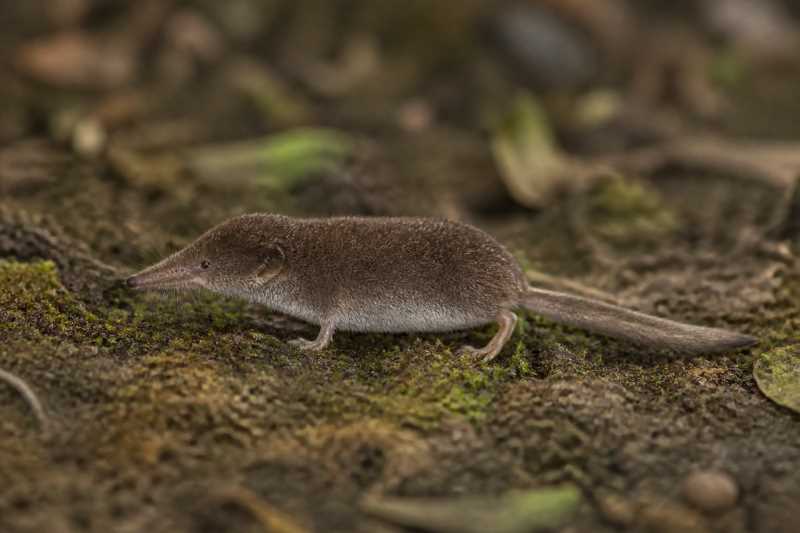
The Thick-tailed White-toothed Shrew is a small, yet robust species, typically measuring between 60 to 90 millimeters in body length, excluding its tail. The tail itself is notably thick at the base and tapers towards the tip, measuring approximately 30 to 50 millimeters. This feature is not only distinctive but also aids in the shrew’s balance and navigation through its habitat.
The shrew’s fur is generally a uniform dark brown to grey color, providing effective camouflage in its natural habitat. The underbelly tends to be lighter, often exhibiting a greyish white hue. Crocidura brunnea possesses a pointed snout and sharp white teeth, which are characteristic of the white-toothed shrews. These dental adaptations are particularly useful for its insectivorous diet, allowing the shrew to efficiently capture and consume prey.
Range and Habitat
The Thick-tailed White-toothed Shrew is predominantly found in South and Southeast Asia, with its range extending through parts of India, Nepal, Bangladesh, and Myanmar. It thrives in diverse habitats, including tropical and subtropical forests, grasslands, and agricultural areas.
These shrews are adaptable and can often be found in proximity to human settlements, provided there is sufficient cover and food availability. They prefer moist environments with ample vegetation, which provides both shelter and a rich supply of prey. Their presence is an indicator of a healthy ecosystem, as they contribute to controlling insect populations.
Behavior and Diet
Crocidura brunnea is primarily nocturnal, spending most of its active hours in the cover of darkness. This behavior helps it avoid predators and take advantage of the cooler temperatures at night. The shrew is solitary by nature, with individuals maintaining defined territories.
The diet of the Thick-tailed White-toothed Shrew consists mainly of insects, spiders, and other small invertebrates. It is an opportunistic feeder and will consume a wide variety of prey items available in its environment. Its sharp teeth and quick reflexes make it an adept hunter, capable of taking down prey efficiently. The diet is crucial not only for the shrew’s survival but also for controlling pest populations, highlighting its ecological importance.
Identification Tips (field recognition cues)
Identifying the Thick-tailed White-toothed Shrew in the field can be challenging due to its small size and elusive nature. However, several key characteristics can aid in its identification:
- Tail Structure: Look for the thick, tapering tail which is a defining feature of this species.
- Coloration: The uniform dark brown to grey coat with a lighter underbelly can help distinguish it from other similar species.
- Behavior: Nocturnal activity patterns and solitary behavior are typical of this shrew.
- Habitat: Presence in moist, vegetative areas near water sources can indicate the potential presence of this species.
- Size and Proportions: Its small size, combined with a proportionately long tail, aids in recognition.
Conservation Status (with threats and protections)
The conservation status of the Thick-tailed White-toothed Shrew is currently classified as Least Concern by the International Union for Conservation of Nature (IUCN). Despite this classification, the species faces several threats, primarily habitat loss due to deforestation and agricultural expansion.
While the species is adaptable, ongoing habitat destruction poses a long-term risk. Conservation efforts for this species are not extensive, but it benefits from broader environmental protection measures aimed at preserving its habitat. Continued monitoring of population trends and habitat conditions is essential to ensure its ongoing survival.
Frequently Asked Questions
1. What do Thick-tailed White-toothed Shrews eat?
Thick-tailed White-toothed Shrews primarily feed on insects, spiders, and other small invertebrates. They are opportunistic feeders, consuming a variety of prey available in their environment.
2. Where can I find Thick-tailed White-toothed Shrews?
These shrews are found in South and Southeast Asia, particularly in India, Nepal, Bangladesh, and Myanmar. They inhabit tropical and subtropical forests, grasslands, and areas near human settlements.
3. How can I identify a Thick-tailed White-toothed Shrew?
Look for their distinctive thick tail, dark brown to grey fur, and nocturnal behavior. They are typically found in moist environments with ample vegetation.
4. Are Thick-tailed White-toothed Shrews endangered?
No, they are currently classified as Least Concern by the IUCN. However, they face threats from habitat loss due to deforestation and agricultural expansion.
5. What role do Thick-tailed White-toothed Shrews play in the ecosystem?
These shrews help control insect populations and serve as indicators of a healthy ecosystem. Their presence signifies a balanced environment with sufficient food resources.
Related posts