New Guinea Waterside Rat (Parahydromys asper)
Introduction
The New Guinea waterside rat, known scientifically as Parahydromys asper, is a fascinating mammal endemic to the lush, tropical island of New Guinea. This semi-aquatic rodent is an intriguing subject of study due to its unique adaptations and ecological niche. As a member of the Muridae family, it shares some common traits with other rodents but stands out for its affinity to water-rich habitats. This article explores the various aspects of the New Guinea waterside rat, from its physical description and habitat to its behavior and conservation status.
Physical Description
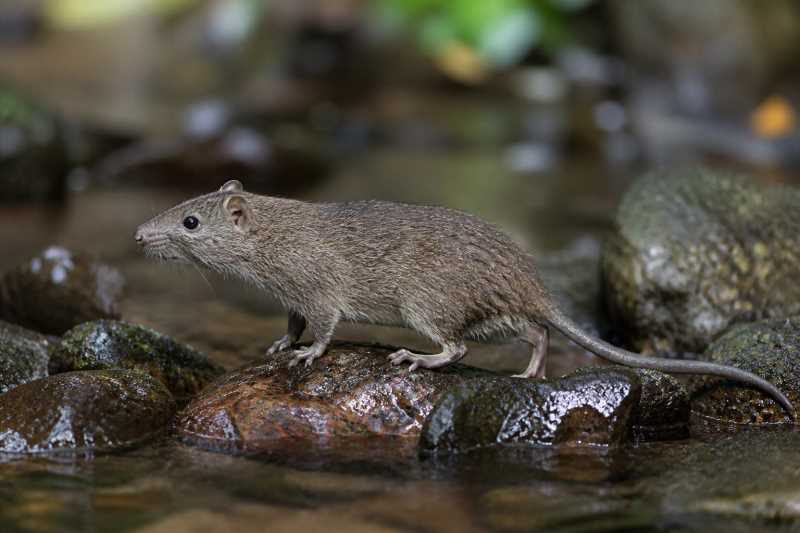
The New Guinea waterside rat is a medium-sized rodent characterized by its robust body and distinct physical features. Adult individuals typically measure between 25 to 30 centimeters in body length, with a tail approximately equal in length to its body. The tail, covered with fine scales and sparse hair, is an essential tool for balance and swimming.
The fur of Parahydromys asper is dense and water-repellent, designed to protect against the damp environments it frequents. The dorsal side of the body is usually a dark gray or brown, providing camouflage among the wet, muddy surroundings, while the ventral side is lighter, often a pale gray or white. Its feet are partially webbed, an adaptation that aids in swimming, and its strong, sharp claws are perfect for digging and foraging along riverbanks.
One of the most distinctive features of the New Guinea waterside rat is its elongated snout, which houses a set of sensitive whiskers. These whiskers are crucial for detecting movement and vibrations in water, aiding in the capture of prey and navigation through its aquatic habitat.
Range and Habitat
Parahydromys asper is exclusively found in New Guinea, an island known for its rich biodiversity and varied ecosystems. Its habitat primarily includes the riverbanks, streams, and marshes of lowland and montane rainforests. These environments provide ample food resources and protection from predators.
The waterside rat is adept at navigating both terrestrial and aquatic environments, although it predominantly resides near water sources. Its range extends throughout the island, from sea level up to elevations of about 2,000 meters. Within these areas, the rat is most commonly found in areas with a dense cover of vegetation, which offers shelter and an abundance of food.
Behavior and Diet
The New Guinea waterside rat exhibits behaviors that are well-suited to its semi-aquatic lifestyle. It is primarily nocturnal, avoiding predators by being active during the night. During the day, it rests in burrows dug into the soft banks of rivers and streams.
Its diet is diverse and primarily carnivorous, consisting of aquatic invertebrates such as insects, crustaceans, and mollusks. It uses its sensitive whiskers and keen sense of smell to locate prey in the water and along the muddy shores. Occasionally, it may also consume plant material and small vertebrates.
The waterside rat is solitary, with individuals maintaining territories that they defend from intruders. Communication is primarily through scent markings and vocalizations, which play a vital role in social interactions, especially during the breeding season.
Identification Tips
Identifying the New Guinea waterside rat in the field involves recognizing its distinctive features and behaviors:
- Size and Shape: Medium-sized rodent with a robust body and long tail.
- Fur: Dense, water-repellent, dark gray to brown dorsally, lighter ventrally.
- Feet: Partially webbed with strong claws.
- Snout and Whiskers: Long snout with prominent whiskers for detecting prey.
- Habitat: Look for them near water bodies in rainforest areas.
- Behavior: Active at night, adept swimmer, often seen along riverbanks.
Conservation Status
The conservation status of the New Guinea waterside rat is currently listed as Least Concern by the International Union for Conservation of Nature (IUCN). However, this does not mean the species is free from threats.
Threats
- Habitat Loss: Deforestation for agriculture and logging is a significant threat, reducing the available habitat for this species.
- Water Pollution: Contamination of water sources from mining and industrial activities can impact the rat’s food supply and overall health.
- Predation: Introduction of non-native predators such as cats and dogs poses a risk, particularly to young individuals.
Protections
Conservation efforts include habitat preservation and environmental education programs to raise awareness about the species and its ecological importance. Protected areas and national parks in New Guinea play a critical role in safeguarding habitats.
Frequently Asked Questions
What is the habitat of the New Guinea waterside rat?
The New Guinea waterside rat inhabits lowland and montane rainforests near rivers, streams, and marshes. It prefers areas with dense vegetation cover and is found at elevations up to 2,000 meters.
How does the New Guinea waterside rat adapt to its environment?
The waterside rat has several adaptations, including dense, water-repellent fur, partially webbed feet for swimming, and long whiskers for detecting prey in aquatic habitats.
Is the New Guinea waterside rat endangered?
Currently, the New Guinea waterside rat is listed as Least Concern, but it faces threats from habitat loss, pollution, and predation by non-native species.
What does the New Guinea waterside rat eat?
The diet primarily includes aquatic invertebrates such as insects, crustaceans, and mollusks, but it may also consume plant material and small vertebrates.
How can I identify a New Guinea waterside rat?
Look for a medium-sized rodent with dense, water-repellent fur, a long tail, partially webbed feet, and a long snout with prominent whiskers, typically found near water bodies in rainforests.
Related posts